Cold rain tastes like iron when it hits your upper lip in November.
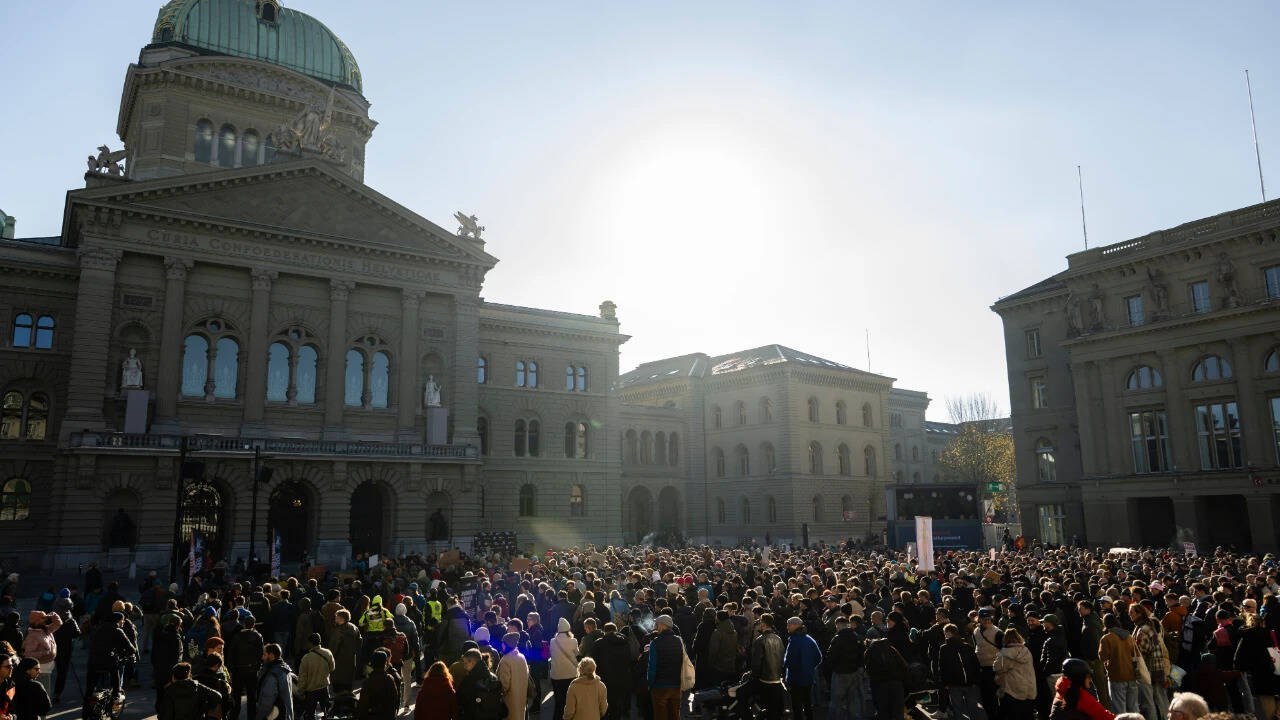
I stood near the Bundeshaus in Bern, watching the breath of three hundred men turn into ghosts in the damp evening air. We were waiting. Not for a train, not for a football match, and not for a political rally promising tax cuts. We were waiting for the courage to say out loud what most of us have spent our entire lives whispering behind closed doors.
Silence.
For decades, that single word has defined how Switzerland handles what happens behind the heavy oak doors of its neat, orderly apartments. From the outside, this country looks like a precision watch—clean streets, punctual trams, breathtaking alpine views, and a pervasive sense of safety. Yet, beneath that pristine surface lies a statistical reality that shatters the postcard illusion. Every two weeks in Switzerland, a woman dies at the hands of her current or former partner. Every single day, police officers respond to dozens of domestic violence calls across cantons from Geneva to Graubünden.
For years, the public conversation around this crisis followed a predictable, exhausting script. Women marched. Women organized. Women bled, protested, and begged for legislative reform, while men watched from the sidelines, offering polite sympathy or defensive shrugs. Not me, the collective male subconscious murmured. I don't hit my wife. I’m one of the good ones.
That night on the cobblestones, the "good ones" finally realized that silence isn't neutrality. It is complicity.
The Architecture of an Invisible Crisis
To understand why a crowd of Swiss men suddenly decided to march through the capital demanding stronger protections against gender-based violence, you have to look at the invisible architecture of domestic abuse.
Consider a hypothetical scenario—a composite drawn from hundreds of real police reports and shelter intake forms across Zurich and Lausanne. Imagine a man named Lukas. Lukas isn't a monster lurking in a dark alley. He is an accountant, well-liked at his local cycling club, polite to the bakery clerk, and generous with his rounds at the pub. At home, however, Lukas operates like a slow-acting poison. He doesn't start with a fist. He starts by monitoring his partner’s phone. Then comes the subtle isolation from her sister, followed by the sudden, explosive anger when dinner is ten minutes late, and finally, the terrifying physical intimidation that leaves no bruises for a doctor to photograph.
When Lukas’s friends hear a raised voice during a phone call, or notice his partner flinching when he reaches for a wine glass, they look away. Why? Because in Swiss culture—and across much of the Western world—privacy is treated as a sacred, untouchable deity. Interfering in another man’s marriage feels like trespassing on private property.
This cultural hesitation creates a deadly vacuum. According to data from the Swiss Federal Statistical Office, police register roughly twenty thousand domestic violence offenses every year, and experts widely agree that the true figure is vastly higher because fear and shame keep victims from dialing 117. When a society treats domestic abuse as a private family dispute rather than a public safety emergency, it hands the abuser an invisible shield.
Think of it like a hairline crack in a concrete dam. From the observation deck, the structure looks magnificent, solid, and eternal. You can ignore the tiny trickle of water seeping through the wall because the reservoir isn't overflowing today. Yet, behind that concrete, millions of tons of pressure are building silently against a compromised foundation. By the time the wall bursts, no one can claim they didn't see the water. They simply chose not to look at the wall.
Why Men Are Finally Stepping Into the Street
The march in Bern didn't happen in a vacuum. It was born out of a slow, painful awakening among Swiss men who realized that framing violence against women as a "women's issue" is a linguistic sleight of hand that lets perpetrators off the hook.
I remember talking to a forty-two-year-old carpenter named Marc during the march. His hands were calloused, stained with sawdust and grease, and he was holding a hand-painted cardboard sign that read, Real Men Don't Look Away.
"For ten years, my neighbor beat his wife," Marc told me, his voice dropping so low I had to lean in over the sound of shuffling boots. "We all heard the thuds through the radiator pipes. My wife wanted to call the police, and I told her not to get involved. I told her we didn't know the whole story. Then one Tuesday, the ambulance came, and she didn't come back."
Marc’s guilt is not unique. It is the exact emotional fuel driving a growing movement of male allies across Switzerland—from grassroots men’s counseling networks in Basel to youth mentorship programs in St. Gallen. These men are confronting an uncomfortable truth: violence against women is overwhelmingly perpetrated by men, which means the cultural permission slip for that violence is issued, stamped, and renewed in male spaces.
It happens in locker rooms when a cruel joke about a partner’s body goes unchallenged. It happens in boardrooms when a female colleague’s boundaries are dismissed as "overreacting." It happens in the pub when a friend brags about "putting his girlfriend in her place," and everyone laughs into their beer instead of asking him what the hell is wrong with him.
When men take to the streets to demand stronger legal protections, expanded shelter funding, and mandatory intervention programs for violent offenders, they are doing something radical. They are breaking the unwritten pact of male solidarity that prioritizes a man's comfort over a woman's survival.
The Gaps in the Swiss Safety Net
Walking through the rainy streets of Bern, the protesters weren't just asking for cultural introspection; they were demanding concrete structural change. Switzerland ratified the Istanbul Convention—the Council of Europe’s landmark treaty on preventing and combating violence against women—back in 2018. On paper, the commitment looks impressive. On the ground, however, survivors still face a labyrinth of bureaucratic hurdles and chronic underfunding.
If you are a woman fleeing a violent home in a rural Swiss canton at two in the morning, where do you go?
The answer, far too often, is nowhere. Women's shelters across Switzerland frequently operate at or above maximum capacity, forcing staff to turn away mothers and children or house them temporarily in cramped hotel rooms without specialized psychological support. Meanwhile, financial resources vary wildly from one canton to the next because Switzerland’s federalist system leaves much of the implementation to local authorities. A woman’s chance of finding an immediate shelter bed or accessing specialized legal aid can depend entirely on which side of a cantonal border she happens to live.
Then there is the question of what happens to the men who commit the violence. Under current practices, restraining orders and temporary eviction notices from the shared home exist, yet enforcement often lacks teeth. Electronic monitoring—such as GPS ankle bracelets for high-risk offenders—has been slow to roll out nationwide, even though experts point out that placing the burden of restriction on the perpetrator rather than forcing the victim into hiding is basic common sense.
Consider how absurd our current default setting actually is. When a man threatens to kill his partner, we expect the woman to pack a single suitcase in the middle of the night, pull her children out of school, abandon her job, and disappear into a secret shelter, while the man stays comfortably in his own living room, sleeping in his own bed.
The men marching in Bern were calling out that backward logic. They demanded nationwide, twenty-four-hour crisis hotlines, guaranteed funding for shelter spaces across all twenty-six cantons, and mandatory, long-term behavioral rehabilitation programs for perpetrators before a restraining order expires and a tragedy unfolds.
The Anatomy of Male Vulnerability and Fear
I will be honest with you: standing in that crowd wasn't entirely comfortable. Even among men who showed up with the best intentions, you could feel an underlying tension—a nervous uncertainty about whether we were doing it right.
Many men stay away from movements like this because they are terrified of saying the wrong thing, of being lumped in with abusers, or of seeming weak in front of their peers. We are raised from boyhood to believe that masculinity is a fortress. You don't admit confusion. You don't show fear. You certainly don't stand in the rain holding a sign that suggests your own gender has a systemic problem with anger and control.
Yet, during our walk toward the Parliament building, something shifted in the air. The awkwardness gave way to a quiet, steady resolve. When you stop defending your ego, you start hearing what women have been trying to tell you for generations.
I thought about my own younger years—the times I laughed along with demeaning remarks just to fit in with older guys on a construction crew, the times I assumed a woman walking fast with her keys clutched between her fingers at night was "just being paranoid." We carry so much casual blindness until we force ourselves to look directly at the reality women navigate every single day.
A woman in Zurich calculates her route home from the tram stop based on streetlamp placement. A woman in Geneva shares her live phone location with three friends before going on a first date. A woman in Lugano stays in a suffocating, abusive relationship because she knows that leaving is statistically the most dangerous moment of her entire life.
Men rarely have to build their daily schedules around the threat of physical violence from the people who claim to love them. Recognizing that disparity doesn't make a man weak. It makes him awake.
What Real Accountability Looks Like After the Banners Come Down
Protests are loud, visible, and cathartic, yet anyone who has ever organized a civic campaign knows that marching for two hours on a Saturday evening changes nothing if everyone goes back to their old habits on Monday morning.
The real test of this Swiss movement won't be measured by how many photographers captured the crowd in Bern. It will be measured in quiet, unglamorous moments over the next five years.
It happens when a father sits down with his fourteen-year-old son after seeing toxic misogyny pop up on the boy’s social media feed, and instead of confiscating the phone in anger, asks him what he thinks respect actually looks like. It happens when a football coach hears a player use violent, degrading language toward a girl and benches him on the spot, explaining clearly that character matters more than goals. It happens when a municipal councilman votes to increase the budget for local victim support services, even when it means cutting funding for a popular civic festival.
And it happens in the hardest moment of all: when a man looks his closest friend in the eye over a cup of coffee and says, "I saw how you spoke to her last night. That’s not okay. You need help, and I’m going to help you find it."
That conversation takes infinitely more courage than shouting into a megaphone. There is no applause for it. You might lose a friend. You might face an explosive defensive reaction. Yet, if men refuse to police the boundaries of healthy masculinity within their own circles, no amount of legislation from Bern will ever be enough to stop the bleeding.
The Sound of Footsteps in the Rain
By the time the march reached the square in front of the Bundeshaus, the rain had settled into a steady, soaking drizzle. No one left early.
Around me, men in wool coats, cycling jackets, and worn work boots stood shoulder to shoulder, listening as speakers read out the names and ages of women killed in Switzerland over the past twelve months. Twenty-four years old. Thirty-eight years old. Sixty-one years old. Each number landed in the cold air like a stone dropping into deep water.
For a full minute afterward, nobody spoke. The only sound in the square was the steady patter of rain hitting umbrellas and the distant hum of a city tram rolling past.
It was a different kind of silence than the one that usually protects abusers behind closed doors. This silence wasn't born out of fear, shame, or looking the other way. It was heavy with memory, grief, and a stubborn refusal to pretend any longer that what happens inside our neighbors' homes is none of our business.
As the crowd finally began to disperse, a young guy in his early twenties folded his soaked cardboard banner carefully under his arm and turned toward the train station. He looked at me, gave a small, solemn nod, and walked off into the dark—leaving wet bootprints across the cobblestones where, for one night at least, men had finally refused to stand still.