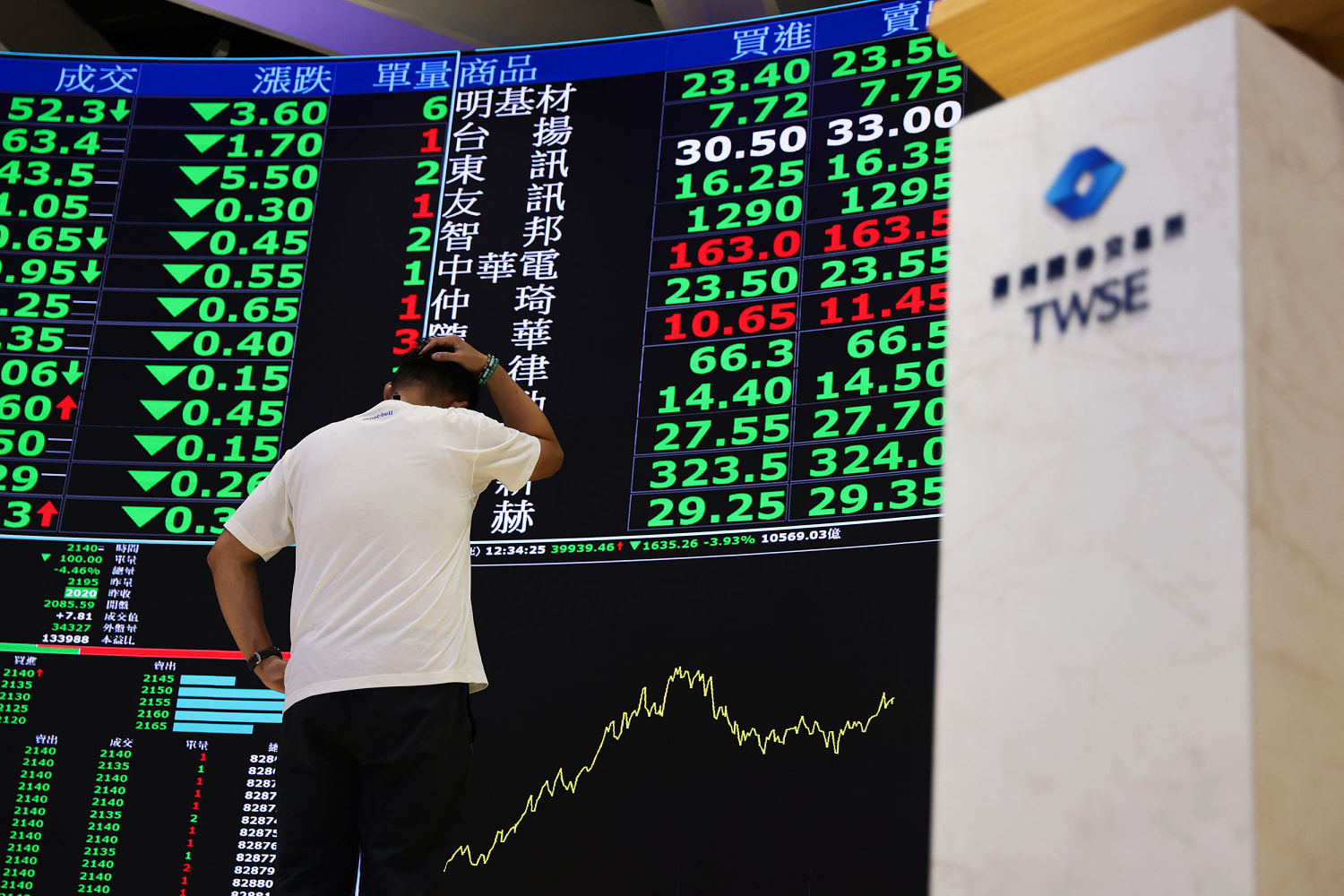
At 8:02 on a rainy Tuesday morning in Manhattan, a thirty-four-year-old bond trader named Marcus spilled lukewarm coffee across a mechanical keyboard that cost more than his first car. He didn’t curse. He didn’t even grab a napkin. He just stared at a blinking amber line on his third monitor—the yield on the ten-year U.S. Treasury note—climbing three basis points in forty seconds.
To anyone walking past the glass walls of his midtown office, it was just a number twitching on a screen. To Marcus, it was the sound of a trillion-dollar consensus snapping in half.
For months, Wall Street had been humming the same soothing lullaby. Inflation was cooling. The Federal Reserve was preparing to gently lower interest rates, easing the pressure on borrowers, reviving the frozen housing market, and handing every mortgage holder in America a long-awaited exhale. The script was written. The trades were placed. And then, voters went to the polls, handed Democrats a clean sweep of the White House and both chambers of Congress, and accidentally threw a wrench into the central bank’s carefully calibrated machinery.
Wait. Why would a political victory in Washington suddenly dictate what a nurse in Ohio pays for a thirty-year mortgage, or whether a small bakery in Austin can afford a loan for a second oven?
It sounds like a conspiracy theory until you trace the plumbing of modern money.
The Invisible Tug-of-War
Let’s strip away the jargon. Think of the U.S. economy as a massive, roaring house party, and the Federal Reserve as the tired neighbor standing by the fuse box.
When the music gets too loud—meaning prices for eggs, rent, and car repairs are climbing too fast—the neighbor walks over and flips a breaker. That breaker is interest rates. By making it more expensive to borrow money, the Fed forces everyone to turn down the volume. People buy fewer cars. Companies pause hiring. The party cools off.
For the past year, the music had finally started to quiet down. Wall Street bet billions of dollars that the neighbor was about to walk back to the fuse box and turn the power back up, delivering a steady, predictable series of rate cuts.
Then came the election results. A unified Democratic government changes the guest list and brings a brand-new set of speakers to the party.
When one party controls the presidency, the House, and the Senate, gridlock evaporates. Suddenly, ambitious fiscal policy isn't just campaign rhetoric; it is legislative destiny. In practical terms, a Democratic sweep signals a high probability of expanded federal spending—green energy subsidies, infrastructure outlays, child tax credits, healthcare expansion—paired with potential corporate tax adjustments and targeted tariffs or trade shifts.
Here is the catch. When the government injects hundreds of billions of dollars into the economy through spending programs, it acts like a shot of espresso straight into the bloodstream of consumer demand.
More money chasing the same amount of goods and labor pushes prices back up.
And if prices start creeping upward again, the tired neighbor at the fuse box—Federal Reserve Chair Jerome Powell and his colleagues—cannot cut interest rates. In fact, they might have to keep rates higher for longer, or even reach back for the breaker switch.
Marcus, sitting in his coffee-stained chair in Manhattan, wasn't mourning a political outcome. He was watching the market realize, in real time, that the cheap money everyone had already spent in their heads wasn't coming.
A Kitchen Table in Columbus
To understand why a three-basis-point twitch on a trading desk matters, leave Manhattan and step into a cramped kitchen in Columbus, Ohio.
Meet Elena and David. (They are a composite of thousands of families caught in this exact vise right now, though their math is brutally real.) Elena is a pediatric physical therapist; David manages logistics for a regional food distributor. Together, they earn a solid middle-class living, save diligently, and have spent the last two years living out of cardboard boxes in a two-bedroom apartment while waiting for mortgage rates to drop from seven percent back toward five.
Every Sunday night, Elena opens a mortgage calculator on her laptop. She plugs in the price of a modest three-bedroom colonial two miles from her daughter’s school. At a 5.5 percent interest rate, the monthly payment stretches their budget, yet leaves room for soccer cleats and an emergency fund. At 7 percent, that exact same house costs nearly four hundred dollars more every single month—money that simply does not exist in their checking account.
"We just need to wait until spring," David told her in October, repeating what every financial news anchor on television had promised. "The Fed is cutting. Rates are coming down."
David was half right, and that is the cruelest part of how money works.
Most people assume the Federal Reserve sets mortgage rates, auto loan rates, and credit card APRs directly. It doesn't. The Fed only controls the overnight rate at which banks lend to each other. Long-term borrowing costs—like Elena and David’s mortgage—are dictated by the bond market, specifically the yield on that ten-year Treasury note Marcus was staring at.
Bond investors are notoriously cynical creatures. They hate inflation more than anything else because inflation eats away at the fixed returns they earn over ten or thirty years. When investors see a unified government poised to pass expansive spending bills, they don't wait for the legislation to pass. They demand higher yields today to protect themselves against the inflation they expect tomorrow.
And when Treasury yields rise, mortgage lenders immediately hike their rates to match.
Without a single new law being signed, without a single dollar of new government spending hitting a bank account, the mere expectation of a Democratic sweep quietly pushed Elena and David’s dream house further out of reach before they even finished their Tuesday morning coffee.
The Ghosts of 2021
If this feels like déjà vu, it should. We have seen this exact movie before, and the ending left bruises on every wallet in the country.
Cast your mind back to early 2021. A newly unified Democratic government passed the $1.9 trillion American Rescue Plan into an economy that was already rebounding from pandemic lockdowns. At the time, plenty of smart, credentialed economists argued that the risk of doing too little far outweighed the risk of doing too much. They believed supply chains would untangle quickly and inflation would prove temporary.
They were wrong.
I remember standing in the aisle of a neighborhood grocery store in the autumn of 2021, holding a standard carton of eggs and a pound of ground beef, doing mental arithmetic that felt slightly unhinged. Prices weren't ticking up by pennies; they were leaping by dollars. Within months, inflation hit a four-decade high of over nine percent, forcing the Federal Reserve into the most aggressive interest-rate hiking cycle since the early 1980s.
Central bankers are haunted by that mistake. They vowed never again to underestimate the inflationary punch of big fiscal stimulus colliding with tight labor markets.
Today, the economy isn't in a deep recession begging for rescue. Unemployment remains historically low. Consumer spending has proved stubbornly resilient. Adding aggressive government spending on top of an already warm engine is like tossing dry kindling onto a campfire that hasn't burned down yet.
Even if a unified Congress offsets some of its new spending with higher taxes on corporations or top earners—a classic Democratic policy lever—economists note a tricky asymmetry. Government spending hits the economy fast and hard, flowing directly into construction projects, paychecks, and household bank accounts. Tax hikes, by contrast, tend to slow the economy down much more gradually. In the short term, the net effect is still stimulative. Still inflationary. Still a headache for the central bank.
Wall Street doesn't trade on five-year averages. It trades on the next six months. And for the next six months, the bond market smells smoke.
The Uncomfortable Truth About Who Wins and Who Pays
Let’s pause and admit something that financial commentators rarely say out loud: this entire dynamic is deeply, maddeningly confusing, and nobody—not the sharpest hedge fund manager in Greenwich, not the PhDs running models inside the Eccles Building in Washington—knows with certainty how it plays out.
Markets are manic-depressive. They routinely overreact to headlines on Tuesday, reverse course by Thursday, and rewrite their own narrative by Friday afternoon. Perhaps a razor-thin majority in the House forces Democratic leadership to water down their biggest spending ambitions. Perhaps a slowdown in global growth or a sudden crack in the job market drags inflation down anyway, forcing the Fed to cut rates regardless of what Congress passes.
Uncertainty isn't a flaw in the system; it is the system.
Yet beneath the daily noise lies a structural reality that every saver, borrower, and investor has to reckon with. For nearly fifteen years after the 2008 financial crisis, we lived in an era of financial gravity defying itself. Interest rates sat near zero. Governments could borrow endlessly without paying a penalty, and central banks stood ready to print money at the first sign of trouble.
That era is dead.
In its place is a world where fiscal policy and monetary policy are locked in a permanent, bruising tug-of-war. When politicians promise relief—whether through student loan forgiveness, housing subsidies, tax cuts, or industrial grants—the bond market acts as a ruthless referee. It tallies the bill, measures the deficit, and quietly adjusts the interest rate on every loan in America to pay for it.
Consider what happens next if yields stay elevated:
- The federal government itself gets squeezed. With the national debt eclipsing $35 trillion, every percentage point increase in interest rates adds hundreds of billions of dollars in annual interest payments—money that crowds out funding for schools, defense, and the very social programs lawmakers want to champion.
- Small businesses stay frozen. A local manufacturer looking to finance a new warehouse faces borrowing costs that eat up their entire profit margin, delaying expansion and new hiring.
- Savers finally catch a break. Retirees and cautious families who spent a decade earning 0.01 percent in savings accounts suddenly find they can earn four or five percent risk-free in money market funds and Treasury bills—a quiet transfer of wealth back toward people who hold cash rather than debt.
Notice how none of this fits neatly into a partisan victory speech. Politics deals in promises; bond markets deal in arithmetic. And arithmetic does not care who won the election.
What You Do When the Ground Shifts
So where does that leave you, sitting outside the glass walls of Manhattan trading floors and away from the committee rooms of Capitol Hill?
First, stop anchoring your financial life to predictions about what the Federal Reserve will do six months from now. If there is one lesson written in permanent ink across the past four years, it is that consensus forecasts about interest rates are fragile things. Waiting on the sidelines for the "perfect" rate is a gamble disguised as prudence.
If you are carrying high-interest credit card debt—where rates have hovered north of twenty percent regardless of election cycles—attack it now. No central bank rescue is coming to save a revolving balance.
If you are buying a home, buy the house you can afford at today’s rate, not the imaginary rate a lender promises you can refinance into next spring. If rates eventually fall, refinancing is a welcome bonus. If they stay stubbornly high because Washington opens the fiscal taps, your roof stays securely over your head anyway.
And if you are investing for the long haul, resist the urge to panic-sell or overhaul your portfolio based on electoral maps. Markets have a remarkable, almost stubborn capacity to digest political shocks, reprice risk, and keep moving forward. Volatility is simply the price of admission for building wealth over time.
Back in midtown Manhattan, the rain finally stopped just after the closing bell at four o'clock. Marcus wiped the dried coffee ring off his desk with a crumpled receipt, shut down his monitors, and walked out into the cool November air. Around him, thousands of commuters poured toward Grand Central Terminal, heads down, checking scores, texts, and news alerts on glowing screens.
None of them were thinking about basis points or Treasury auctions. They were thinking about dinner, daycare pickups, and whether this would finally be the year they fixed the leaking roof. Yet invisible to every single one of them, the price of their tomorrow had just been renegotiated in the quiet hum of a million servers—and the bill was already in the mail.