Silence.
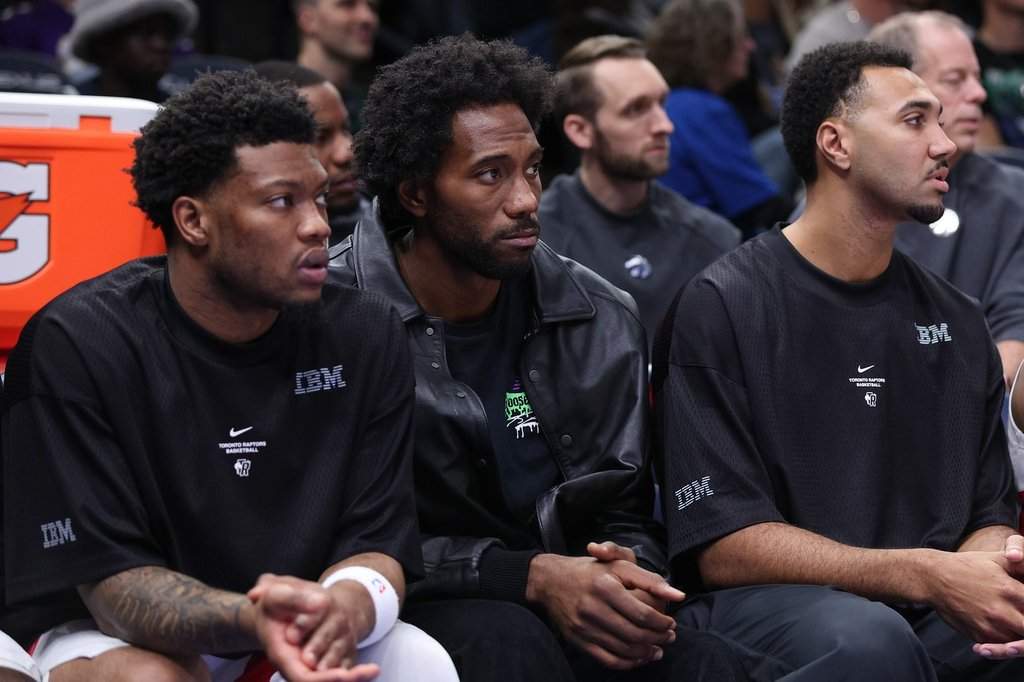
That is what settles over Scotiabank Arena during the first few seconds after a clean defensive zone faceoff win when number forty-four is watching from the press box instead of digging his edges into the scarred ice below. Most fans in the lower bowl are checking their phones or nursing the last warm sip of an eighteen-dollar beer, waiting for the puck to cross the red line before they bother looking up. They miss the pause. They miss the subtle hesitation of a replacement defenseman who stops behind his own net, looks up ice, sees two forecheckers bearing down like freight trains, and decides that the safest play is a soft, hopeful chip off the tempered glass that lands squarely on the stick of an opposing winger. Also making waves in this space: Inside the Dodgers Winter Crisis Nobody Is Talking About.
A three-line press release does not capture that sound. When the Toronto Maple Leafs announce that Morgan Rielly remains out with a lower-body injury, the transaction log treats it like a weather report or a minor delay on the GO Transit line. Day-to-day. Week-to-week. Re-evaluated on Monday. You read the update over morning coffee, nod once, and start calculating salary cap relief or wondering which Marlies call-up deserves a cup of coffee on the third pairing.
I used to read injury reports the exact same way, right up until the winter I tore a ligament in my own hip playing senior men's hockey in a freezing rink outside Mississauga. Nothing heroic happened. Nobody laid me out at center ice. I simply pivoted backward to track a twenty-two-year-old kid who had three gears I no longer possessed, felt a sharp, wet pop deep inside my groin, and spent the next four months learning what hockey players actually mean when they say "lower-body." More information into this topic are covered by ESPN.
You do not realize how much of skating happens in the dark until one hinge refuses to open. Walking to the kitchen feels fine. Climbing stairs hurts a little, maybe a dull ache behind the pelvis that you can ignore with two ibuprofen. Then you step onto ice, try to open your hips from a standstill to crossover left, and your brain sends a signal that your body simply declines to answer. There is no dramatic collapse. There is just a fraction of a second where the blade refuses to bite, and in professional hockey, a fraction of a second is the difference between starting a five-man rush and fishing a rubber disc out of your own netting.
The Architecture of a Missing Engine
To understand why Morgan Rielly's name sitting on the injured list changes the entire geometry of Toronto's lineup, you have to stop thinking of him as a traditional defender and start picturing him as a suspension bridge.
Consider a hypothetical shift in the second period against a heavy, forechecking team like Florida or Boston. Call it a Tuesday night in November, the kind of grind-it-out game that never makes the season-end highlight reel. Without Rielly, the Maple Leafs' blue line suddenly breaks into two distinct islands. On one side, you have the stay-at-home specialists—big, honest, heavy-boned defenders whose primary job is clearing bodies from the crease and pinning cycles along the half-wall. On the other side, three hundred feet away, you have four-time Rocket Richard caliber forwards waiting for a pass that arrives in stride rather than bouncing off their shin pads.
Between those two islands sits sixty feet of neutral zone ice. When Rielly is healthy, he is the steel cable spanning that gap.
Over more than a decade in Toronto—drafted fifth overall back in 2012, surviving the tank years, the Babcock era, the bubble, and every spring heartbreak since—Rielly has logged more than twenty-two minutes a night on average across over eight hundred regular-season games. People love to dissect his defensive zone coverage in slow-motion replays on sports talk radio. They pause the frame when a backdoor pass slips past his skate blade or when a bigger forward leans on him in front of the crease. Those critiques are fair, grounded in real video, and completely beside the point when he is gone.
What disappears when Rielly sits out is controlled zone exits.
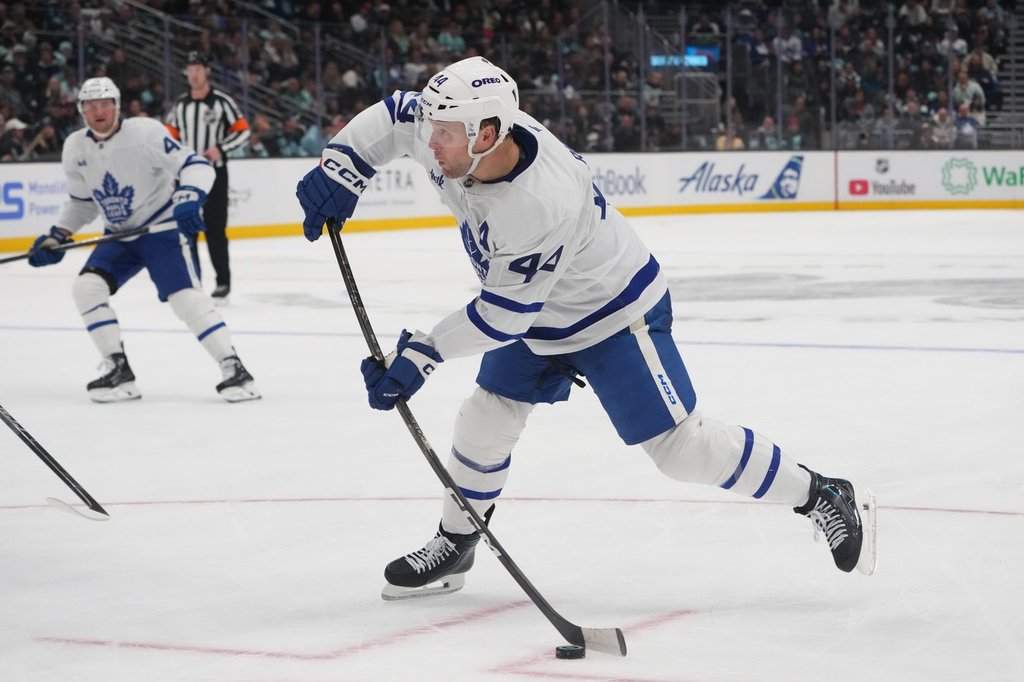
Hockey analytics track this obsessively now, measuring how often a defenseman carries the puck out of his own end versus how often he flips it into neutral territory and surrenders possession. For years, Rielly has ranked among the NHL's premier transition engines. He takes a hit behind the goal line, absorbs the shock through his knees, and accelerates out of the turn with his head up, forcing the opposing left winger to back off by three strides. That tiny retreat creates oxygen for Auston Matthews, William Nylander, and the rest of Toronto's top six. Without that first stride, the forwards have to come back below the hash marks just to fetch the puck, burning fifty percent of their shift energy before they even reach the center red line.
Inside the Vague Language of Lower-Body Injuries
Why won't the team just tell us what is actually wrong?
Every time a reporter stands outside the dressing room at the Ford Performance Centre and asks for specifics on Rielly's lower-body injury, the answer arrives wrapped in the same polite, impenetrable cotton wool. He is progressing. He skated on his own before practice. No setback, just taking it day by day.
Fans hate the secrecy, and honestly, it is hard to blame them when ticket prices require a second mortgage. Yet that vagueness exists for a brutal, practical reason. The moment a coaching staff confirms that a defenseman has a high ankle sprain, an MCL strain, or a hip flexor tear, every forechecker in the Eastern Conference receives a target map. The next night Rielly steps onto the ice, the opposing team's fourth-line winger will dump the puck specifically into Rielly's corner on every single shift, finishing his check half a beat late into that exact joint.
More than that, lower-body recoveries in hockey follow a maddeningly nonlinear path. A pulled hamstring or a tweaked knee can feel ninety-five percent healed during a morning skate in tracksuits or light pads. You glide around the circles, snap crisp fifty-foot passes, and feel ready to play twenty-four minutes that night. Then comes the first game-speed collision along the boards—where two two-hundred-pound men collide at twenty miles an hour while your skate blade is wedged in a rut—and three weeks of rehab vanish in a heartbeat.
Medical staffs across the league know the trap of rushing a high-minute defenseman back in the first half of the season. Data from NHL injury tracking consistently shows that soft-tissue lower-body injuries carry some of the highest recurrence rates in professional sports when players return even a few days ahead of full structural readiness. If Rielly misses ten games now so that his stride is unbroken in April, the coaching staff takes that trade every single time, even if the standings tighten while he watches from upstairs.
The Ripple Effect Down the Bench
When your number-one minutes-eater leaves the lineup, nobody steps up to play his exact role. Instead, everyone else gets pushed one rung higher on a ladder that was not built to hold them.
Think about what happens to a second-pairing defenseman who usually thrives playing eighteen sheltered minutes against opposing middle-six lines. Suddenly, he is playing twenty-three minutes. He is on the first power-play unit, standing at the top of the umbrella where one bobble at the blue line turns into a shorthanded breakaway. He is taking defensive zone draws with ninety seconds left in a one-goal game against the league's most lethal scorers.
By the third period of a back-to-back road trip, that extra four or five minutes of heavy ice time turns into lactic acid in the quads. Passes that were tape-to-tape in October miss by six inches in November. Stick checks arrive a fraction too late, drawing hooking penalties that wear down the penalty kill even further.
Even the power play loses its quiet rhythm. Critics often debate whether Toronto's man advantage needs a heavier slap shot from the point, pointing out that Rielly has never been a classic hundred-mile-an-hour bomb thrower from the blue line. What those critics miss is his deception. Rielly walks the line with his shoulders square to the net, freezing the top penalty killer with a subtle look toward the right circle before slipping a backhand saucer pass to the left flank. Replacement point men tend to telegraph their intentions, allowing penalty-killing triangles to shift early and suffocate shooting lanes before the puck ever leaves the stick.
The Weight of Being the Constant
There is another layer to Rielly's absence that rarely shows up on a tactical whiteboard, and it lives inside the quiet culture of the dressing room.
Walk through the Maple Leafs' roster over the last decade and count how many faces have remained unchanged. Coaches have arrived with grand promises and departed after abrupt spring exits. General managers have reshuffled depth charts, traded away draft picks, and signed veteran mercenaries for one final run. Through every wave of scrutiny in the most relentless hockey market on earth, Morgan Rielly has been the constant.
He is the guy who stands in front of twenty microphones after a humiliating 5-2 loss on a Saturday night and answers every uncomfortable question without rolling his eyes or throwing a teammate under the bus. He is the veteran who takes a nervous nineteen-year-old rookie out to dinner on his first road trip so the kid stops staring at the hotel ceiling.
When a player like that disappears from the bench, the emotional temperature of the team shifts. Young defensemen lose their safety net. Forward groups lose the vocal steadiness on the bench between whistles when a game starts slipping away in the second period. You cannot quantify leadership on a spreadsheet, and sports writers often lean on it as a lazy cliche, right up until the exact moment the room's longest-tenured voice is sitting in a suit three levels above the ice.
What Recovery Actually Looks Like Behind Closed Doors
If you want to know how close Morgan Rielly really is to returning, stop watching the morning injury reports and start watching the clock before main practice begins.
In the NHL, the road back from a lower-body injury follows a rigid, unglamorous choreography. First comes the gym—stationary bikes, blood-flow restriction cuffs, endless isometric holds while teammates laugh and tape their sticks twenty feet away. Next comes the solo skate, usually forty-five minutes before the rest of the roster touches the ice. An assistant coach or skills specialist stands at center ice with a bucket of pucks, feeding crisp passes while the injured player practices tight turns, backward crossovers, and sudden stops on the affected leg.
The real test happens when the player finally joins full team practice wearing a regular jersey instead of a red non-contact sweater. Watch him during board battle drills. Watch whether he plants his outside edge hard when a teammate leans into his hip, or whether he subtly bails out half a second early to protect the joint. Players can fool reporters, and sometimes they can even fool trainers, but they cannot fool the ice. The ice exposes every ounce of hesitation.
Until that hesitation disappears completely, the Maple Leafs will continue to patch the hole with committee minutes, simplified breakouts, and conservative zone exits. They will grind out ugly two-one wins and absorb frustrating losses where the puck never seems to leave their own end cleanly.
Late tonight, long after the crowds have cleared out of downtown Toronto and the Zamboni has laid down one final mirror-smooth sheet of water, a lone figure will likely still be stretching on a rubber mat outside the training room, testing the angle of a hip or an ankle one millimeter further than yesterday. Nobody sells tickets to watch that part of the season, yet the entire spring depends on whether that quiet, invisible work holds together when the noise comes back.