The fluorescent lights in a strip-mall campaign office in Bakersfield hum with a particular, lonely frequency at eleven o’clock on a Tuesday night. Folded cardboard pizza boxes sit stacked beside a trash can overflowing with glossy door-hangers that never made it to porches. On the whiteboard, dry-erase markers map out precincts in red and blue—only the red columns look less like a battle plan and more like an obituary.
Outside, the warm November air carries the scent of dust and diesel from Highway 99. Inside, a 64-year-old retired high school history teacher—let’s call him Arthur, a composite of dozens of local precinct captains across the Central Valley and Inland Empire—stares at his phone screen as county registrars drop another batch of ballots. He has knocked on doors in triple-digit heat since July. He has argued with neighbors over property taxes, water allotments, and the price of a gallon of regular unleaded. He believed, down to his marrow, that the frustration simmering in grocery store checkout lines would translate into a political earthquake.
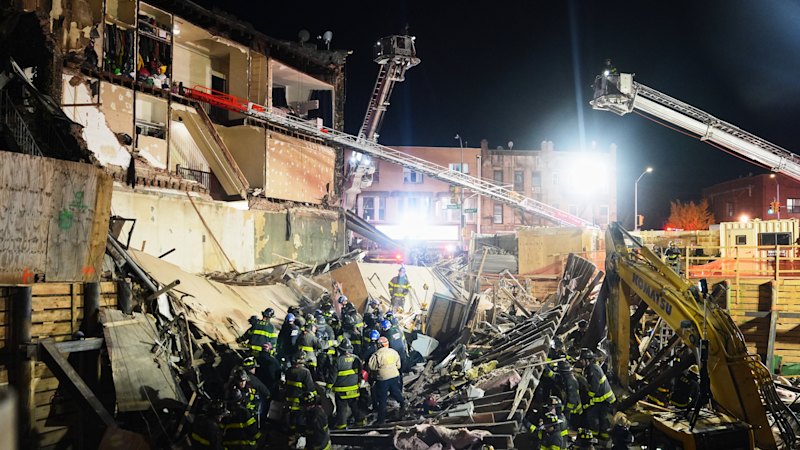
Instead, the ground beneath his party gave way.
By the morning of November 11, 2026, the wreckage was undeniable. California Republicans had not merely lost an election; they had suffered a contraction so severe it pushed them to the margins of relevance in the nation's most populous state. In the state Legislature, where the party already existed as a outnumbered minority, voters wiped out roughly a third of their remaining seats, leaving Democrats holding their largest statehouse supermajority in 150 years. Proposition 50—the redrawn congressional maps approved by voters the previous year—did its brutal work, sweeping away GOP House incumbents in pivotal districts. Even the party’s signature statewide ballot push, a heavily promoted voter ID initiative, went down in flames.
Hours after the scale of the defeat became clear, California GOP Chair Corrin Rankin announced she would not seek another term.
Stepping down was the easy part. Deciding what rises from the ashes is where the real war begins.
The Math of Disappearance
To understand the panic gripping conservative circles from Sacramento to San Diego, you have to look past the cable news punditry and examine the cold, unforgiving arithmetic of November 2026.
For years, the prevailing wisdom among California Republicans was that the Golden State was simply waiting for a tipping point. High housing costs, spiking utility bills, insurance cancellations in wildfire-prone foothills, and chronic homelessness were supposed to be the great equalizers. Surely, the logic went, when a family in Riverside or Fresno can barely afford groceries and electricity, they will punish the party that has controlled Sacramento for decades.
They didn't.
Instead, an anti-incumbent wave crashed over the midterm elections—and in California, voters aimed their anger almost entirely at the party out of power in the statehouse, driven by fierce backlash against national Republican leadership. Think of the California GOP like a local hardware store trying to sell hammers during a hurricane while its corporate headquarters three thousand miles away keeps insulting the townspeople. No matter how badly neighbors need nails and plywood, they refuse to walk through the front door.
Political scientists call this the nationalization of local elections. On the ground, it feels much
The Ghosts of Orange County (And the Battle for California’s Soul)
news
The fluorescent lights in the strip-mall office buzz with the sound of a dying neon sign. Outside, the late afternoon sun turns the San Gabriel Mountains a bruised purple, while six lanes of Interstate 10 roar with commuters who have stopped looking at political yard signs.
Inside, folding chairs scrape against industrial carpet. A half-empty pot of burnt coffee sits beside a stack of glossy mailers that nobody picked up.
This is the physical reality of the California Republican Party in the wake of recent historic election cycles. While national pundits dissect electoral maps from television studios in New York, the actual autopsy happens in rooms like this one—cramped, air-conditioned spaces tucked behind dry cleaners and nail salons from Bakersfield to San Diego.
Numbers tell a brutal story. Registered Republicans now make up roughly a quarter of the Golden State's electorate, trailing Democrats by millions of voters and even falling behind those who claim no party preference at all. Supermajorities in Sacramento pass legislation without needing a single GOP vote. Statewide office has become a mirage, unseen by a Republican since Arnold Schwarzenegger walked out of the Capitol in 2011.
Yet, spreadsheets cannot capture the quiet grief—or the sudden, fierce anger—simmering in those folding chairs.
To understand what happens next in the most populous state in the union, we have to look past the precinct data and examine a civil war being fought over identity, survival, and the definition of conservatism itself.
The Architecture of a Collapse
For decades, California was the cradle of modern American conservatism. It gave the nation Richard Nixon and Ronald Reagan. It birthed the 1978 tax revolt known as Proposition 13, a populist earthquake that reshaped fiscal policy across the country. Orange County, with its sprawling master-planned communities and aerospace defense contractors, was once so reliably red that Republican presidential candidates didn't even need to campaign there; they just came to collect checks.
Then, the ground shifted.
Think of a political party like a massive, multi-generational family business. For forty years, the California GOP sold a specific product: low taxes, deregulation, tough-on-crime policing, and suburban stability. That product worked brilliantly when the state’s economy ran on defense manufacturing, oil, and agribusiness, and when the electorate was overwhelmingly white and suburban.
The demographics of California transformed faster than the party's business model. By the time the state became majority-minority, the GOP found itself clinging to an inventory nobody in the rapidly growing coastal cities wanted to buy.
The turning point arrived in 1994 with Proposition 187, a ballot measure designed to deny public services to undocumented immigrants. Republican Governor Pete Wilson staked his reelection on it. He won that November, securing a short-term victory that functioned like an economic time bomb. Within a generation, millions of young Latinos—watching how the party treated their parents and neighbors—registered as Democrats and never looked back.
The erosion continued quietly, then all at once.
By the 2018 midterms, the unthinkable happened: Democrats swept every congressional seat in Orange County. Even after Republicans clawed back a few of those districts in subsequent cycles through razor-thin margins and hyper-localized campaigns, the overarching trajectory remained grim. When the dust settled on recent statewide and legislative contests, the party found itself staring at historic lows in voter registration share and legislative relevance.
Two Visions in the Wilderness
Consider a hypothetical scenario that plays out every weekend at county central committee meetings from Redding to Riverside.
Imagine two activists sitting across a scarred wooden table.
On the left is Elena, a thirty-four-year-old small business owner from the Inland Empire. Her parents immigrated from Guadalajara in the eighties, built a landscaping company from a single pickup truck, and instilled in her a fierce belief in hard work, faith, and skepticism of government overreach. Elena is furious about California's highest-in-the-nation gas taxes, soaring electricity bills, and retail theft laws that force her to ask a clerk to unlock a cabinet just to buy toothpaste. She believes the state is broken and ripe for a conservative revival—if only her party would stop sounding like it hates the people who live here.
On the right is Arthur, a seventy-two-year-old retired aerospace engineer from Huntington Beach. He has knocked on doors for every Republican nominee since Barry Goldwater in 1964. Arthur watches hours of national cable news every night. To him, California isn't just mismanaged; it is occupied territory. He doesn't want compromises, moderate candidates, or softened rhetoric on cultural flashpoints. He wants ideological purity, aggressive confrontation, and a leader who mirrors the combative populism dominating the national GOP.
Elena wants to win swing voters in suburban strip malls. Arthur wants to purge traitors from the party ranks.
Between them lies the chasm threatening to swallow the California Republican Party whole.
I have sat in rooms watching versions of Elena and Arthur argue until their voices went hoarse. You can smell the stale sweat and old paper; you can feel the exhaustion of people who have spent thousands of hours volunteering for candidates who lose by twenty points. When a movement loses consistently for twenty years, frustration curdles into paranoia. Instead of asking why voters rejected their message, factions turn inward, hunting for heretics.
The National Albatross
Here is the paradox that keeps California GOP strategists awake at three in the morning: the very things that win primary elections in Ohio, Texas, or Florida are political poison in Los Angeles and the Bay Area.
Because political media is completely nationalized, a candidate running for a state Assembly seat in suburban Sacramento cannot escape the gravitational pull of national Republican politics. Voters in swing districts don't just evaluate the local candidate's plan for fixing potholes or lowering housing costs; they project the entire national brand onto that candidate's forehead.
When national figures rail against California as a "failed state" or mock its residents, local Republicans pay the price at the ballot box.
Even when California Republicans field diverse, pragmatic candidates—and in recent cycles, the party has recruited an unprecedented number of women, Latino, Asian American, and Black candidates—those challengers still run into a brick wall of brand toxicity. Voters might like the individual candidate. They might agree with them on crime, inflation, and failing public schools. Yet, when they step into the voting booth and see that "(R)" next to the name, millions of Californians simply cannot pull the lever.
It is an invisible tax on every Republican campaign in the state, adding a five-to-ten-point handicap before a single dollar is spent on television ads.
The Cost of a One-Party State
Why should anyone outside the fractured ranks of the California GOP care whether the party survives? Even if you despise conservative politics, history offers a sobering warning about what happens when one party holds unchecked power for decades.
Competition forces accountability. Without a viable opposition party capable of threatening the majority's grip on power, governance grows sluggish, insular, and beholden to entrenched special interests.
Look at the daily realities confronting ordinary Californians today. The state boasts the fourth- or fifth-largest economy on earth, a dazzling engine of technological innovation and agricultural abundance. Simultaneously, it suffers from the highest poverty rate in the nation when adjusted for the staggering cost of living. Families spend half their income on rent. Young professionals pack U-Hauls bound for Austin, Phoenix, and Boise because buying a starter home in Los Angeles or San Jose requires a tech executive's salary.
Homelessness has transformed from an urban policy challenge into a sprawling humanitarian crisis visible under nearly every freeway overpass. Wildfires, supercharged by climate shifts and decades of forest mismanagement, have rendered homeowners insurance virtually unobtainable for millions of residents.
In a healthy two-party system, these failures would trigger a massive electoral realignment. The party out of power would step forward with a clear, compelling alternative, scoop up disaffected moderates, and sweep into office.
Instead, California voters look at the state's dysfunction, glance over at the Republican Party, see internal infighting and national culture-war obsessions, and reluctantly hand Democrats another supermajority. The absence of a credible rival has robbed California of its democratic immune system.
The Blueprint in the Rubble
Yet, if you look closely beneath the wreckage of statewide blowouts, faint green shoots are pushing through the concrete.
Political history rarely moves in a straight line. Remember that in the 1930s, the Republican Party was widely declared dead after Franklin D. Roosevelt's New Deal coalition crushed it in four consecutive presidential elections. Less than twenty years later, Dwight D. Eisenhower sat in the Oval Office.
In California, the path out of the wilderness isn't a mystery; it is already visible in the few places where Republicans are actually winning.
Look at local school board races across the state, where frustrated parents—many of them registered Democrats and independents—have rallied around candidates demanding academic rigor, transparency, and back-to-basics education. Look at the shift among working-class Latino and Asian American voters in the Central Valley and parts of Southern California, who are increasingly alienated by progressive policies on public safety, small business regulations, and meritocracy in higher education.
Recent ballot measures offer an even clearer roadmap. When Californians vote directly on issues stripped of party labels, they frequently side with center-right instincts. Voters have repeatedly rejected attempts to repeal Proposition 13's property tax protections. They have pushed back against efforts to bring back affirmative action in university admissions. Most tellingly, Californians overwhelmingly passed tough-on-crime reforms to roll back earlier leniency on retail theft and drug offenses—defying the wishes of the state's most powerful Democratic leaders.
The voters are there. The frustration is real. The appetite for change is palpable.
What is missing is a messenger the electorate trusts.
To capitalize on this opening, the California GOP faces an agonizing choice. It must decide whether it wants to be a social club for ideological purists or an actual political party built to win elections.
Winning in California requires ruthless discipline. It means focusing relentlessly on kitchen-table economics: the price of gas, the cost of groceries, the impossibility of buying a home, the safety of neighborhood streets, and the quality of local schools. It requires fielding candidates who look like modern California, speak the language of empathy rather than resentment, and possess the courage to break with national party orthodoxy whenever that orthodoxy hurts California families.
It also requires money—tens of millions of dollars invested not just in last-minute October attack ads, but in year-round community organizing inside immigrant neighborhoods, union halls, and college campuses where Republicans haven't shown their faces in thirty years.
The Choice at Sunset
Back in that strip-mall office off Interstate 10, the meeting finally breaks up.
The folding chairs are stacked against the wall. The burnt coffee is poured down the sink. Outside, the purple bruise over the San Gabriel Mountains has deepened into black, and the headlights on the freeway blur into an endless, rushing river of white and red light.
Elena walks to her SUV, carrying a clipboard with twelve new voter registration forms she collected outside a grocery store that morning. Across the parking lot, Arthur unlocks his sedan, shaking his head at a text message alert on his phone about the latest national outrage.
They both drive away into the California night, heading in opposite directions, leaving the dark office behind them—while four million cars rush past on the highway, waiting for someone, anyone, to give them a reason to turn off the exit.