Silence.
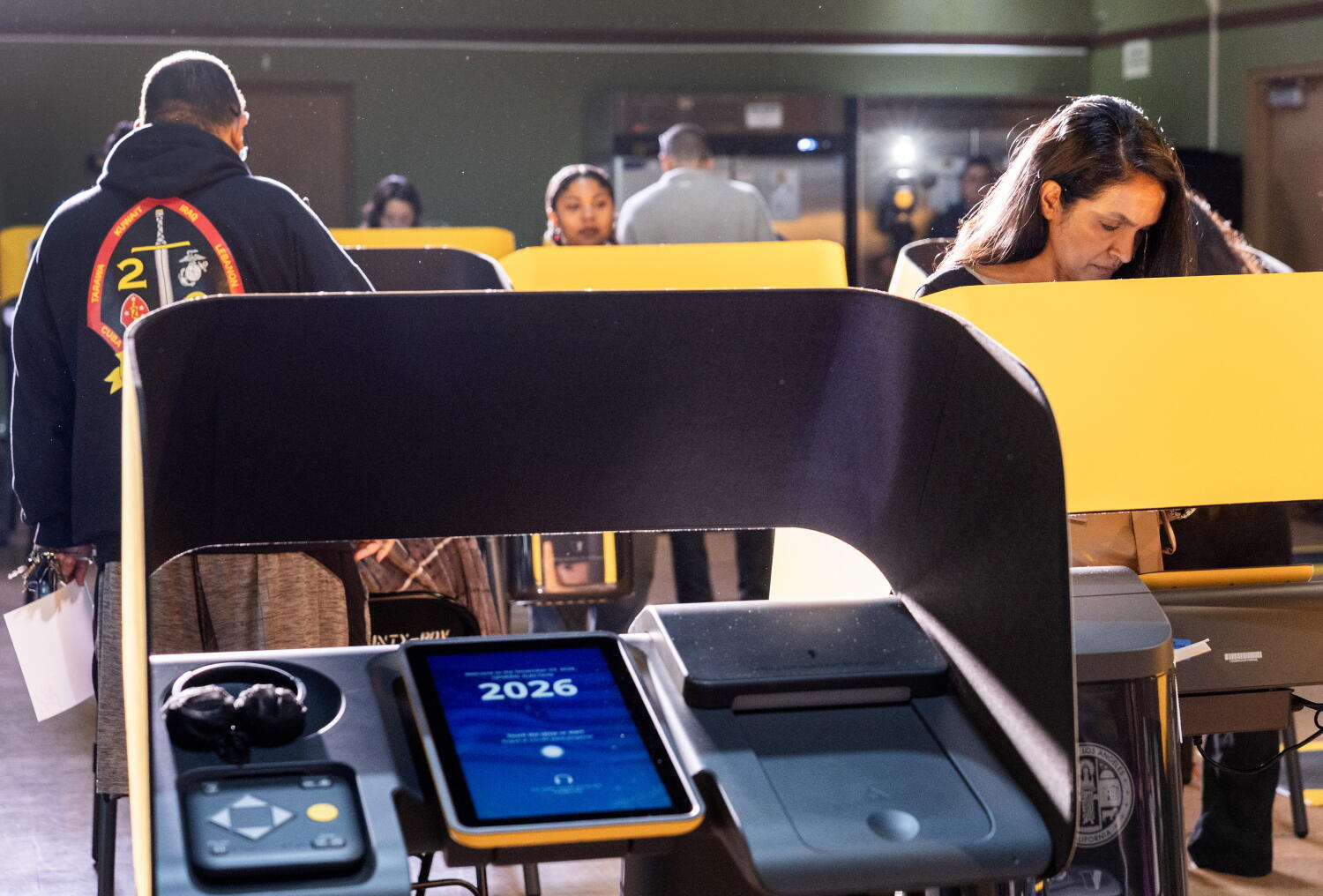
That is what actually settles over a county tabulation warehouse at three in the morning, long after the television anchors have loosened their ties, the cable chyrons have frozen into stale percentages, and the pundits have moved on to dissecting blame. In the fluorescent glare of a concrete room in Maricopa County, or a municipal basement in Wayne County, or a converted gymnasium in rural Pennsylvania, there are no cheering crowds or dramatic musical stings. There is only the rhythmic, pneumatic hiss of high-speed optical scanners, the dry rustle of heavy cardstock, and the low murmur of two election workers—one registered Democrat, one registered Republican—leaning over a single sheet of paper to verify whether a stray ink mark beside a candidate’s name represents a deliberate choice or a trembling hand.
When Americans search for 2026 election results and ask how many votes are left to count, they are usually looking for a number. They want a clean, comforting figure that tells them when the suspense will end and who won. Yet behind every uncounted ballot sitting in a sealed transfer bag is not a statistical error or a bureaucratic delay, but a deliberate, grueling human safeguard designed to make sure a single citizen's voice does not vanish into the noise.
We have gotten the story of election night completely backward. For decades, broadcast television trained us to treat democracy like a horse race with a photo finish at midnight, even though midnight on Election Day has never been anything more than an arbitrary milestone in a much longer, legally mandated marathon.
The Anatomy of the Uncounted Pile
To understand why millions of ballots remain untabulated days—and sometimes weeks—after the polls close in a major midterm cycle like the 2026 general election, you have to stop picturing a single giant bucket of votes and start picturing four distinct streams of paper moving at entirely different speeds.
Consider a hypothetical voter named Elena, a night-shift nurse in a suburban swing district who dropped her mail-in ballot into a secure municipal drop box at 6:45 p.m. on Tuesday evening. By 8:00 p.m., when the first wave of results flashed across national screens, Elena’s vote was not among them. In fact, according to standard state election administration procedures documented by the National Conference of State Legislatures (NCSL), Elena’s ballot had barely begun its journey.
Before an optical scanner can read a single bubble on Elena’s sheet, election officials must execute a sequence of security checks that cannot be rushed without breaking the law:
- Chain-of-Custody Reconciliation: Drop boxes and precinct bags must be transported under bipartisan escort to a central facility, where the physical count of envelopes is reconciled against poll-book sign-ins.
- Signature and Identity Verification: Every mail-in envelope is checked against the voter’s registration file. In states with strict verification protocols, bipartisan teams inspect mismatched signatures by hand.
- Extraction and Flattening: Envelopes are sliced open, secrecy sleeves are removed, and ballots folded inside envelopes for weeks are flattened so they do not jam high-speed scanners.
- Adjudication: Any ballot with a tear, a coffee stain, an overvote, or a checkmark instead of a filled-in oval is kicked out by the machine for human review.
In states like Pennsylvania and Wisconsin, state laws historically prohibited election workers from even opening mail-in envelopes until Election Day morning. Meanwhile, in Western states such as California, Washington, and Arizona—where the vast majority of the electorate votes by mail—ballots postmarked on Election Day can legally arrive days later, and voters often drop hundreds of thousands of mail ballots off in person on Tuesday itself. As the Bipartisan Policy Center has repeatedly noted in its post-election analyses, late-arriving drop-off ballots are the heaviest lift in American election administration because every single envelope enters the verification pipeline at the exact same hour the polls close.
Wait. Think about what that means for the numbers you see on your screen.
When an election tracker reports that "88 percent of the estimated vote is in," that denominator—the total number of votes cast—is itself an educated guess until every precinct reports its reconciliation logs and every mail room finishes logging its final trays. That remaining twelve percent is not missing. It is simply waiting in line for the exact same verification that early voters received three weeks earlier.
The Invisible Weight of the Provisional Ballot
If mail-in ballots are the river slowing down the count, provisional ballots are the boulders beneath the surface.
Picture another hypothetical character: Marcus, a twenty-two-year-old college senior who moved three blocks off campus in September and forgot to update his voter registration address before his state’s deadline. When Marcus walks into his neighborhood precinct on Election Day, his name is not on the printed poll book. Under the federal Help America Vote Act of 2002, poll workers cannot simply turn Marcus away. Instead, they hand him a provisional ballot—a regular paper ballot sealed inside a specialized, color-coded affidavit envelope—and instruct him to fill out his current and former addresses.
Marcus’s ballot goes into a separate, locked compartment. It will not be touched on election night. It cannot be touched on election night, because nobody knows yet whether Marcus already voted at his old precinct or whether he is legally eligible to cast a ballot in that specific local district.
Across the United States, hundreds of thousands of provisional ballots are cast in every federal midterm election. According to data compiled by the U.S. Election Assistance Commission (EAC) across recent federal cycles, provisional ballots regularly account for roughly one to two percent of all ballots cast nationwide—a slice that sounds trivial until you remember that congressional races and state legislative majorities frequently hinge on a few hundred votes.
Every single one of those envelopes requires a miniature investigation. Over the seven to fourteen days following Election Day, county clerks cross-check Marcus’s affidavit against state motor-vehicle databases, county tax rolls, and neighboring precinct poll books. If they confirm he did not vote elsewhere and lives within the district, his envelope is opened and added to the official tally. If he voted in the wrong precinct, state law dictates whether his votes for statewide offices count while his local races are invalidated.
I spent a November week once observing a county canvassing board in the Midwest, sitting in a folding metal chair behind a yellow rope while four administrators argued for twenty minutes over a single provisional envelope. The air smelled like stale coffee and wet wool coats. On the table sat a ballot belonging to an elderly man whose handwriting had deteriorated after a stroke, leaving a signature on his 2026 envelope that looked like a jagged seismograph compared to the looping cursive he had signed on his driver's license application in 2014.
Watching those four people—two Democrats, two Republicans—pull out a magnifying glass, compare the slant of the capital letters, check the voter's history of never missing a midterm in thirty years, and finally nod in unison to accept the ballot was one of the least glamorous, most moving things I have ever witnessed. There were no cameras in that room. Nobody went viral. Yet the sheer stubbornness with which those four exhausted bureaucrats protected one old man's right to be counted changed how I look at every stalled election map.
Why the Final Percentages Always Shift
If you have ever gone to bed watching a candidate lead by four percentage points, only to wake up to a dead heat or a flipped projection, it is easy to feel a cold spike of suspicion. Our brains are wired to look for patterns, and when a steady lead erodes overnight, instinct whispers that something unnatural is happening behind closed doors.
The truth is far simpler, though no less frustrating when you are staring at a screen waiting for certainty: different types of voters use different methods of voting, and those methods are counted in a strict, predictable order.
In many states, in-person Election Day votes are tabulated first because they are fed directly into precinct-level optical scanners by the voters themselves. When the polls close at 7:00 or 8:00 p.m., the poll worker prints out a paper receipt tape from the machine and transmits the encrypted memory card to county headquarters. Boom—thousands of votes appear instantly.
In other states, pre-processed early mail ballots are released the moment the polls close, creating an immediate surge for whichever party encouraged mail voting more aggressively, followed hours later by rural Election Day precincts whose physical memory cards have to be driven forty miles down dark two-lane highways to the county seat.
Then comes the "late mail" and "cure" phase.
What is ballot curing? Imagine Elena, our night-shift nurse, rushing to seal her envelope before her shift and accidentally signing her husband’s name line instead of her own, or forgetting to date the outer declaration where state law requires it. Under laws in roughly half of U.S. states—including battlegrounds like Arizona, Nevada, Pennsylvania, and North Carolina—county offices are required to notify voters when a technical defect threatens to disqualify their mail ballot.
Those voters are given a narrow window, often between three and eight days after Election Day, to "cure" the error by submitting a signed affidavit, uploading a photo ID, or appearing briefly at the county clerk's office. Because cured ballots are added in batches at the very end of the canvass, the final few thousand votes reported in a tight House race frequently skew differently from the votes counted on Tuesday night.
It is not a conspiracy. It is simply the calendar catching up with human error.
The Trap of the Unofficial Number
Part of our collective anxiety during the days after a midterm election comes from a misunderstanding of what the numbers on news websites actually are. Every single figure published on election night, and for days afterward, is strictly unofficial.
In the United States, there is no single national election system. Instead, the 2026 midterm is administered across more than 10,000 local jurisdictions—counties, cities, townships, and parishes—operating under fifty distinct sets of state statutes. When media organizations and data providers like the Associated Press report how many votes remain, they are synthesizing live feeds from county websites alongside historical turnout models and precinct-reporting trackers.
Sometimes a county updates its website once an hour; sometimes a small county clerk goes home at midnight to sleep because her three-person staff has been awake since 4:00 a.m., leaving 4,000 ballots locked in a vault until 9:00 a.m. the next morning. To someone refreshing a browser in New York or Los Angeles, that county looks frozen. In reality, three human beings are simply drinking coffee and getting ready to unlock a steel door.
Furthermore, the remaining vote total fluctuates because states do not stop receiving legal ballots on Tuesday night. Beyond domestic mail ballots postmarked by Election Day, every state must wait for ballots cast by active-duty military personnel and overseas citizens under the Uniformed and Overseas Citizens Absentee Voting Act (UOCAVA). A Marine stationed in Okinawa or a diplomat in Nairobi has legal grace periods—extending up to ten or even fourteen days in several states—for their ballot to reach their home county registrar.
Consider what happens next: until those statutory deadlines pass, no county board can legally convene its final canvass, audit its machine tallies against paper receipts, and certify the official results to the Secretary of State.
The Cost of Demanding Instant Certainty
We live in an era where a package ordered at noon arrives on our doorstep by five, where bank transfers clear in seconds, and where live sports scores update to the millisecond. Against that backdrop, waiting five days to find out who won a congressional seat in California's Central Valley or an Arizona county board feels broken. It feels archaic.
And to be honest, the waiting is exhausting. When control of the U.S. House of Representatives or a razor-thin state senate hangs on six uncalled races, the information vacuum breeds rumor, cynicism, and exhaustion. People feel powerless staring at progress bars that refuse to move from 94 percent to 100.
Yet speed and accuracy in a paper-ballot election are locked in a permanent tug-of-war. You can have instant results on election night, or you can have paper trails, bipartisan signature verification, military ballot grace periods, provisional protections for voters who moved, and public audits before certification. You cannot have both at the exact same time.
Think of counting a modern American election less like tallying an online poll and more like conducting a forensic audit while the whole world watches over your shoulder. Every ballot is a legal instrument. Every envelope is evidence. If an election worker rushes and feeds a creased ballot through a scanner twice, the reconciliation log will catch the discrepancy at the end of the night, forcing the entire batch to be pulled, hand-counted, and re-scanned from scratch. Slowing down is what keeps the count honest.
What Happens When the Machines Finally Stop
Eventually, the transfer bags are empty. The cure deadlines expire. The overseas military envelopes arrive, are verified, and are fed through the last quiet rollers of the optical scanners.
In county courthouses across the country, canvassing boards gather in public rooms to conduct post-election audits—pulling random batches of paper ballots by hand to prove that the computers read the ink accurately—before signing the formal certificates of election. Only then do the numbers become real in the eyes of the law.
Down in that concrete warehouse in Maricopa, or that quiet gymnasium in Pennsylvania, the fluorescent lights finally click off. A clerk turns a heavy brass key in the deadbolt of a room stacked floor-to-ceiling with sealed cardboard boxes, each labeled with precinct numbers and signed across the tape by two neighbors who disagree on almost everything except the rule that every valid piece of paper inside belongs to a citizen who showed up.