Silence.
When a man who has worn the same black leather jacket for three decades finally sets it down on the back of a boardroom chair, the sound it makes is almost nothing, yet the whole world hears the thunder.
Think about what happens to a room when gravity suddenly shifts. For more than thirty years, Jensen Huang has been the unmistakable center of mass at Nvidia—the co-founder who took a struggling graphics chip maker from the brink of bankruptcy in the mid-nineties and turned it into the beating silicon heart of modern artificial intelligence. Every investor, every engineer, every breathless headline has treated Jensen and Nvidia as a single, indivisible organism. You do not mention one without conjuring the other.
Now imagine a hypothetical Tuesday morning in Santa Clara, California, not long after the succession rumors turn into formal filings and the transition clock officially starts ticking. The coffee in the glass carafes is still hot. The fluorescent hum of the boardroom feels louder than usual. Outside the glass walls, Wall Street traders are refreshing their terminals with white knuckles, wondering whether a multi-trillion-dollar empire can survive the departure of its founder without fracturing under the weight of its own expectations. Around the polished table sit the directors tasked with steady hands—and near the center sits a woman who has spent her entire career mastering the exact kind of high-stakes, zero-margin-for-error transitions that make silicon valley executives lose sleep.
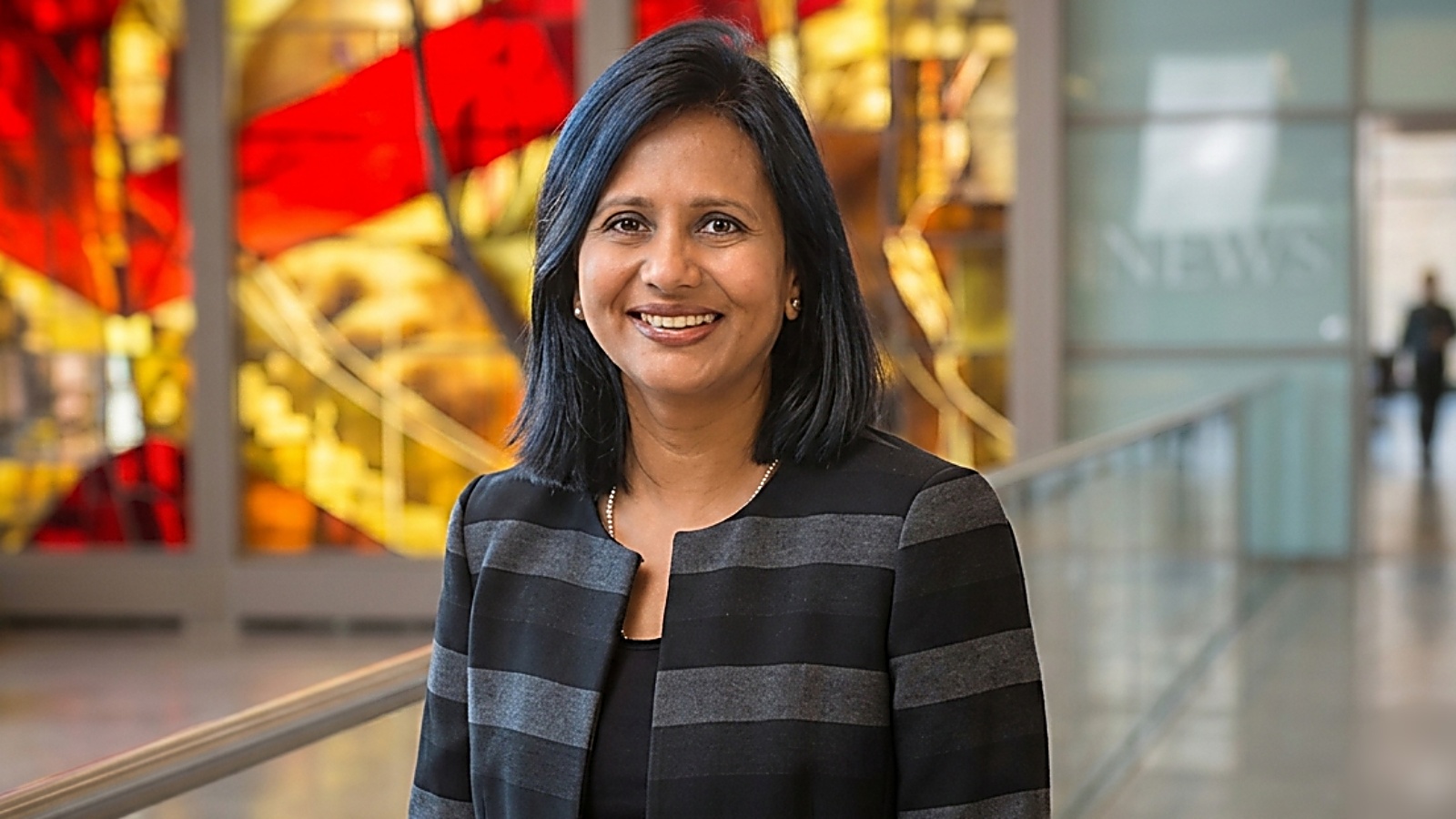
Her name is Aarti Shah.
If you ask ten casual tech observers to name the power brokers inside Nvidia’s inner sanctum, nine of them will stumble after saying Jensen’s name. They might guess a chip architect from Stanford or a venture capitalist from Sand Hill Road. Almost none of them will point to a pharmaceutical statistician born in India who spent twenty-seven years climbing the ranks of Eli Lilly before joining Nvidia’s board of directors in 2020.
That blind spot is precisely why her story matters right now.
The Myth of the Lone Genius
We have a terrible habit in modern business journalism of mistaking a charismatic founder for the entire machine. I have watched this play out up close across two decades of covering corporate transitions, sitting in sterile hotel ballrooms during shareholder meetings and watching panic ripple through institutional desks the moment a visionary CEO hints at stepping back. When Steve Jobs stepped away from Apple, the consensus among seasoned analysts was polite pessimism. When founders leave, the story goes, the soul leaves with them, and what remains is merely a caretaker committee polishing the silverware.
It is an intoxicating myth because it simplifies a messy reality into a single hero’s journey. It is also dangerously wrong.
A company worth trillions of dollars does not run on charisma alone; it runs on governance, capital allocation, supply chain discipline, and the quiet, unglamorous work of institutionalizing brilliance so that it outlives any one person. When Jensen Huang’s exit moves from whispered speculation to boardroom reality, the survival of Nvidia’s dominance will not be decided on a keynote stage under stage lights. It will be decided in closed-door committee rooms by directors who know how to separate noise from signal.
And nobody in that room understands signal versus noise quite like Aarti Shah.
From Mumbai to the Calculus of Survival
To understand what Aarti Shah brings to the table during a leadership earthquake, you have to strip away the glossy corporate biography and look at what she actually did for a living before tech reporters ever learned how to spell her name.
Born and raised in India, Shah earned her bachelor’s and master’s degrees in statistics and mathematics at Maharaja Sayajirao University of Baroda before crossing the ocean to earn a PhD in applied statistics from the University of California, Riverside. Think about that discipline for a moment. Statistics is not the art of guessing; it is the rigorous science of making life-or-death decisions when you only have incomplete, noisy data.
In 1994, she joined Eli Lilly and Company as a senior statistician. Over the next twenty-seven years, she did not merely survive in one of the most heavily regulated, fiercely competitive industries on earth—she rose to become Senior Vice President and Chief Information and Digital Officer, reporting directly to the CEO and sitting on the executive committee.
Let us pause and translate pharmaceutical leadership into plain English, using a simple analogy. Imagine running a casino where every single slot machine costs two billion dollars to build, takes twelve years to pull the lever, and has a ninety percent chance of paying out zero—except if you miscalculate the odds, people do not just lose money, they lose their lives. That is drug development. Every clinical trial is an exercise in brutal statistical truth. You cannot charm a molecule into passing Phase III trials. You cannot give a inspiring keynote speech to a regulatory agency and hope they overlook flawed data. Either the numbers hold under crushing scrutiny, or the whole project collapses.
Shah spent nearly three decades living inside that crucible. She helped steer global drug development programs, managed vast clinical data ecosystems, and eventually led Eli Lilly’s digital transformation—dragging a 140-year-old pharmaceutical giant into the era of cloud computing, advanced analytics, and artificial intelligence long before "AI transformation" became a lazy buzzword on every quarterly earnings call.
When Nvidia recruited her to its board of directors in June 2020, most observers barely blinked. Back then, Nvidia was still widely viewed through the lens of gaming GPUs and early data center expansion, valued at a fraction of what it would command just a few years later. Adding a pharma executive looked like standard corporate diversification.
Looking back, it looks like foresight.
Why a Pharma Veteran Holds the Keys to a Silicon Empire
By the time Nvidia exploded into the undisputed kingmaker of generative artificial intelligence, the company’s biggest threats were no longer purely technical. Sure, competitors were racing to build rival accelerators, and hyperscalers were designing custom in-house silicon. Yet inside the boardroom, the real existential headaches looked remarkably similar to the ones Aarti Shah had spent her career solving.
First, there is the problem of hyper-scale complexity. When a company grows at an exponential clip, its internal systems crack under the strain. Supply chains stretch across continents; customer concentration creates terrifying revenue cliffs; regulatory scrutiny from Washington to Brussels tightens like a vise. Shah had already navigated global regulatory labyrinths and modernized legacy digital infrastructure at massive scale.
Second, there is the intersection of AI and biology—the exact frontier where Jensen Huang himself repeatedly insisted the next great wave of computing would land. Nvidia was no longer just selling chips to chatbot makers; it was building foundational models for protein folding, drug discovery, and healthcare imaging. Having a board member who had actually sat in the chair of a pharmaceutical Chief Information Officer—someone who knew firsthand what hospital systems, researchers, and drugmakers actually needed versus what Silicon Valley engineers thought they needed—turned out to be an unfair advantage.
Third, and most crucially, there is governance during a generational handoff.
Consider what happens when a founder steps down. Every ambitious vice president suddenly wonders if their faction will win the crown. Every major customer quietly calls their account rep to ask if the product roadmap is about to stall. Every activist investor smells blood in the water. In those moments, the board of directors stops being a ceremonial oversight body and becomes the literal nervous system of the corporation.
Shah serves on Nvidia’s Nominating and Corporate Governance Committee—the very engine room responsible for board composition, executive oversight, and leadership continuity. Let that sink in. While the public stares at the departing CEO, the Nominating and Corporate Governance Committee is the body tasked with ensuring the institution does not wobble on its axis.
The Human Weight of Being the Outsider Who Sees Everything
I remember speaking once with a former Fortune 500 board chair about what separates a decorative director from an indispensable one during a crisis. He leaned across the table, lowered his voice, and told me something I have never forgotten: "The best director in any crisis is the person who didn't grow up drinking the company's own Kool-Aid, because they are the only one brave enough to ask the stupid question that saves everyone's skin."
That is Aarti Shah’s superpower inside Santa Clara.
She did not grow up in the semiconductor fraternity of Silicon Valley, where everyone went to the same three universities, worked at the same four chipmakers, and shares the same blind spots about hardware cycles. Her instincts were forged in Gujarat, sharpened in Riverside, and battle-tested in Indianapolis. She knows what it feels like to be the woman in the room whose quiet, methodical rigor cuts through hours of chest-thumping bravado.
Think about the emotional reality of that position right now.
Imagine sitting at that board table as the era of Jensen Huang winds down. There is immense gratitude in the room—how could there not be, when one man’s stubborn conviction turned a three-hundred-dollar graphics card company into a colossus? Yet alongside that gratitude sits a cold, terrifying responsibility. If the transition falters, history will not blame the departing founder; history will blame the board that failed to catch the baton.
I have felt a smaller version of that exact dread when stepping into a leadership vacuum after a beloved mentor left an organization I worked for. You walk into the room and realize that the safety net is gone. People look at you not for nostalgia, but for certainty—even when you yourself are staring at an uncertain map, praying your calculations hold. It is lonely work. It requires setting aside ego and relying entirely on process, preparation, and quiet nerve.
Shah has built an entire life around quiet nerve. Alongside her role at Nvidia, she has served on the boards of Northwestern Mutual and Sandoz, and she has poured years of energy into mentoring women in STEM and serving on nonprofit boards like the Indianapolis Public Library Foundation and the Center for Interfaith Cooperation. Look at the pattern of her choices: insurance, generic medicines, public libraries, interfaith bridges, semiconductor governance. Every single institution she touches is built on one foundational currency—public trust over the long haul.
What Everyone Misses About the Post-Jensen Era
When financial commentators dissect Nvidia’s future without Jensen Huang, they inevitably obsess over the horse race. Who gets the CEO title? Will it be an internal operations titan, a product visionary, or an external heavyweight? They treat succession like a coronation, as if finding one magical replacement will solve everything.
But the real problem lies elsewhere. No single human being can replace a thirty-year founder who invented the company’s culture from scratch. Trying to clone Jensen Huang would be suicide.
Instead, the post-Jensen era requires a structural evolution: shifting from a founder-led sprint to an institution-led marathon. In a founder-led sprint, one person holds the entire architecture of the company in their head, making rapid intuitive leaps that nobody else dares challenge. In an institution-led marathon, the board and the executive team must replace intuition with repeatable systems, transparent succession pipelines, and disciplined risk management—without suffocating the engineering audacity that made the company great in the first place.
That balance is excruciatingly hard to strike. Tip too far toward bureaucracy, and Nvidia becomes the next lumbering tech dinosaur, slowly losing its edge to hungrier startups. Tip too far toward chaos, and internal politics tear the engineering ranks apart while competitors feast on delayed product roadmaps.
Walking that tightrope requires someone who understands both sides of the equation—someone who respects the messy, unpredictable nature of scientific discovery while insisting on ironclad statistical and operational discipline. It requires an executive who has watched billion-dollar bets fail in clinical trials and still kept the research pipeline moving forward without panic.
It requires Aarti Shah.
The Seat at the Table
Watch the headlines over the coming months, and you will see the same predictable cycle repeat itself. Analysts will breathlessly parse every word of Nvidia’s earnings calls. Speculators will trade on every rumor about executive departures, stock volatility, and rival chip benchmarks. Cameras will follow whoever steps onto the stage to wear the mantle of leadership next.
And largely out of frame, in a quiet conference room where phones are left at the door and spreadsheets replace slogans, Aarti Shah will open her notebook, adjust her glasses, and look closely at the numbers that actually determine whether an empire endures.
The leather jacket was never what held the company together. It was always the architecture underneath.


