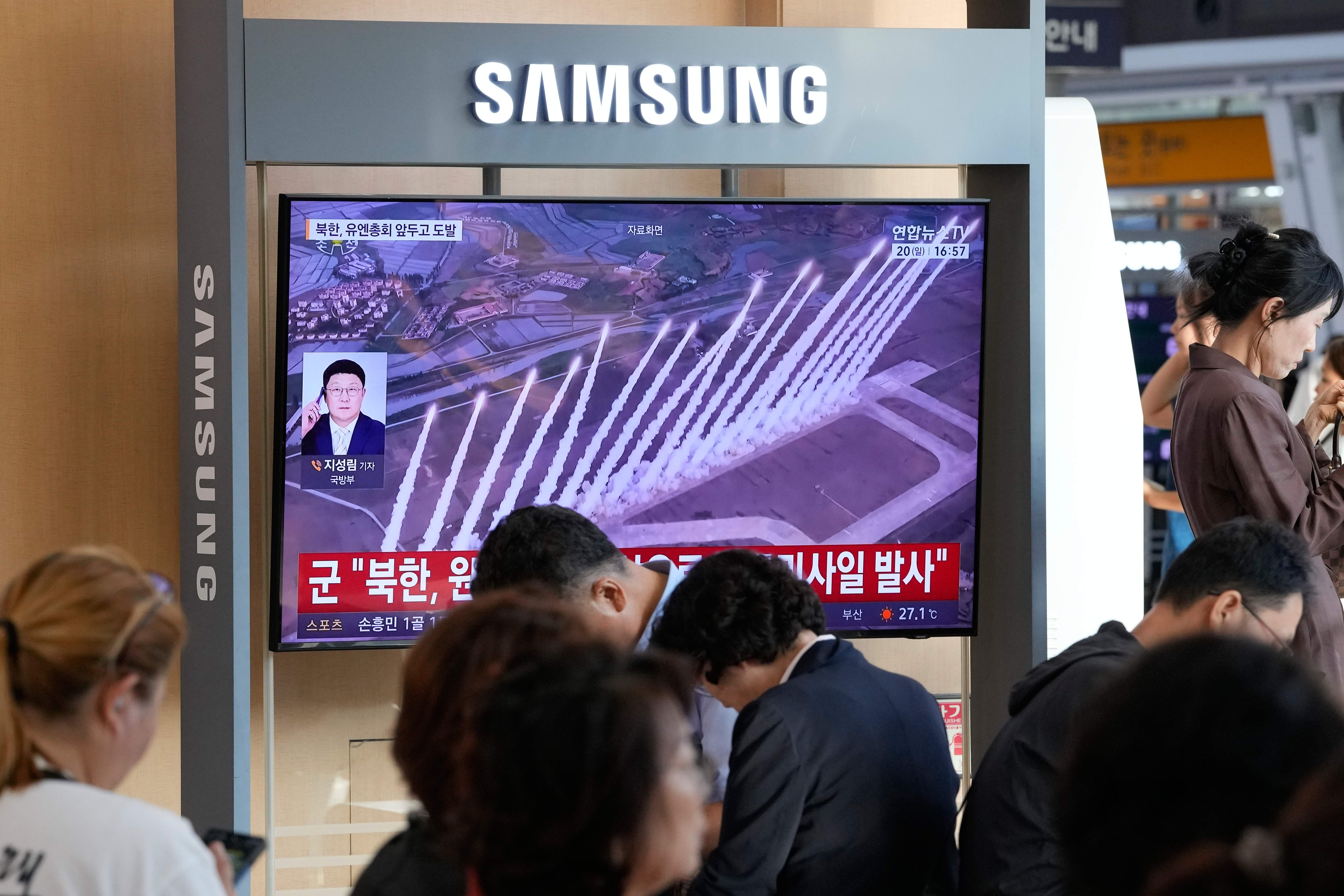
Pyongyang launched a pair of short-range ballistic missiles toward its eastern waters, according to military officials in Seoul, marking yet another calculated escalation in an already tense regional standoff. The missile tests, detected by the Joint Chiefs of Staff, landed just outside the exclusive economic zone of neighboring nations but reignited urgent debates regarding deterrence, missile defense architecture, and the shifting diplomatic vacuum in Northeast Asia.
For months, defense analysts have tracked a subtle yet dangerous evolution in the capability of North Korea's strategic forces. These are not merely routine artillery exercises or antiquated Scud launches. The trajectory data, propulsion signatures, and mobility displayed during recent tests point toward a determined effort to refine tactical nuclear delivery systems capable of bypassing regional missile shields.
The Technological Leap In Solid-Fuel Propulsion
Western intelligence agencies often focus purely on the launch count, missing the critical engineering shifts happening inside secretive state-run laboratories. The transition from liquid-fueled systems to advanced solid-fuel propellants represents a profound transformation in operational readiness.
Liquid-fueled engines require extensive pre-launch preparation, making them sitting ducks for reconnaissance satellites operated by regional adversaries. Solid-fuel missiles, by contrast, arrive at the launch site fueled and ready to fire within minutes. This drastically reduces the window for preemptive neutralization.
+-------------------------------------------------------+
|              Liquid vs. Solid Fuel Metrics            |
+---------------------+---------------------------------+
| Metric              | Liquid-Fueled / Solid-Fueled    |
+---------------------+---------------------------------+
| Prep Time           | Hours to Days / Minutes         |
| Mobility            | Restricted / Highly Mobile      |
| Detection Risk      | High (During Fueling) / Low     |
+---------------------+---------------------------------+
When a battery moves into position under the cover of a mountain tunnel network, rolls out a transporter-erector-launcher, and clears the area within a single digit timeframe, standard early-warning protocols face an unprecedented stress test. The recent ballistic missiles followed a depressed trajectory designed to evade standard interceptor batteries, underscoring how adversary doctrine has adapted to modern defensive arrays.
Geopolitical Timing In A Fractured Security Environment
Context matters in military signaling. These launches rarely happen in a vacuum. They coincide with shifts in diplomatic alignment, joint defense drills conducted by regional allies, and domestic economic pressures inside the isolated regime.
By pushing the envelope incrementally, Pyongyang tests the red lines of Washington and Seoul without triggering an immediate kinetic response. This salami-slice strategy erodes deterrence over time. Each individual launch feels manageable, yet the cumulative effect normalizes a higher baseline of regional instability.
Furthermore, the expanding military partnership between Pyongyang and Moscow has introduced a troubling variable. Observers note a reciprocal exchange of conventional munitions for advanced technological assistance. If aerospace engineering support or guidance system telemetry is flowing across the northern border, the reliability of these weapons systems increases dramatically.
The Cost Of Deterrence Fatigue
Policy makers in allied capitals face a persistent danger known as deterrence fatigue. When missile tests occur with regular frequency, public outrage dulls, media coverage shrinks, and diplomatic channels atrophy.
Military planners cannot afford such complacency. Every successful telemetry test yields critical flight data that engineers use to correct guidance flaws, improve heat shield durability, and increase payload capacity. The cumulative nature of these tests means that defensive networks must maintain absolute perfection every single day, while the opposing side only needs a few successful iterations to perfect a strategic threat.
Reassessing regional security requires moving past ritualistic condemnations at international forums. The reality on the ground demands hardened command-and-control infrastructure, expanded real-time intelligence sharing among allies, and a willingness to confront the supply chains feeding these clandestine weapons programs. As these ballistic missiles continue to arc across the morning sky toward eastern waters, the margin for strategic error shrinks closer to zero.