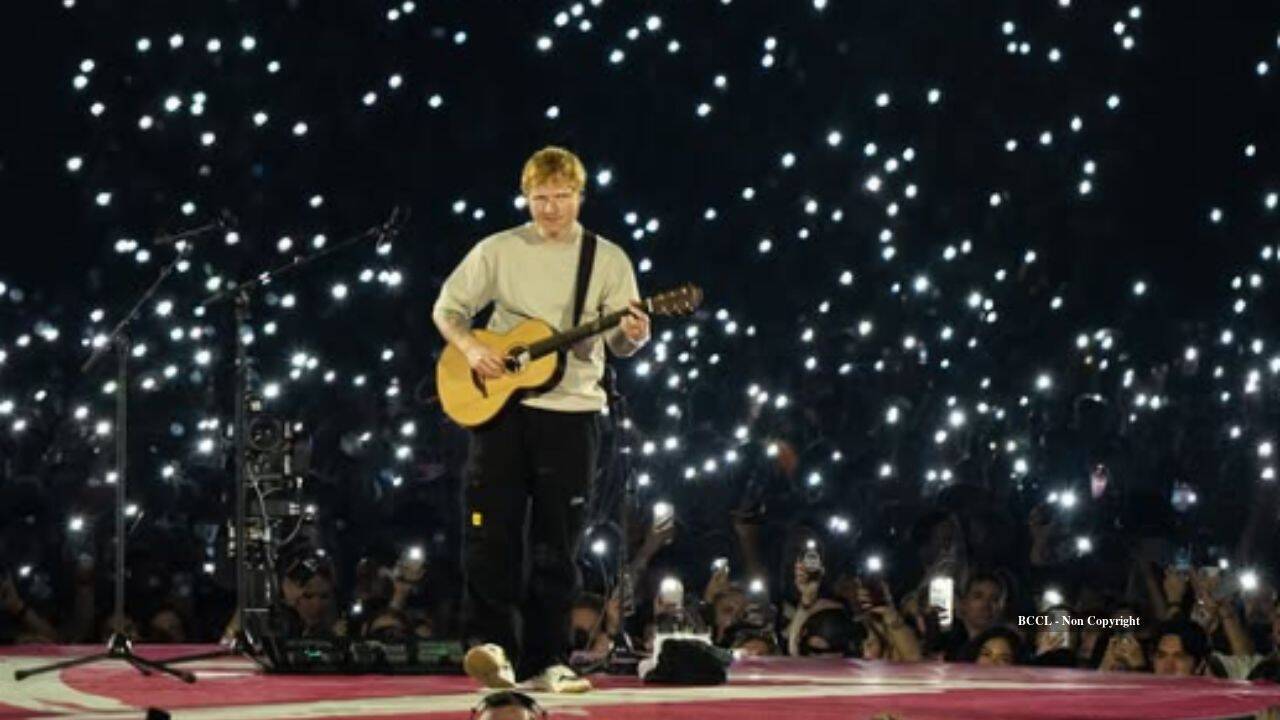
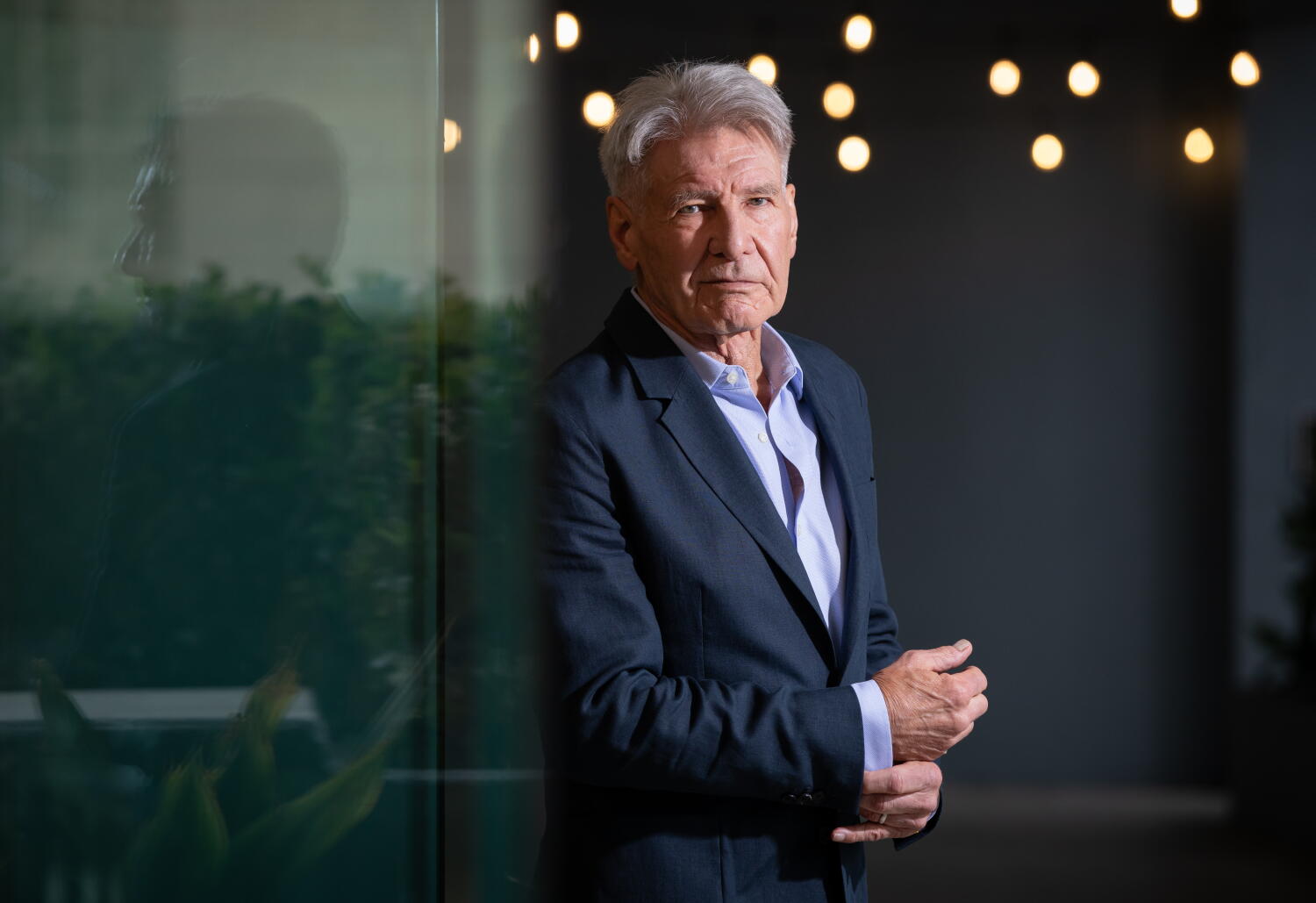
Silence.
That is the first thing you notice when you step off the cobblestone heat of St. Peter’s Square and pass beneath the heavy stone arches of the Apostolic Palace, where the ambient roar of Roman traffic simply vanishes into thick plaster and centuries of incense. I have stood in those anterooms, watching the Swiss Guard shift their weight in striped wool, feeling the strange atmospheric pressure that settles over anyone waiting to cross a threshold guarded by two thousand years of institutional memory. You do not walk into the Vatican to improvise. Every step is measured, every title rehearsed, every handshake choreographed down to the angle of the wrist.
Which makes the image of Bob Dylan standing there—eighty-five years old, wearing the kind of dark, severe tailoring that makes him look less like a rock star and more like an itinerant nineteenth-century riverboat gambler—feel like a glitch in the historical record.
When word slipped out that Bob Dylan had met privately with Pope Leo XIV inside the Vatican, the news wires did what news wires always do. They flattened a collision of two massive cultural universes into a three-paragraph bulletin. They noted the date, the duration of the audience, the exchange of modest gifts, and the general warmth of the encounter. Cold facts. Clean dates. Zero pulse.
If you only read the wire copy, you missed the entire point of why two aging men—one carrying the keys of St. Peter, the other carrying sixty-five years of American restlessness—decided they needed to sit across from each other without cameras rolling.
To understand what actually happened in that room, you have to stop thinking about celebrity photo-ops and start thinking about the heavy, suffocating weight of speaking for people who expect you to have all the answers.
The Weight of the Crowns Nobody Asked For
Consider, for a moment, a hypothetical young seminary student sitting in a cramped apartment in Chicago back in the late 1970s. Let’s call him Marcus, though he stands in for thousands of men who came of age when the Catholic Church was still reeling from the tectonic aftershocks of the Second Vatican Council. On Marcus’s desk sits a worn copy of Thomas Merton’s The Seven Storey Mountain. Next to it, leaning against a stack of theology textbooks, is a vinyl copy of Slow Train Coming.
For Marcus, there was no contradiction between the two. Both Merton and Dylan were wrestling with the exact same terror—the realization that modern life had stripped human beings of their vocabulary for the sacred, leaving them wandering through shopping malls and missile silos with an ache they couldn't name.
Now fast-forward nearly half a century.
Robert Francis Prevost, the Chicago-born Augustinian friar who spent decades serving among the poor in Peru before ascending to the papacy as Pope Leo XIV, carries the formal, terrifying authority of the Roman Catholic Church. Across the table sits Robert Zimmerman, the kid from Hibbing, Minnesota, who spent six decades furiously dodging every label humanity tried to pin onto his lapel.
Why does a meeting between Pope Leo XIV and Bob Dylan matter right now? Because both men occupy positions of immense symbolic gravity at a moment when the institutions they represent—organized religion on one hand, and the mythic power of popular song on the other—are fighting for relevance in a world addicted to algorithmic noise.
Look at the trajectory of both men. One became the supreme pontiff of 1.4 billion Catholics, inheriting a fractured global flock that demands clarity on everything from artificial intelligence to war, poverty, and doctrinal survival. The other became the reluctant laureate of the twentieth century, awarded the Nobel Prize in Literature in 2016 for creating new poetic expressions within the great American song tradition, yet still refusing to explain what half his lyrics mean.
They are both, in vastly different ways, custodians of old languages in an era that only wants soundbites.
The Road to Rome Was Paved in 1997
To grasp the emotional undercurrent of Dylan’s audience with Pope Leo XIV, you have to rewind the tape to a chilly September evening in Bologna, Italy, nearly three decades earlier.
In 1997, Dylan stood on a massive outdoor stage at the Italian National Eucharistic Congress, a frail, seventy-seven-year-old Pope John Paul II seated nearby in a white armchair. Dylan played "Knockin' on Heaven's Door," "A Hard Rain's A-Gonna Fall," and "Forever Young." Afterward, he walked up the steps, took off his cream-colored cowboy hat, and clasped the Pope’s trembling hands.
At the time, Cardinal Joseph Ratzinger—who would later become Pope Benedict XVI—was deeply skeptical of having a rock musician perform at a Eucharistic Congress. Ratzinger famously wrote later that he wondered whether it was right to let a prophet of a completely different kind take the stage before the pontiff. Yet John Paul II took Dylan’s lyrics and built an entire homily around "Blowin' in the Wind," telling three hundred thousand young people that the answer to their longing wasn't blowing in the wind—it was blowing in the Spirit.
That moment in 1997 cracked open a door that never quite shut again.
Dylan’s relationship with faith has always been jagged, fierce, and fiercely private. When he converted to evangelical Christianity in the late 1970s, releasing Slow Train Coming, Saved, and Shot of Love, his secular fanbase revolted. Critics mocked him. Concertgoers booed when he refused to play "Like a Rolling Stone" and instead preached between songs about the Book of Revelation. People wanted him to be their political oracle, not a street-corner evangelist.
Yet if you listen closely to Dylan’s catalog from 1962 all the way through Rough and Rowdy Ways, the biblical cadence never left him. It wasn't a phase; it was his primary operating system. His songs are saturated with scripture, judgment, grace, betrayal, and the persistent, nagging suspicion that human beings are accountable to something higher than their own appetites.
When Pope Leo XIV welcomed Dylan to the Vatican, he wasn't greeting a novelty act or a nostalgic relic from the 1960s. As an Augustinian, Pope Leo belongs to an order rooted in the teachings of St. Augustine of Hippo—a man who spent his youth chasing sensual pleasure, theatrical applause, and philosophical fads before famously writing, "Our hearts are restless until they rest in You."
If there is a single phrase in Christian literature that summarizes Bob Dylan’s entire sixty-year Never Ending Tour, it is that exact line from Augustine.
What Happens When Two Listeners Share a Table
People often ask what two figures of this magnitude actually talk about when the doors close and the translators step back. Do they debate theology? Do they talk about music? Do they trade stories about the American Midwest?
Let’s be honest about what we know and what remains behind closed doors. The Vatican’s Holy See Press Office rarely releases transcripts of private audiences, protecting the sanctity of confidential conversation so guests can speak without performing for history. We know the meeting took place during Dylan’s European tour swing, that it was initiated through quiet diplomatic and cultural channels, and that the conversation centered on the state of modern culture, peace, and the role of art in preserving human dignity.
The rest requires reading the room through the lives both men have actually lived.
Think about what Pope Leo XIV brings to that table. Before he ever wore the white cassock, Robert Prevost spent years in Trujillo, Peru, walking dusty streets where poverty wasn't an abstract policy debate—it was an empty stomach and a leaking roof. As the first American-born pope in history, Leo XIV understands the specific spiritual sickness of the United States: the loneliness masked by hyper-connectivity, the political tribalism that turns neighbors into enemies, and the quiet despair that settles over a wealthy nation that has forgotten how to hope.
Now think about what Bob Dylan brings to that same table. Dylan has spent more nights on tour buses and in anonymous hotel rooms than almost any living human being. He has stared out at millions of faces across six continents—from rusted-out steel towns in Pennsylvania to packed arenas in Tokyo and Rome. He has watched empires rise, ideologies rot from the inside, and generations trade their idealism for cynicism.
Imagine a metaphor for that encounter. Picture two night-watchmen standing on opposite walls of the same besieged city, finally meeting by a small brazier at three in the morning. Neither man can stop the storm rolling in over the horizon. Neither man has a magic wand to fix the fractures in the walls. They simply compare notes on what they’ve seen in the dark, warming their hands over a small fire before walking back out to their posts.
I remember talking once with an older Italian journalist who had covered three papacies from the Sala Stampa. He told me that the most revealing moments in the Vatican never happen during the big encyclicals or the balcony blessings. They happen when a pope meets someone who doesn't want anything from him—no political endorsement, no financial favor, no doctrinal concession.
Dylan didn't come to Rome to convert, to campaign, or to rehabilitate his image. At eighty-five, Bob Dylan has nothing left to prove to anyone on earth. He came because, at the end of a long road, a man who has spent his life searching for truth inside songs recognizes another man who has spent his life searching for truth inside prayer.
The Quiet Rebellion Against a Loud World
Why did this story strike such a nerve across the globe, generating millions of searches and sparking heated debates across dinner tables and social media feeds?
Because deep down, we are starving for encounters that aren't transactional.
Every day, we are bombarded by manufactured alliances—tech billionaires posing with politicians, pop stars endorsing brands, influencers trading outrage for clicks. Everything feels staged, monetized, and hollow. We have become so accustomed to cynicism that when two people with genuine, hard-won authority sit down together simply to acknowledge each other’s humanity, it feels almost subversive.
Look at the subtle symmetry between Pope Leo XIV and Bob Dylan:
- Both reject easy answers. Leo XIV has consistently steered the Church away from reactionary slogans, emphasizing patient discernment, synodal listening, and solidarity with the forgotten. Dylan has spent his entire career dismantling the expectations of anyone who tried to turn him into a cardboard hero.
- Both understand the power of memory. In a culture suffering from collective amnesia, where yesterday’s tragedy is erased by today’s notification, the papacy and the folk tradition serve the same stubborn purpose: they refuse to let us forget where we came from.
- Both speak in parables. Jesus taught in stories because raw dogma bounces off hardened hearts, while a story slips past the defenses and detonates days later. Dylan writes in surreal, prophetic fragments for the exact same reason.
When a critic once complained that Dylan’s later songs were too dark, too obsessed with mortality and historical ruins, they missed the warmth beating underneath the gravel. Dylan isn't mourning the end of the world; he is mourning the carelessness with which human beings treat their own souls. And when Pope Leo XIV speaks to crowds in St. Peter’s Square about the wounds of modern society, he isn't scolding them from an ivory tower—he is pleading with them to wake up before they sleepwalk past their own lives.
The Weight of the Final Mile
There is a particular vulnerability that comes with age, even when you are surrounded by aides, security details, and protocols.
I have watched aging mentors—writers, pastors, musicians—navigate their eighties. The body slows down. The voice thins out or roughens like sandpaper. Friends disappear one by one, leaving you standing in a shrinking circle of people who remember the world before everything went digital. You become acutely aware that your remaining words carry a different kind of gravity, not because you are infallible, but because you no longer have time to waste on nonsense.
In Dylan’s 2020 masterpiece "I Contain Multitudes," he sang about carrying all of life’s contradictions inside one fragile frame—the sacred and the profane, the saint and the sinner, the Beethoven sonatas and the Rolling Stones records. It was the confession of a man who had finally stopped trying to edit himself into a neat, coherent biography.
Pope Leo XIV, stepping into the shoes of the Fisherman in his late sixties and seventies, carries a parallel awareness. He knows the Church he leads is battered by scandals, secularization, and internal polarization. He knows he cannot single-handedly heal every wound. Yet day after day, he steps out onto the loggia, raises his hand, and offers a blessing to a city and a world that often doesn't even know what it is being blessed for.
When Dylan walked into that papal apartment, he wasn't meeting an abstract institution. He was meeting Robert Prevost—a guy from Illinois who grew up listening to the exact same radio waves, breathing the same midwestern air, shaped by the same turbulent decades of American history. Two sons of the American heartland who took radically different highways—one through the jungles of Peru and the corridors of Rome, the other through Greenwich Village coffeehouses and dusty highways—only to find themselves standing on the exact same patch of marble floor in Vatican City.
Think about the sheer improbability of that geometry.
What Remains After the Doors Close
If you are looking for a joint communiqué that solves the Middle East crisis or settles the liturgy wars, you won't find it here. Neither Bob Dylan nor Pope Leo XIV has ever been in the business of tying neat bows onto messy human realities.
Instead, what lingers from their meeting is something quieter, harder to measure, and far more durable. It is the reminder that art and faith—when they are honest, unvarnished, and stripped of vanity—are two lungs breathing the exact same air. Art asks the questions that keep us awake at night; faith dares to believe that the silence answering us isn't empty.
Eventually, the aides checked their watches. The protocol officers gave the subtle nod that signals the end of a private audience. Gifts were exchanged—a signed volume, a commemorative medal, words spoken too softly for any microphone to catch.
Then Bob Dylan turned, adjusted his coat against the cool draft of the marble corridor, and walked back out into the blinding Roman sunlight, leaving behind the man in white who had chosen to stay inside the walls and carry the cross of the world’s expectations—while the man in black stepped back into the street to keep singing until the wheels fall off.