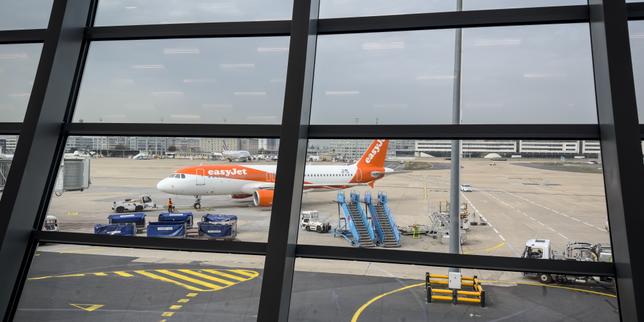
Private equity has officially set its sights on the European budget airline market, and it’s turning into a massive boardroom brawl. If you’ve tracked the airline business recently, you know the sector has felt shaky. Geopolitical tensions in the Middle East and surging jet fuel prices have battered stock prices over the last few months. But while regular retail investors see a volatile market and panic, massive US investment firms see an absolute bargain.
The latest proof? The aggressive, multi-billion-pound pursuit of easyJet by the Minneapolis-based private credit and asset management titan Castlelake. Don't miss our earlier article on this related article.
Castlelake recently came forward with its fourth distinct proposal, dangling a £4.9 billion valuation—equivalent to 650 pence per share—in front of the easyJet board. The airline’s leadership team unanimously knocked it back, calling it an opportunistic attempt to buy the company on the cheap. But instead of slamming the door completely, easyJet did something interesting. They opened their books. The board extended the regulatory deadline to July 5, 2026, giving Castlelake a window to dig into limited commercial data and come back with a better price.
This isn't just a standard corporate takeover story. It represents a deeper structural shift in how commercial aviation operates. The financialization of airlines is accelerating. Wall Street funds no longer want to just lease planes to carriers; they want to run the whole show. If you want more about the background of this, The Motley Fool provides an in-depth summary.
The Hidden Value Wall Street Sees in Budget Carriers
Why is a US private credit firm with $38 billion in assets under management so obsessed with a British low-cost airline? The answer lies in the massive gap between easyJet's current stock market valuation and the intrinsic value of its hard assets.
When public markets get nervous about short-term headwinds, they punish airline stocks indiscriminately. The conflict involving Iran earlier this year caused jet fuel costs to spike, sending easyJet shares tumbling down toward the 400p to 500p range. Castlelake saw this as the perfect moment to strike, launching their initial bid on June 1, 2026.
But public stock prices don't reflect the physical reality of what easyJet actually owns.
- Airport Slots: The airline controls some of the most coveted, tightly restricted takeoff and landing slots at primary European hubs like London Gatwick, Paris Charles de Gaulle, and Amsterdam Schiphol. You can't just buy your way into these airports anymore; you have to inherit or buy out an existing slot portfolio.
- A Modern Fleet: easyJet is in the middle of a massive fleet renewal program, swapping out older planes for highly fuel-efficient Airbus A320neo family aircraft. In a world with volatile fuel prices, owning a massive order book of efficient jets is like holding gold.
- The Holidays Business: easyJet Holidays has quietly turned into a massive profit engine for the company, capturing high-margin package vacation revenue from families who want cheap flights bundled with hotels.
Major institutional shareholders know this. That’s why top investors are currently holding out for at least £7 per share, which would value the airline at roughly £5.3 billion. They argue that selling for anything less would hand all the upside of easyJet's long-term profitability targets straight to American financiers.
The Complex Legal Gymnastics of Majority Ownership
Buying an airline isn't like buying a tech startup or a restaurant chain. If a foreign fund buys too much of a European or British carrier, the airline can literally lose its right to fly.
Under long-standing European Union regulations, any airline holding an EU operating licence must be at least 51% owned and controlled by EU nationals. Even though easyJet is a UK-headquartered company listed on the London Stock Exchange, it maintains an extensive network of European subsidiaries to operate its cross-border continental flights. If an American fund like Castlelake just swept in and bought 100% of the shares, easyJet’s European network would be grounded overnight.
To get around this compliance nightmare, Castlelake has designed a remarkably intricate corporate structure. They aren't bidding alone. They brought in Brookfield Asset Management, but more importantly, they partnered with two prominent Irish aviation executives: Peter Bellew and Mark Breen.
Peter Bellew knows easyJet intimately because he used to be its Chief Operating Officer until 2022. He also ran Malaysia Airlines and served as COO of Ryanair. Under the proposed deal structure, the bidding entity would split its ownership. Castlelake and its institutional co-investors would own 49%. The remaining 51% would be owned directly by Bellew and Breen. Because both executives are EU nationals, the airline would technically satisfy the regulatory requirements for European ownership.
It's clever. But easyJet's board remains highly skeptical. They’ve openly flagged major concerns regarding the deliverability and legal transparency of this ownership structure. If regulators decide that Bellew and Breen are merely fronting for American capital without holding true operational control, the entire deal falls apart.
How Financialization Changes the Passenger Experience
When an airline transitions from a publicly traded company to a private-equity-controlled asset, the priorities shift dramatically. Public companies have to answer to a diverse mix of retail investors, long-term pension funds, and founders who care about market share and brand legacy. Private equity funds operate on strict, aggressive timelines to optimize cash flow, strip out inefficiencies, and flip the asset for a massive profit within five to seven years.
Look at Castlelake's track record. They are deeply embedded in aviation finance and aircraft leasing. They recently took a 32% stake in Scandinavian carrier SAS as part of its bankruptcy restructuring, an investment that is currently being transitioned over to Air France-KLM. They know how to squeeze value out of balance sheets.
If easyJet goes private, you can expect a much more aggressive focus on ancillary revenue. Low-cost carriers already charge you for baggage, seat selection, and onboard snacks, but private equity ownership typically pushes these strategies to the absolute limit. Every square inch of the aircraft cabin becomes a monetization vector.
There’s also the question of route optimization. Publicly traded airlines sometimes maintain strategically important but lower-margin routes to protect market share or feed their broader network. Private equity has zero emotional attachment to specific destinations. If a route isn't hitting its exact margin targets within a specific quarter, it gets axed immediately. The focus shifts entirely to high-density, highly profitable corridors.
The counterargument is that private backing insulates an airline from the manic mood swings of the public stock market. Free from the pressure of quarterly earnings calls, management can theoretically focus on long-term capital investments, like securing that expensive fleet of fuel-efficient Airbus jets, without worrying about how a temporary fuel price spike will affect the daily stock price.
What Happens Next Before the July Deadline
We are entering a critical window for the future of European low-cost travel. By pushing the "put-up or shut-up" deadline back to July 5, 2026, easyJet's board has shifted the pressure squarely onto Castlelake.
The investment firm now has access to the inner workings of easyJet’s financial books. They have a few days to analyze the carrier’s exact cost structures, fuel hedging contracts, and forward booking data for the peak summer holiday season. If those numbers look as strong as easyJet claims, Castlelake will likely have to sweeten the pot and meet the shareholders' demand of 700p per share.
If you own easyJet shares, the smart move is to sit tight and do nothing. The board has explicitly advised shareholders to take no action while these limited talks progress. If Castlelake walks away on July 5 without raising its bid, easyJet's stock might take a short-term hit, but the underlying asset value, especially its massive slot portfolio, remains incredibly secure. If they return with a revised £5.3 billion offer that satisfies the regulatory ownership hurdles, the consolidation of European aviation will have cleared its biggest hurdle yet.