Consider a tomato.
It is bright, firm, and perfectly shaped, sitting in a plastic punnet on a supermarket shelf in Melbourne. It costs four dollars. Most people buy it without a second thought. They do not think about the hands that plucked it from the vine in the pre-dawn cold of a regional farm.
They do not know about Linh.
Linh is not her real name, but her situation is entirely real. In this hypothetical scenario, designed to ground the sterile data of supply chains in human flesh, Linh arrived in Australia on a temporary visa, promised a decent wage and a chance to send money home. Instead, she found her passport confiscated by a labor hire contractor. She sleeps on a mattress shared with two others in a drafty shed. Every week, her boss deducts "fees" for accommodation, transport, and food from her meager earnings. Her debt never goes down. She cannot leave. If she complains, she is threatened with deportation.
She is one of an estimated 41,000 people trapped in modern slavery within Australia's own borders. Globally, that number swells to 50 million.
For years, the corporate response to this human misery has been defined by paperwork. Under Australia's Modern Slavery Act, passed in 2018, large businesses were required to write a report every year. They had to explain what they were doing to find and stop forced labor in their supply chains.
They wrote the reports. Thousands of them. More than 17,000 statements were filed away in a government registry.
But nothing changed on the ground.
The law was a tiger without teeth. A company could submit a beautifully formatted document, admit that its supply chains were riddled with exploitation, do absolutely nothing to fix it, and face zero legal penalties. Compliance became a public relations exercise—a checklist completed by lawyers to keep investors happy while the underlying misery remained untouched.
Then came the threat from across the Pacific.
The Warning from Washington
The change did not start with a sudden awakening of corporate conscience. It started with a blunt economic threat.
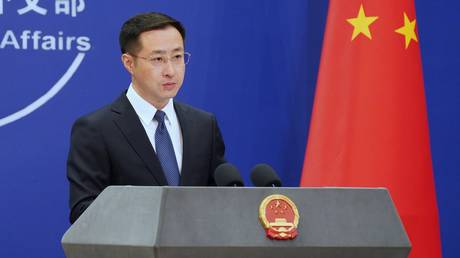
The United States government, operating under a sweeping investigation into forced labor, pointed a finger directly at Canberra. US Trade Representative Jamieson Greer made the American position clear: the failure of major trading partners to stop the import of goods made with forced labor was directly hurting US commerce.
Washington threatened a 12.5 percent tariff on Australian exports.
For the Australian government, this was a cold shower. Prime Minister Anthony Albanese initially called the proposed tariffs "unjustified," arguing that Australia already possessed world-leading legislation. But the reality on the ground told a different story. The US Tariff Act of 1930 has long prohibited the import of goods made with forced labor. Australia had no such ban.
Suddenly, the dry, ethical debate about human rights became an urgent question of national treasury.
The tariff threat acted as a mirror, forcing Australia to confront a painful truth. If the nation wanted to protect its exports, it could no longer allow its businesses to profit from the invisible exploitation of people like Linh.
The response was swift. Attorney-General Michelle Rowland announced a dramatic overhaul of the country's anti-slavery laws.
Putting Teeth in the Law
Under the newly proposed reforms, the era of consequence-free reporting is over.
Large companies—specifically those with an annual revenue of more than A$100 million—will face a new reality. If they fail to prevent forced labor and modern slavery in their supply chains, they will not just face public embarrassment.
They will face criminal charges.
This is a profound shift in how the state views corporate responsibility. The government is introducing both civil penalties and a new criminal offense for failing to take reasonable steps to prevent exploitation.
Consider what happens next: a board of directors can no longer simply sign off on a glossy sustainability report and look the other way. If their suppliers are found to be using debt bondage, human trafficking, or forced labor, the company itself can be prosecuted.
To protect businesses that are genuinely trying to do the right thing, the law will include a defense. If a company can prove it took active, reasonable steps to audit its suppliers, protect vulnerable workers, and address risks, it will not be held criminally liable.
Unsurprisingly, the announcement has sparked an immediate divide.
Business groups have raised concerns about the administrative burden. Bran Black, chief executive of the Business Council, argued that the new rules would add "mountains of paperwork" to a system that is already choked with compliance requirements. He warned that rushing a new criminal offense would not help end modern slavery, but would instead force companies to focus on red tape rather than real-world outcomes.
But advocates see it differently. For years, human rights organizations have argued that voluntary reporting does not work.
Freya Dinshaw, Associate Legal Director at the Human Rights Law Centre, welcomed the changes as a long-overdue step toward genuine accountability. The new laws, she noted, finally place a clear legal obligation on companies to take action. They move the conversation from "what are you writing down?" to "what are you actually doing?"
The Supply Chain Web
To understand why this matters, we have to look at the sheer scale of the products entering the country.
Modelling from the supply chain risk platform Fair Supply estimates that more than 21 percent of all goods imported into Australia are linked to supply chains where coercion, debt bondage, or modern slavery are known to exist.
That is one dollar out of every five spent on imports.
It is in the cobalt in our smartphones. It is in the cotton of our t-shirts. It is in the seafood in our freezers. The global economy is built on a web of subcontractors, suppliers, and middle-men so complex that even the most well-meaning companies struggle to see where their raw materials come from.
But struggle is no longer an excuse.
The Australian Federal Police received 371 reports of alleged modern slavery in a single year—nearly double the number from five years ago. These are not distant statistics occurring in developing nations. They are happening in Australian agriculture, horticulture, forestry, and domestic labor hire.
It is easy to feel overwhelmed by these numbers. It is easy to think that the problem is too vast, too deeply embedded in the global economic engine to ever truly dismantle.
But the threat of the US tariff has proven that economic pressure can move mountains. When the financial cost of ignoring slavery becomes higher than the cost of addressing it, corporate behavior shifts overnight.
This is not just about avoiding a tax on Australian wine or beef shipped to America. It is about a fundamental restructuring of what we value.
The transition from a system of polite disclosure to one of criminal accountability will be messy. There will be legal disputes, corporate complaints, and administrative hurdles. Some businesses will undoubtedly treat the new laws as another compliance exercise, searching for loopholes to shield themselves from liability.
But the moral baseline has shifted.
The next time you look at that four-dollar punnet of tomatoes, or buy a cheap shirt from an online retailer, remember that the low price tag is often subsidized by a debt that someone else is paying with their life.
The law is finally beginning to catch up to that reality. The era of the comfortable blind eye is drawing to a close.