The Ledger on Main Street
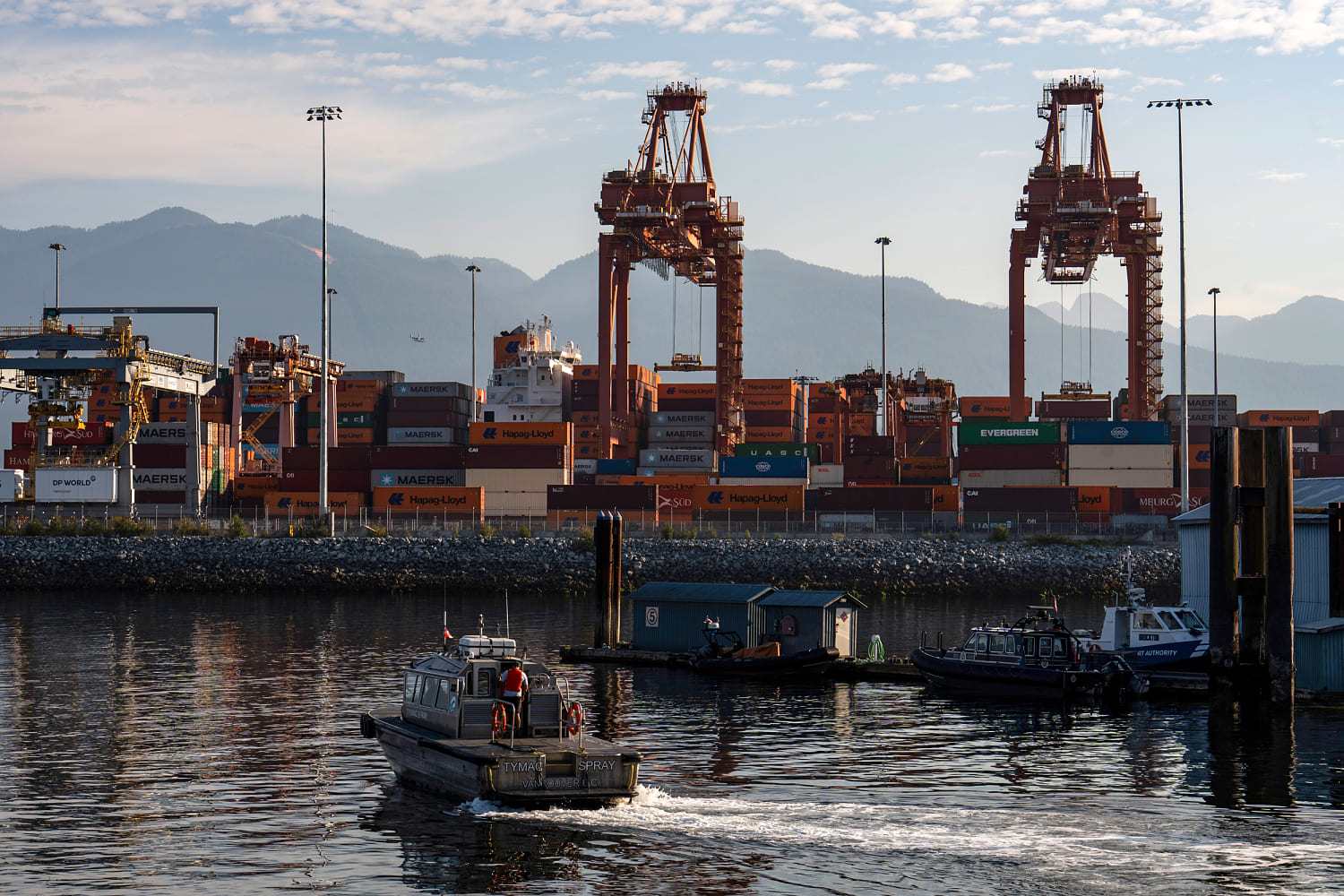
The shipping container arrived in San Pedro Harbor on a Tuesday, carrying forty-eight thousand custom brass hinges and a debt that hadn't existed seventy-two hours earlier.
For decades, the math of small-scale importing was simple enough to draft on a paper napkin. You calculated raw materials, factored in freight, added a predictable custom duty, and set a retail price that kept three local assembly workers paid and the lights burning in a workshop outside Akron. It wasn't high finance. It was arithmetic.
Then the notification arrived.
A sudden shift in trade policy—enacted by executive decree under the Trump administration—slammed a fresh twenty-five percent tariff onto raw steel and specialized components coming out of overseas foundries. For global conglomerates with treasury departments in Manhattan and supply chains spanning six continents, a twenty-five percent shock is a line-item adjustment, a temporary hit to quarterly margins absorbed by scale.
For a family-owned hardware business in Ohio, it was an immediate, unpayable invoice.
The money was gone before the crate even touched the dock.
The Abstract War at the Kitchen Table
Macroeconomics feels clean when discussed on cable news. Analysts speak in sweeping terms: trade deficits, leverage, domestic manufacturing revival, structural rebalancing. They draw neat lines across supply chain diagrams and talk about national leverage as if international commerce were a high-stakes game of poker played with chip stacks that cost nothing to lose.
Walk into a regional workshop, though, and the neat lines turn into frayed wires.
Consider a hypothetical shop owner named Elena—a composite of the dozen independent business founders who recently banded together to file suit in federal court. Elena doesn't run a multinational empire. She sells niche dental equipment assembled from specialized foreign parts that simply aren't forged anywhere within three thousand miles of her building.
When a new tariff hits, Elena doesn't get to pass that cost along to her customers overnight. Contracts are locked. Orders are booked six months out.
Instead, the tariff acts as a direct, retrospective tax on work she has already promised to deliver. She sits at her kitchen table with two highlighters and a spreadsheet, realization sinking in with every line: she can either break her word to long-time buyers, or she can pay the federal government for the privilege of losing money on every unit she ships.
The policy was designed to punish foreign competitors. In reality, the bill was delivered straight to Elena's mailbox.
Why the Courts Are Now the Last Resort
When a government uses executive authority to alter the rules of commerce overnight, it relies on broad national security statutes—laws originally drafted to protect the nation during wartime or acute international crises.
The legal challenge mounted by a coalition of small business owners hinges on a fundamental constitutional friction. Does the executive branch possess unchecked power to alter the economic reality of domestic companies without explicit, granular authorization from Congress?
The suit isn't about international diplomacy. It's about predictability.
Enterprise requires a baseline of stability. A small company can adapt to rising labor costs; it can plan for shifting consumer tastes; it can even weather a localized downturn. What it cannot survive is complete regulatory volatility—the sudden, arbitrary overnight recalibration of its cost of goods sold.
The legal filings detail a shared, quiet panic:
- Shrinking Liquidity: Unlike public corporations, small firms do not have access to credit facilities or equity markets to bridge sudden cash-flow deficits.
- Irreversible Loss: Money paid in customs duties during an ongoing legal dispute is rarely recovered, even if a policy is later deemed unlawful or scaled back.
- Supply Chain Paralysis: Shifting manufacturing sources back to domestic suppliers isn't like flipping a light switch. Tooling a local factory takes years, millions in capital, and specialized skills that have, in many sectors, vanished over two generations.
The lawsuit asks a deceptively simple question: Who bears the cost when a government decides to restructure global trade on short notice?
The Illusion of Domestic Substitution
The core argument for aggressive tariff policies sounds intuitively correct: make foreign goods expensive, and domestic buyers will buy American.
It is a clean, appealing narrative. It fits neatly onto bumper stickers.
But modern manufacturing is not an assembly line from 1950. It is a dense, tangled spiderweb.
To build a single high-precision medical pump in Pennsylvania, a company might source micro-tubing from Germany, specialized seals from Japan, and custom-molded casings from Asia. No single domestic facility produces all three components to the required safety tolerances.
When tariffs hit those specialized seals, the Pennsylvania manufacturer doesn't suddenly start buying seals made down the street—because the factory down the street doesn't exist. They simply pay more for the Japanese seal. The cost of manufacturing the American pump rises. The American pump becomes less competitive globally.
In attempting to protect domestic industry, the policy inadvertently taxes the very businesses doing the manufacturing at home.
The Human Cost of Volatility
The real tragedy of trade turbulence isn't found in trade volume statistics or macroeconomic charts. It lives in the quiet conversations held in breakrooms across the Rust Belt and the Pacific Northwest.
It is the founder deciding not to hire two new apprentices this spring.
It is the family business putting off the purchase of a new CNC machine that would have doubled their efficiency.
It is the constant, grinding anxiety of operating in an environment where the rules of survival can be rewritten in a single morning press conference.
Capital moves where it is welcome, but it settles where it is safe. For millions of small employers across the country, safety has been replaced by a persistent, background hum of uncertainty.
They are not asking for subsidies. They are not asking for special protection from competition. They are asking for a rules-based system where the ground beneath their feet stops moving long enough for them to build a future.
In a quiet courtroom in Washington, three judges will eventually read the briefs, weigh the statutory authorities, and issue a ruling. But outside that courtroom, on loading docks and in small assembly plants, the meters are still running, and the crates are still arriving, loaded with promises made in good faith under a set of rules that no longer exist.