A heavy mahogany table sits under the harsh glare of security lights. On one side, translators shuffle papers, their pens tapping a nervous rhythm against glass water pitchers. On the other side, an empty leather chair sits pulled back from the edge. It is a vacancy that carries the weight of a thousand warheads.
Geopolitics is often covered as a series of dry chess moves, a ledger of sanctions, percentages, and acronyms like IAEA. But diplomacy, at its core, is remarkably fragile. It is built entirely on the willingness of deeply flawed, heavily armed human beings to sit in a room together and talk. When that willingness vanishes, the silence that follows can be deafening.
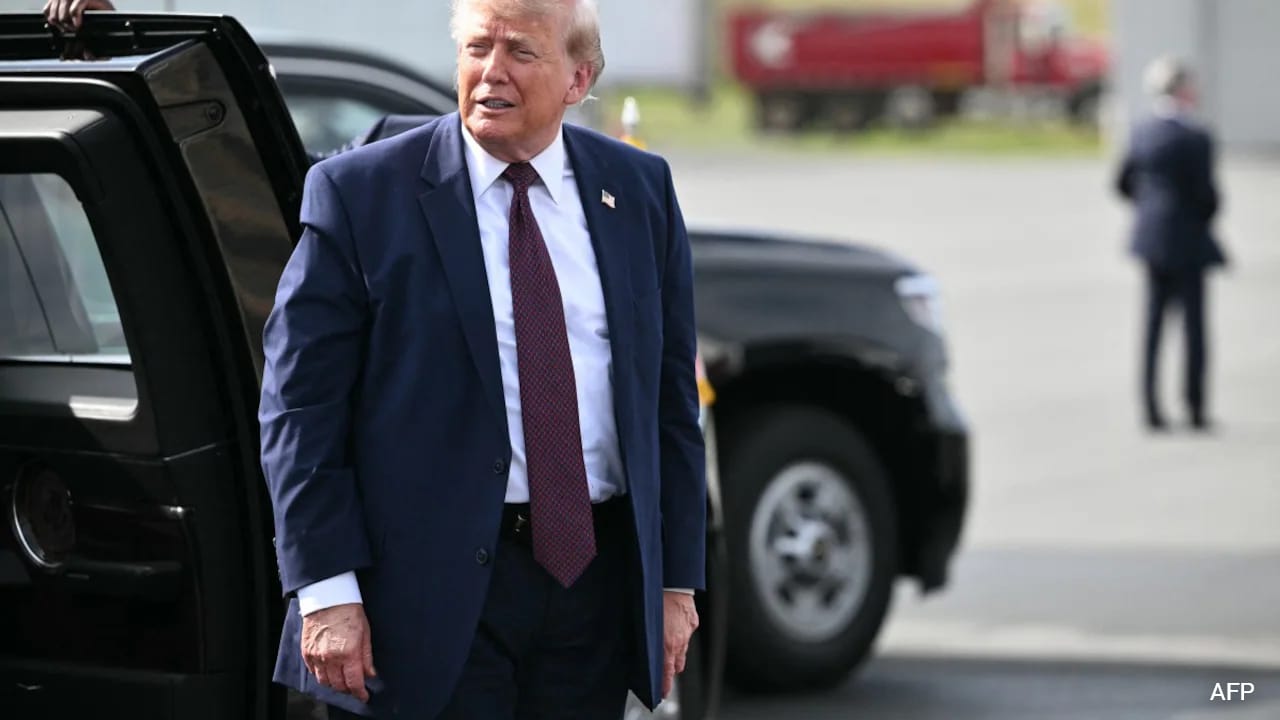
Donald Trump recently re-entered this arena with a characteristically blunt ultimatum. He declared that if Iran refuses to grant United Nations inspectors total access to its nuclear facilities, he simply will not meet with them. No summits. No handshakes. No back-channel negotiations.
To some, this looks like the ultimate power move, a masterclass in leveraging leverage. To others, it feels like locking the door to the bunker and throwing away the key while the countdown clock is ticking.
The Invisible Inspector
Consider what actually happens inside a nuclear facility.
Imagine a woman named Sarah. She is not a politician. She is a nuclear physicist from Vienna, wearing a blue UN vest and carrying a handheld radiation monitor. Her job is to count cylinders of uranium hexafluoride gas. She measures the enrichment levels, checks the tamper-evident seals on centrifuge cascades, and reviews surveillance camera footage.
Sarah is the thin line between transparency and total paranoia.
When Sarah is allowed to do her job, the world breathes a collective, if uneasy, sigh of relief. We know, with mathematical certainty, exactly how close a nation is to assembling a weapon. But when the doors are slammed in her face, the math stops. The imagination takes over.
In the absence of hard data, military planners must always assume the worst-case scenario. Intelligence agencies begin guessing. Satellites stare down at concrete roofs, unable to see through the rock. The danger increases exponentially not because the centrifuges are spinning faster, but because the world is suddenly flying blind.
The Art of the Ultimate Walkaway
Donald Trump's political identity has always been anchored in the power of the walkaway. His business philosophy dictates that if you cannot get the terms you want, you must be willing to leave the table entirely.
By applying this to Iranian nuclear diplomacy, he is shifting the stakes from economic pressure to diplomatic isolation. The logic is straightforward: a meeting with an American president is a massive prize of political legitimacy. If Iran wants that prize, they must pay for it with total, unhindered transparency.
But international diplomacy does not operate like a real estate transaction in Manhattan.
When a real estate deal falls through, both parties walk away, perhaps frustrated, but intact. The seller keeps the building; the buyer keeps the cash. When a nuclear negotiation disintegrates, the status quo does not just freeze in place. The centrifuges keep spinning. The enrichment levels creep higher. The shadow of a pre-emptive military strike grows longer over the Middle East.
The Cost of the Silent Treatment
History is littered with the ghosts of broken dialogues.
During the darkest days of the Cold War, the United States and the Soviet Union maintained open phone lines precisely because they terrified each other. They understood that the only thing more dangerous than talking to an adversary was guessing what that adversary was doing in the dark.
If the United States seals off the diplomatic channel, the immediate question becomes: what happens next?
Iran is currently wrestling with its own severe internal pressures, an sputtering economy, and a complex web of regional proxy conflicts. A total refusal to engage from Washington could push the leadership in Tehran into a corner. Nations backed into corners rarely capitulate; more often, they lash out. They seek alliances with other isolated powers, building a coalition of the locked-out.
The human cost of this stalemate is rarely born by the people sitting at the mahogany tables. It is felt by ordinary citizens. It is felt by families in Tehran navigating skyrocketing inflation caused by isolating sanctions. It is felt by young soldiers stationed across the Persian Gulf, waiting to see if a miscalculation in the dark will turn into a hot war.
A Room Without Windows
We often desire certainty in a world that offers none. We want clear villains, decisive victories, and simple rules. The idea of refusing to meet with an opponent who will not play by the rules feels inherently just. It satisfies our collective desire for accountability.
But the hard truth of global security is that you do not make peace with your friends. You make it with your enemies, and your enemies are almost always untrustworthy.
If UN inspectors are locked out of Iran, the instinct to walk away is entirely understandable. It is a rejection of bad faith. Yet, an empty chair cannot negotiate. An empty chair cannot de-escalate a midnight crisis in the Strait of Hormuz. An empty chair cannot look an adversary in the eye and discern the difference between a bluff and a genuine threat.
The security lights will remain on in those negotiation rooms, regardless of who decides to show up. The water pitchers will sweat in the heat. The translators will wait. The real test of global leadership is not knowing when to walk away from the table, but possessing the grit to stay seated when every instinct tells you to run.