The consumer tech press is lying to you about portable air conditioners.
Every June, the same beautifully photographed gift guides surface. They promise a quick, rolling fix to a sweltering apartment. They review slick, minimalist plastic towers and rate them on fan noise, smart app integration, and aesthetics. They call them a lifesaver.
They are lying by omission.
The fundamental physics of a standard single-hose portable air conditioner mean it is actively fighting against its own purpose. Under the hood, these machines are an engineering compromise so severe that they often create the very problem you are paying $500 to solve. If you buy a single-hose portable unit to "beat the summer heat," you have fallen for an illusion.
The Fatal Flaw of Single-Hose Physics
To understand why the standard portable AC is an appliance masquerading as a solution, you have to understand where the heat goes.
An air conditioner does not create cold; it removes heat. A traditional window unit sits half-outside your room. It sucks in indoor air, cools it over an evaporator coil, and blows it back into the room. Simultaneously, it takes outdoor air, runs it over a hot condenser coil to collect the rejected heat, and dumps that heat right back outside. The indoor air cycle and the outdoor air cycle never mix.
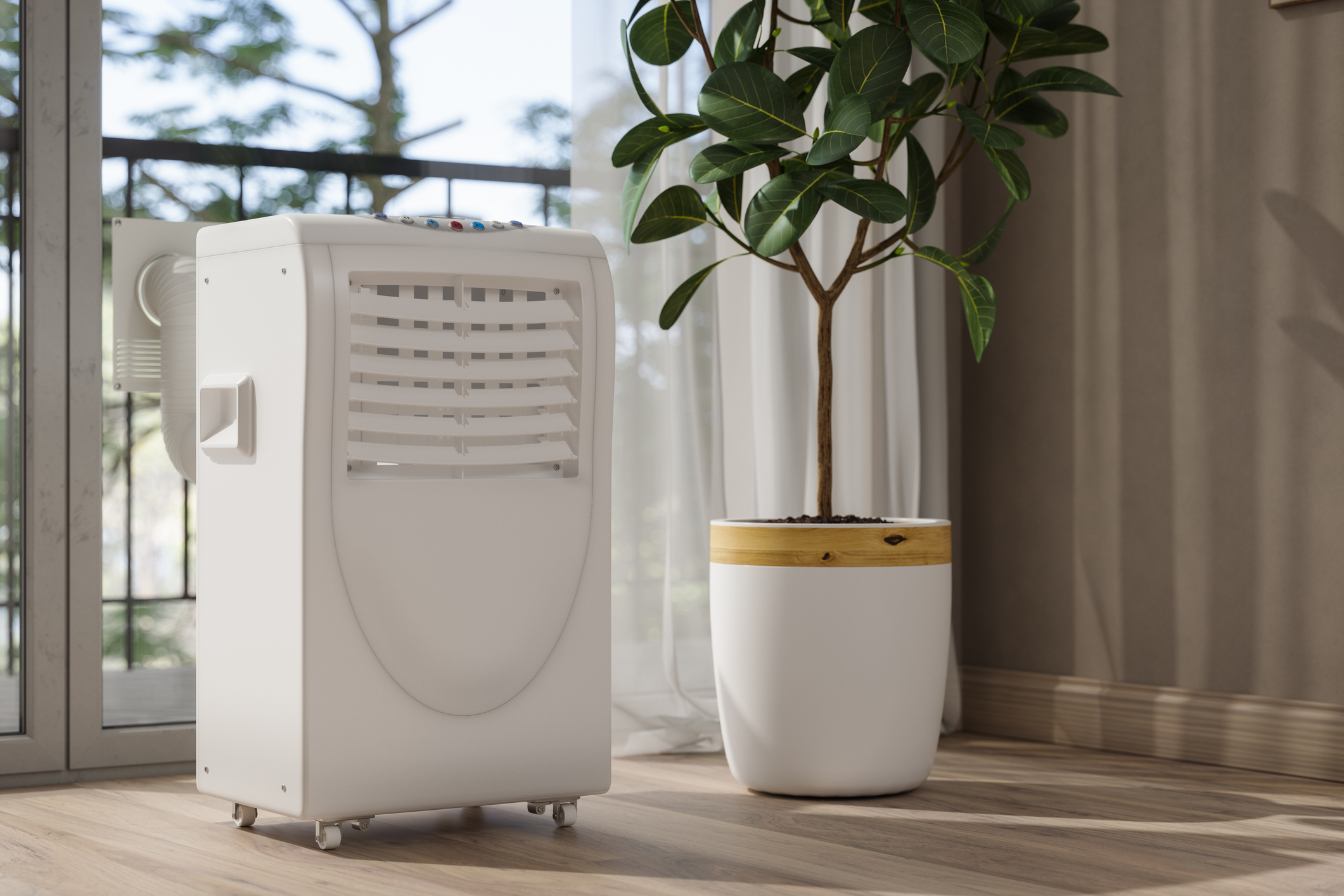
Now look at a single-hose portable unit sitting in your bedroom.
It pulls air from your room, cools it, and blows it onto your face. But it also needs to cool its own internal condenser coil. Where does it get the air for that? It sucks it right out of your air-conditioned room. It heats that air up to scorching temperatures, and blasts it out the window through that flexible plastic hose.
Think about the math. If a machine is constantly throwing 100 cubic feet of air per minute out of your window, that air has to be replaced. Your room becomes a vacuum chamber.
To equalize the pressure, hot, humid air from the outside world is sucked into your home through every crack, keyhole, floorboard, and gap under your doors. You are cooling your bedroom while simultaneously forcing unconditioned 95°F air from the street or your hallway into the rest of your apartment. You are paying to cool air, just to vent it outside, while turning your home into an active vacuum pump for ambient humidity.
The Myth of the BTU Rating
When shopping for an AC, consumers look at British Thermal Units (BTUs). A higher number means more cooling power. The industry exploited this blind spot for over a decade.
For years, portable units used the Ashrae rating system. A portable unit labeled "14,000 BTU" sounded like a commercial-grade monster capable of freezing a living room. In reality, once you account for the radiant heat bleeding off the plastic exhaust hose—which acts like a giant, uninsulated radiator inside your room—and the negative pressure pulling hot air indoors, that 14,000 BTU unit performs like a 7,000 BTU window unit.
In 2017, the Department of Energy (DOE) stepped in. They introduced a new testing standard (SACC, or Seasonally Adjusted Cooling Capacity) to force manufacturers to admit how inefficient these devices are.
| Unit Type | Advertised Rating (ASHRAE) | True Cooling Capacity (DOE SACC) | Real-World Efficiency Loss |
|---|---|---|---|
| Standard Single-Hose Portable | 14,000 BTU | ~8,000 BTU | ~43% loss via negative pressure and hose bleed |
| Dual-Hose Portable | 14,000 BTU | ~10,000 BTU | ~28% loss via hose bleed only |
| Standard Window Unit | 8,000 BTU | 8,000 BTU | 0% loss from negative pressure |
When you read a mainstream review praising a 12,000 BTU single-hose unit, they are giving you raw, deceptive marketing numbers. I have seen frantic homeowners spend thousands of dollars outfitting three rooms with high-BTU portable units, only to watch their electric bills cross the $600 mark while their apartments remained sticky and warm. The machines were effectively fighting each other for air.
Dismantling the Common Defenses
People buy these appliances out of desperation or because they feel trapped by circumstances. Let's address the justifications used to defend these rolling money pits.
"My landlord or HOA bans window units."
This is the most legitimate reason people turn to portables, but it usually stems from a lack of awareness about modern hardware. Landlords ban window units because traditional designs hang precariously over property lines, risk falling, and can damage window frames.
The market has evolved. Saddle-style or U-shaped window air conditioners straddle the window sill. The heavy compressor hangs outside, below the frame, allowing you to open and close your window completely. They are incredibly secure, virtually invisible from certain angles, and eliminate the falling hazard entirely. Before you surrender to a portable unit, buy a U-shaped unit and challenge the archaic wording of your lease.
"But it's portable. I can wheel it from the living room to the bedroom."
No, you can't. Not easily, anyway.
To move it, you must detach the rigid, awkward plastic window bracket, unhook the accordion hose, wheel the heavy, water-filled chassis across your carpet, and re-install the entire apparatus in the next room. It is a tedious 15-minute chore. Nobody does this daily. You will leave it in one room, and you will trip over the hose all summer.
"I can just drain the water tank once a week."
Most modern units claim to use "auto-evaporation" to blast the condensed water out of the exhaust hose. In dry climates, this works. In high humidity, the system fails. The internal pan fills up rapidly, the machine shuts off at 3:00 AM, and you wake up drenched in sweat to an error code. Your options are to prop a heavy machine up on blocks to drain it into a shallow pan, or run a permanent garden hose across your floorboards.
How to Actually Cool Your Space
If a window unit is genuinely, completely impossible due to structural constraints, you must change your buying criteria entirely.
1. Dual-Hose is the Minimum Entry Barrier
If you must buy a portable unit, it has to be a dual-hose model.
A dual-hose system uses one hose to draw outside air into the unit to cool the internal components, and a second hose to blast that heated air back outside. This completely eliminates the vacuum effect. It stops the machine from drawing hot hallway air into your living space.
These units are more expensive, heavier, and harder to find because mainstream consumers reject them for having two ugly hoses instead of one. Buy one anyway. Brands like Whynter or the specialized dual-hose offerings from Midea are the only acceptable choices in this category.
2. Insulate the Exhaust Path
The plastic accordion hose shipped with every portable AC is a thermodynamic disaster. It is paper-thin plastic. When the machine is running, that hose heats up to over 115°F. You essentially have a space heater running inside the room you are trying to cool.
Go to a hardware store. Buy reflective bubble wrap insulation (often called Radians or Reflectix) and wrapping tape. Encase the entire exhaust hose in insulation. It looks industrial, but it stops the heat from radiating straight back into your air-conditioned space.
3. Manage the Micro-Climate
Stop trying to cool an entire open-concept apartment with a rolling unit. If you are forced to use a portable machine, seal the room it is in. Close the bedroom door. Put a draft stopper under the door to mitigate the negative pressure pull. Treat that room like an isolation chamber.
The Uncomfortable Truth
The portable air conditioner industry thrives on impulse buys driven by heatwaves. When the temperature hits 98°F and delivery times for window units stretch to a week, people run to big-box hardware stores and grab whatever rolling box is left on the floor.
They accept poor performance, roaring compressor noise right next to their beds, and astronomical energy bills because "at least it's blowing cold air."
Stop accepting bad engineering. Demand a dual-hose configuration if you have no other choice. If you can use a window, stop being lazy about the installation process and put in a high-efficiency U-shaped unit.
Your wallet, your ears, and your comfort will thank you. Stop venting your expensive air out the window.