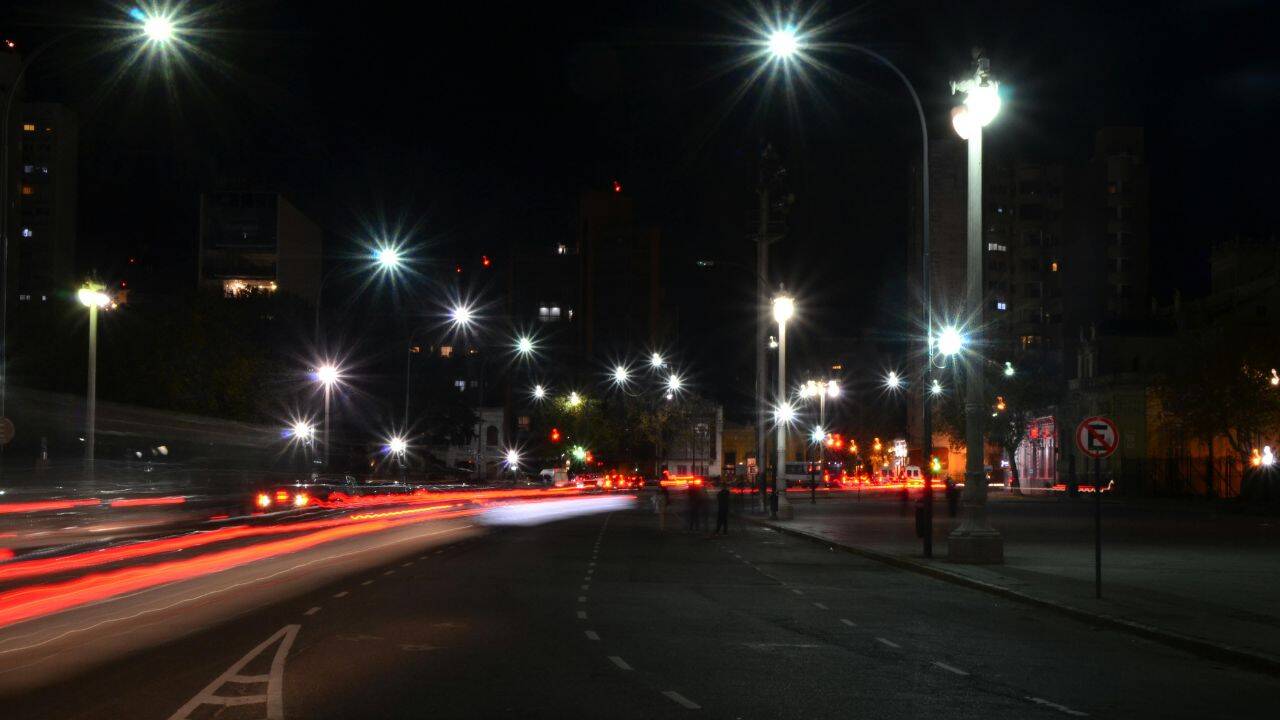
The widespread transition of municipal lighting from high-pressure sodium to high-efficiency white light-emitting diodes (LEDs) has introduced a severe ecological sink. While these installations reduce municipal energy costs and carbon emissions, they generate unintended biological feedback loops. The most stark manifestation of this disruption is the localized collapse of terrestrial decomposer populations, specifically isopods (commonly known as pill bugs or woodlice), which become trapped in massive, circular aggregations beneath white light sources. This phenomenon is not a random behavioral anomaly; it is a predictable failure mode resulting from the intersection of insect sensory biology and modern optical engineering.
Understanding this ecological trap requires analyzing the biophysical mechanisms that drive isopods into these high-mortality zones, quantifying the physiological costs of the trap, and identifying the structural engineering changes required to mitigate the damage to soil ecosystems.
The Biophysical Architecture of the Phototactic Trap
Terrestrial isopods, such as Armadillidium vulgare, are crustacean decomposers that rely on specific environmental cues to regulate their water balance and avoid predators. Because they breathe through modified, gill-like structures called pleopodal lungs, their survival depends on maintaining high systemic moisture levels. Under normal conditions, their behavior is governed by negative phototaxis (moving away from light) and positive hygrotaxis (moving toward moisture).
White LED streetlights disrupt these fundamental behavioral axes. When nocturnal isopods encounter a high-intensity light footprint on pavement or compacted soil, their navigation systems fail. The primary driver of this failure is a conflict between two competing behavioral responses:
- Phototactic Disorientation: The intense illumination overwhelms the lateral compound eyes (ommatidia) of the organism, disrupting its ability to orient using natural celestial or polarized light cues. Instead of fleeing the light, the isopods become disoriented within the boundaries of the illuminated zone.
- Thigmotactic Aggregation: As disoriented individuals wander within the lighted footprint, they encounter other isopods. Isopods exhibit strong thigmotaxis—a behavioral tendency to maximize contact with surfaces or other organisms. This behavior is an evolutionary adaptation designed to conserve moisture by huddling together in dark, damp microenvironments.
Beneath a white streetlight, this survival mechanism becomes self-destructive. Once a small group of isopods clusters together to seek shelter from the artificial light, they create a physical structure that attracts wandering individuals. This creates a positive feedback loop. Wandering isopods, unable to find natural shelter in the illuminated area, join the cluster. The physical size of the cluster increases, making it a stronger stimulus for other disoriented isopods. The result is a massive, circular aggregation of up to several thousand individuals trapped on dry, exposed terrain.
Mathematical Modeling of the Isopod Aggregation Feedback Loop
The formation of these circular aggregations can be modeled as a stochastic self-assembly process where the probability of an individual joining or leaving the cluster is governed by local light intensity and group size.
Let the probability of an individual isopod entering a cluster of size $N$ within an illuminated zone be $P_{join}(N)$, and the probability of leaving the cluster be $P_{leave}(N)$. Under natural dark conditions, the leaving rate is high because individuals continuously disperse to forage:
$$P_{leave}(N) \propto \frac{1}{N}$$
Under high-intensity white light, the leaving rate approaches zero because individuals face a hostile, illuminated environment immediately outside the boundary of the cluster. The survival mechanism of huddling overrides the urge to disperse:
$$P_{leave}(N) \approx \epsilon$$
where $\epsilon$ is an infinitesimally small probability of departure. Conversely, the joining rate scale is proportional to both the surface area of the existing cluster and the density of disoriented individuals ($\rho$) in the illuminated footprint:
$$P_{join}(N) = \alpha \cdot \rho \cdot N^{1/2}$$
Because $P_{join}(N) \gg P_{leave}(N)$, the system rapidly moves toward an absorbing state where the cluster size $N$ grows exponentially until the local population of mobile isopods is exhausted. This mathematical reality explains why researchers observe highly dense, circular "death spirals" containing over 5,000 individuals under a single light source.
Spectral Vulnerability: Blue-Wavelength Emission vs. Legacy Illumination
The severity of this ecological trap is directly tied to the spectral composition of modern municipal lighting. Legacy high-pressure sodium (HPS) lamps emit a warm, orange-yellow light concentrated in wavelengths above 580 nanometers. In contrast, standard cold-white LED lamps, which typically operate at a correlated color temperature (CCT) of 4000K or higher, feature a prominent emission peak in the blue spectrum around 450 nanometers.
Terrestrial isopods possess visual pigments that are highly sensitive to blue and ultraviolet wavelengths. The blue peak of cold-white LEDs falls directly within the peak sensitivity range of their photoreceptors. This intense blue light triggers a hyper-stimulated state, driving high levels of behavioral disorientation.
Furthermore, blue light scatters more widely in the atmosphere and through canopy cover than longer wavelengths (Rayleigh scattering). This increases the effective zone of disruption. A single 4000K LED fixture projects a much larger behavioral trap than an equivalent HPS fixture, drawing in organisms from a wider radius and concentrating them onto asphalt and concrete surfaces.
Physiological Depletion and Predator Vulnerability Metrics
The consequences of being trapped in these illuminated zones are rapid and lethal. The mortality rate within these aggregations is driven by three distinct, compounding factors: desiccation, energetic exhaustion, and hyper-predation.
Desiccation Kinetics
Isopods must continuously manage trans-cuticular water loss. On dry surfaces like asphalt, under the dry microclimates created by the heat of electric fixtures and the absence of leaf litter, the rate of water loss increases exponentially. The rate of desiccation ($J$) can be expressed as:
$$J = A \cdot g_c \cdot (VPD)$$
where $A$ is the surface area of the organism, $g_c$ is the cuticular conductance, and $VPD$ is the vapor pressure deficit of the surrounding air. In an illuminated, exposed environment, $VPD$ is significantly higher than in damp soil or leaf litter. While huddling in a circular cluster reduces the effective surface area ($A$) exposed to the air for individuals in the center, those on the periphery remain highly vulnerable. As peripheral individuals desiccate and die, the outer layer of the cluster collapses, exposing the next layer to desiccation.
Energetic Depletion
The constant, futile movement of disoriented individuals attempting to navigate away from the light source rapidly depletes their glycogen reserves. Isopods are adapted for low-energy, slow-movement foraging lifestyles. The high-stress, continuous locomotion induced by phototactic disorientation causes metabolic rates to spike, exhausting their limited energy reserves within hours. This leaves them too weak to disperse even if the light source is turned off at dawn.
Predation Amplification
The formation of large, stationary, highly visible clusters of thousands of invertebrates creates an ideal foraging ground for opportunistic predators. Carabid beetles, spiders, rodents, and urban birds quickly learn to exploit these lit zones. The normal defensive mechanisms of the isopods—such as rolling into a ball (conglobation) or fleeing into crevices—are useless on flat, illuminated surfaces. Predation rates within these light-induced clusters are several orders of magnitude higher than in adjacent dark habitats.
Soil Ecosystem Degradation and Nutrient Cycling Disruption
The loss of thousands of isopods beneath municipal streetlights is not merely a localized biodiversity issue; it directly degrades soil health and nutrient cycling in urban green spaces. Isopods are primary decomposers. They play an indispensable role in breaking down coarse organic matter, such as fallen leaves and dead wood, into smaller fragments.
This mechanical breakdown increases the surface area of organic matter, allowing bacteria and fungi to colonize and further decompose the material. This process releases nitrogen, phosphorus, and carbon back into the soil, making these nutrients available to plants.
When isopod populations are systematically removed from urban soils by phototactic traps, this decomposition process stalls. Leaf litter accumulates, soil compaction increases, and nutrient availability drops. The loss of these primary decomposers disrupts the entire subterranean food web, reducing the abundance of larger predators that rely on isopods as a food source, and degrading the overall health of urban parks and green infrastructure.
Municipal Lighting Infrastructure Re-Engineering Protocol
Addressing this ecological challenge does not require abandoning LED technology, which remains essential for energy efficiency. Instead, municipal engineers and urban planners must implement precise hardware and spectral design standards to isolate and eliminate these behavioral traps.
Spectral Tuning and Warm-CCT Implementation
Cities must phase out cold-white (4000K and higher) LED fixtures in favor of ultra-warm LEDs with a CCT of 2200K or lower, or PC-amber (phosphor-converted amber) fixtures. These warmer light sources minimize emissions below 500 nanometers, effectively removing the blue light peak that triggers phototactic disorientation in isopods and other nocturnal invertebrates. By shifting the spectral output to wavelengths that fall outside the visual sensitivity of these organisms, the behavioral disruption is minimized.
Optical Shielding and Precision Backlight Control
The physical footprint of streetlighting must be strictly controlled to prevent light spill into adjacent soils, leaf litter, and grass verges. Light fixtures must utilize Backlight-Uplight-Glare (BUG) shielding to direct light exclusively onto pedestrian walkways and roadways. By creating sharp boundaries between the illuminated pavement and dark roadside soil, isopods are less likely to encounter the light footprint, preserving their natural, dark foraging habitats.
Dynamic, Motion-Activated Dimming Systems
Streetlights in areas adjacent to parks, reserves, or residential green spaces should be integrated with motion sensors. These fixtures remain dimmed to 10% of their maximum output when no pedestrian or vehicular traffic is detected, instantly scaling up to 100% only when triggered by active use. This drastically reduces the total duration of light exposure over a 24-hour cycle, allowing nocturnal decomposers to forage safely during the long periods of darkness between active traffic intervals.