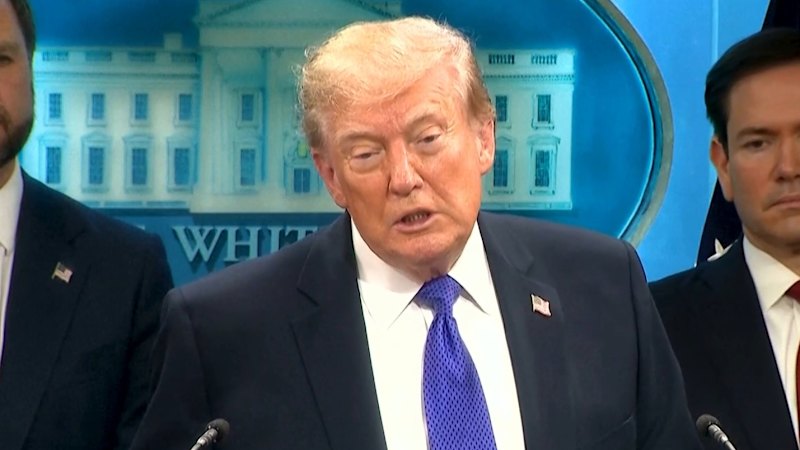
"Permanent peace" with Tehran is the oldest fairy tale in Washington. Every administration steps up to the podium convinced that its specific mix of threats, carrots, and personal chemistry will finally crack a regime built on permanent grievance. Trump pitching a permanent peace deal with Iran fits a deeply familiar script. The headlines write themselves. Markets twitch. Pundits debate whether the deal is historic or naive.
They are all arguing over the wrong premise.
The lazy consensus assumes two things. First, that the core friction between Washington and Tehran is a transactional dispute that can be settled on paper like a commercial real estate contract. Second, that a president's personal dealmaking instinct can override structural incentives that have governed the Islamic Republic since 1979.
Both assumptions collapse under basic political scrutiny.
A "permanent" deal requires two durable sides capable of honoring terms across political cycles. In the United States, treaties and executive agreements are routinely torn up or reinterpreted by successors, and Congress remains a permanent veto point on sanctions relief. In Iran, supreme authority sits with an ideological apparatus whose legitimacy depends on framing the United States as an existential adversary. Signing a piece of paper does not dissolve a revolutionary identity. Often, it simply shifts the battlefield.
What Headlines Miss About "Permanent" Diplomacy
Diplomacy is not a light switch. It is a ledger.
When commentators read that Trump is pitching a permanent peace deal with Iran, they tend to treat "peace" as the absence of overt military strikes or a formal halt to nuclear enrichment. That definition is far too narrow for anyone who has spent time watching Middle Eastern statecraft or advising multinational firms on geopolitical risk.
In practice, conflict between Washington and Tehran operates across four distinct tracks:
- Nuclear thresholds: Enrichment levels, centrifuge cascades, breakout timelines, and inspection access.
- Regional deterrence: Proxy networks, maritime chokepoints, missile proliferation, and retaliatory strikes.
- Economic warfare: Primary and secondary sanctions, oil exports, banking access, and currency stability.
- Domestic survival: Regime cohesion, succession politics, street protests, and ideological enforcement.
A breakthrough on one track rarely locks in peace across the others. Even if negotiators draft strict limits on enrichment and pair them with phased sanctions relief, regional friction and shadow deterrence do not vanish overnight. Calling any diplomatic arrangement "permanent" in a system defined by asymmetric pressure and shifting domestic coalitions is wishful thinking dressed up as analysis.
The Trap of Treating Symptoms as the Disease
I have watched boards and executive teams blow millions of dollars over the years because they mistook a tactical diplomatic thaw for a structural reset. A headline breaks about backchannels or a sweeping peace proposal, and suddenly supply-chain leads, energy desks, and regional managers treat sanctions relief or shipping stability as a done deal. Six months later, a proxy escalation or a snapback dispute sends everyone scrambling back to square one.
Misreading diplomatic theater costs real money. When analysts confuse a negotiating posture with a durable settlement, they price in stability that does not exist.
Precision matters here. Deterrence is the credible threat of punishment or denial that stops an adversary from taking an action. Appeasement is granting concessions to a revisionist actor in the hope that its appetites will shrink. Coercive diplomacy is using calibrated pressure alongside bargaining to extract specific behavioral changes. People throw those terms around interchangeably on cable news, and the confusion produces terrible strategy. A permanent peace deal requires mutual political alignment or overwhelming, enduring enforcement. Neither is guaranteed when structural mistrust runs four decades deep.
Why People Ask the Wrong Questions About This Deal
Whenever high-stakes talks or bold proposals surface around Tehran, search feeds fill up with predictable questions. Most of them start from a flawed assumption.
Can Trump Actually Get a Permanent Peace Deal With Iran?
He can get an agreement, a framework, or a temporary truce. He cannot unilaterally manufacture permanence.
No American president can bind every future Congress, every future White House, or every faction inside Tehran. Even if a deal is inked today, its longevity depends on verification, domestic politics in both capitals, and whether regional actors try to sabotage it. Framing the question around "permanence" sets an impossible standard that guarantees disappointment—or worse, invites leaders to oversell fragile terms as an end to history.
A sharper question is this: What specific, verifiable behaviors would a deal change for the next twenty-four to thirty-six months, and what happens the moment either side cheats?
Would a Deal Lower Oil Prices and Stabilize Shipping?
Potentially in the short run, and conditionally—not automatically, and not permanently.
Markets love relief from tail risk. Any credible move away from direct military confrontation or tighter enforcement around key waterways can trim a geopolitical risk premium from crude and freight rates. Yet energy markets are driven by physical supply and demand, OPEC+ discipline, global growth, and enforcement credibility, not speeches alone. If sanctions relief is phased, reversible, or contested by allies and lawmakers, commercial shipping and insurers move cautiously. A single incident in the Persian Gulf or Red Sea can erase weeks of calm in an afternoon.
Is Diplomacy Better Than Escalation?
Of course diplomacy is preferable to a wider war. Nobody serious wants regional escalation that wrecks economies and costs lives.
The flaw in the question is treating "a grand peace deal" and "all-out war" as the only two doors in the room. Real-world statecraft lives in the messy middle: containment, targeted pressure, quiet de-escalation, deterrence, and narrow, transactional bargains. Insisting on a sweeping, permanent settlement when the underlying political gap is massive often leads to overpromising—which breeds backlash when inevitable friction returns.
The Mechanics That Actually Decide Whether Talks Hold
To understand whether a pitch for a permanent peace deal with Iran has teeth or is mostly political theater, look past the rhetoric and examine the mechanics.
| Mechanism | What Proponents Hope For | What Usually Happens in Practice |
|---|---|---|
| Sanctions Relief | Rapid economic breathing room and normal trade ties | Slow, conditional re-entry; banks stay risk-averse due to snapback fears |
| Verification & Limits | Clear red lines and intrusive monitoring | Disputes over definitions, covert work, and baseline inventories |
| Regional Restraint | Quieting proxy fronts and maritime threats | Decentralized actors keep pressure alive without direct attribution |
| Domestic Politics | Leaders claim historic triumph and stability | Hardliners at home attack concessions as weakness or betrayal |
Consider a thought experiment. Imagine a scenario where Washington and Tehran announce a sweeping framework promising long-term peace, gradual sanctions relief, and strict oversight. On day one, diplomatic headlines celebrate a historic breakthrough. By month four, a disagreement erupts over what counts as compliant activity, secondary sanctions enforcement remains murky for compliance officers, and a regional clash tests the limits of the agreement. Neither side has to declare the deal dead for confidence to fray. Ambiguity does the damage quietly.
That is why political scientists and historians of international relations—figures like Thomas Schelling on bargaining and coercion, or Robert Jervis on security dilemmas and perception—have long emphasized that commitments only work when incentives stay aligned after the handshake. A signature does not erase a security dilemma. If Tehran fears regime vulnerability and Washington fears proliferation and regional dominance, both sides will keep hedging even while talking peace.
The Blind Spots in My Own Contrarian Take
Being skeptical of "permanent" breakthroughs carries its own risks. Cynicism can be just as lazy as optimism.
If you assume every diplomatic initiative is doomed before the ink dries, you can miss real—if limited—windows to reduce nuclear risk, free detainees, lower temperature on shipping lanes, or create breathing room that prevents a miscalculation. Even imperfect, temporary agreements have value if they buy time and lower the odds of a catastrophic clash. Dismissing talks outright because they are not "permanent" confuses perfection with progress.
What Smart Operators Should Do Instead
If you run a business, manage risk, invest capital, or advise decision-makers exposed to Middle East volatility, stop trading on slogans. A pitch for a permanent peace deal with Iran is a signal to watch closely, not a cue to rewrite your five-year plan around permanent calm.
Do three things instead:
- Separate headlines from legal and financial reality. A proposed deal or diplomatic push does not immediately lift compliance obligations, change insurance underwriting, or normalize payment channels. Wait for binding text, formal licensing, and clear enforcement guidance before changing operating exposure.
- Stress-test for whiplash, not just one outcome. Build plans that handle both sudden de-escalation headlines and abrupt diplomatic breakdowns. Focus on inventory buffers, route flexibility, currency exposure, and contract clauses that hold up under shifting rules.
- Track enforcement and third-party behavior. Watch how allies, banks, shipping firms, and regional neighbors react. Deals live or die in implementation and day-to-day compliance, not at the press conference.
Permanent peace is a destination politicians love to advertise. Real-world leverage is built on clear terms, verified incentives, and cold-eyed preparation for what happens when the cameras leave the room.