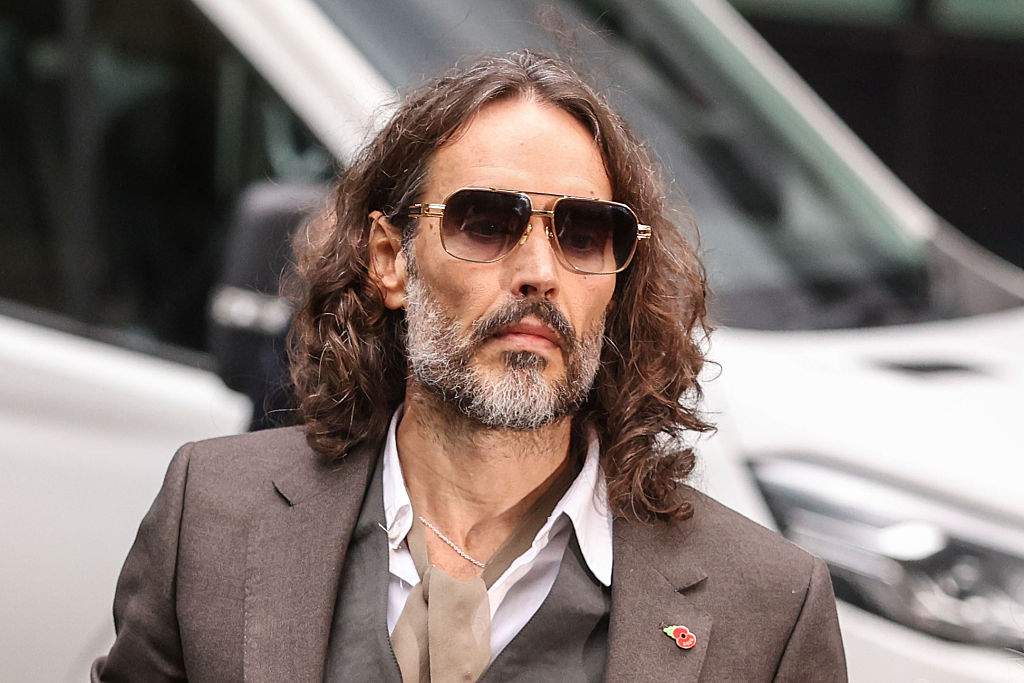
Rumors claiming Russell Brand was sentenced to more than 10 years in prison are circulating aggressively across social media feeds and clickbait websites right now, but the reality is completely different. He has not been sentenced to 10 years in prison. In fact, as of late 2026, he hasn't been convicted of any crime or sentenced to serve prison time at all.
You've probably seen the thumbnails. Dramatic mugshots, bold yellow text screaming about a decade behind bars, and vague captions urging you to click a link before it gets deleted. It's the classic internet rumor mill working overtime, blending real ongoing legal troubles with outright fabrication to harvest cheap clicks. Meanwhile, you can read other events here: Why Samantha Markle Called Thomas Markle Mentally Sharp Before His Arrest.
If you're trying to figure out what actually happened with Russell Brand's legal battles, you need to separate the real criminal investigations and civil lawsuits from the fake headlines designed to trick casual scrollers. Here is the actual breakdown of where things stand, why these false prison rumors keep popping up, and how the real legal proceedings work.
Where the Russell Brand Prison Sentence Rumors Came From
Fake celebrity sentencing stories don't appear out of thin air. They usually piggyback on real, high-profile news events where the public is already expecting a major legal update. To explore the full picture, we recommend the excellent report by Reuters.
In Brand's case, the fuel for these rumors comes from two very real, very serious tracks of legal action that began making headlines back in September 2023. That was when a joint investigation by The Times, The Sunday Times, and Channel 4's Dispatches published multiple allegations of sexual assault and emotional abuse spanning between 2006 and 2013. Brand has consistently denied all allegations, maintaining that all of his relationships were consensual.
Since that initial broadcast, two separate things have happened:
- Police investigations in the UK: The Metropolitan Police and Thames Valley Police launched criminal investigations after receiving multiple reports of non-recent sexual offenses.
- Civil lawsuits in the US: A civil suit was filed in New York under the Adult Survivors Act, alleging sexual assault on a film set in 2010.
Content farms and automated spam networks take these real legal developments and twist them into fake breaking news. Why? Because people searching for updates on a celebrity investigation are much more likely to click a headline claiming a "10-year prison sentence" than one explaining the slow, bureaucratic reality of pre-trial legal motions and police file reviews.
I've watched this exact pattern play out dozens of times over the last few years with major entertainment figures. An investigation drags on for months without a splashy public update, algorithmic feeds get hungry for fresh engagement, and suddenly low-quality domains start publishing fabricated sentencing articles. They use AI-generated voiceovers on TikTok and YouTube Shorts, pairing stock courtroom footage with completely invented judge quotes. By the time mainstream fact-checkers debunk the claim, the spam sites have already cashed in on the ad revenue.
What Actually Happens in UK Police Investigations
Part of the confusion stems from how differently the British legal system operates compared to the American court system. If you're used to watching US legal dramas, you might expect an arrest, an immediate public indictment, and a televised trial within a few months.
That isn't how it works in England and Wales.
When the Metropolitan Police investigate historical allegations, the process is notoriously slow and largely confidential until formal charges are authorized. Detectives have to interview complainants, gather corroborating witness statements, review decades-old communications or medical records, and interview suspects under caution.
Once the police finish gathering evidence, they don't just lock someone up or throw them into a courtroom. They submit a comprehensive file of evidence to the Crown Prosecution Service (CPS). Independent prosecutors at the CPS then apply a strict two-stage test under the Code for Crown Prosecutors:
- The Evidential Stage: Is there enough reliable, admissible evidence to provide a realistic prospect of conviction against the suspect on each charge?
- The Public Interest Stage: If there is enough evidence, is a prosecution required in the public interest?
Only if the CPS formally authorizes charges does a case move toward a Magistrates' Court and eventually a Crown Court for trial. You cannot be sentenced to prison without a formal charge, a trial (or a guilty plea), and a conviction. Skipping straight to a "10-year prison sentence" headline ignores every single foundational step of British criminal procedure.
Civil Lawsuits vs Criminal Charges
Another massive point of confusion in these viral posts is the difference between a civil lawsuit and a criminal prosecution. People routinely conflate the two, which makes it easy for misleading headlines to sound plausible.
In the United States, Brand was named in a civil lawsuit filed in the New York State Supreme Court in late 2023. That suit also named companies involved in the production of the 2011 film Arthur, including Warner Bros. Pictures.
Here is what you need to keep in mind about civil court:
- No prison time is on the table. Civil lawsuits deal with financial damages, liability, and restitution—never incarceration. Even if a defendant loses a civil case completely, a civil judge has zero authority to sentence anyone to prison.
- Different burden of proof. Criminal cases require proof "beyond a reasonable doubt." Civil cases generally rely on a "preponderance of the evidence," meaning it is more likely than not that the claims are true.
- Slow pre-trial timelines. Civil litigation involves endless rounds of motions to dismiss, discovery disputes, and depositions that routinely stretch across multiple years before a jury ever sees the inside of a courtroom.
When a clickbait blog mashes together details from a New York civil filing with a UK criminal investigation and slaps a fake prison sentence on top, they're counting on readers not knowing the difference between civil liability and criminal sentencing.
Why Celebrity Death and Prison Hoaxes Explode on Social Media
If you feel like fake celebrity news has gotten noticeably worse lately, you're not imagining things. The mechanics of social media distribution have changed dramatically, rewarding sensationalism over basic accuracy.
First, engagement-bait algorithms don't distinguish between real news and angry comments pointing out that the news is fake. When someone posts "Russell Brand sentenced to 10 years in prison" on Facebook or X, hundreds of people jump into the comments to argue about his politics, his past career, or whether the story is real. The platform's algorithm sees high comment velocity and immediately pushes the post to thousands more users.
Second, search engine manipulation plays a huge role. Spammers monitor trending search queries around controversial public figures. The moment searches for "Russell Brand update" or "Russell Brand court" spike, automated content mills spin up dozens of near-identical articles stuffed with keywords like "sentenced," "prison," and "verdict" to capture organic search traffic before legitimate news outlets publish routine procedural updates.
Honestly, it's exhausting to wade through. Even savvy readers get tripped up when five different dubious websites repeat the exact same fabricated detail within a 24-hour window. That repetition creates an illusion of consensus—the false impression that because multiple sites are reporting it, it must be true.
How to Verify Breaking Celebrity Legal News Yourself
You don't need a law degree or media credentials to spot a fake sentencing story in about thirty seconds. Whenever you see a dramatic claim about a celebrity going to prison, run through a quick verification check before sharing it or taking it at face value.
Check the major wire services first. If a globally recognized entertainer were actually convicted and sentenced to over a decade in prison, it wouldn't be an exclusive scoop on a random blog you've never heard of. Outlets like the BBC, Associated Press, Reuters, The Guardian, and The New York Times would have push alerts out within minutes. Open a new tab, search the person's name alongside "BBC" or "Reuters," and see what comes up. If they aren't reporting a sentencing, it didn't happen.
Look for specific court details. Real legal reporting is packed with dry, verifiable specifics. A genuine article about a criminal sentence will name the exact court (for example, Southwark Crown Court or the Old Bailey), the name of the presiding judge, the exact statutory charges the defendant was convicted of, and the date the verdict was handed down. Fake articles rely on vague phrases like "a judge ruled yesterday" or "court documents reveal" without naming a single institution or official.
Inspect the domain and author. Click through to the actual website hosting the story. Does the site have an editorial masthead, real journalists with verifiable histories, and clear correction policies? Or is it covered in aggressive pop-up ads with an author listed simply as "Admin" or "Staff Writer"?
Watch out for old photos passed off as new. Many viral posts use photos of a celebrity walking outside a courthouse from years ago—often from an unrelated civil dispute, a custody hearing, or even a film set—and caption them as "arriving for sentencing." A quick reverse image search will usually show the photo is five or ten years old.
The next time a viral post claims Russell Brand or any other high-profile figure has been handed a massive prison sentence, take ten seconds to check the BBC or AP wire before believing a word of it.