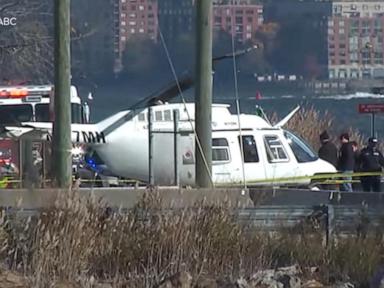
When a New York City tour helicopter makes a hard landing across the Hudson River in New Jersey, the internet immediately erupts with panic about sightseeing flights. Viral videos spread within minutes. Armchair experts flood the comments claiming the aircraft practically fell out of the sky, yet the reality of aviation emergency procedures tells a completely different story.
Let's be clear about what actually happened and why these incidents look so terrifying on smartphone footage. When an NYC tour helicopter experiences a mechanical issue or sudden wind shear near the Manhattan skyline, pilots rarely have the luxury of gliding back to a concrete helipad at West 30th Street or Pier 6. Instead, they execute a controlled emergency maneuver—often targeting open fields, industrial parking lots, or waterfront parks along the New Jersey shoreline in places like Kearny, Jersey City, or Hoboken. Everybody walks away shaken, the aircraft sustains structural damage, and local news runs dramatic headlines about a near-catastrophe.
Honestly, calling a controlled emergency landing a "crash" misunderstands how rotorcraft actually fly.
Why NYC Tour Helicopters End Up Making Hard Landings in New Jersey
Airspace over the Hudson River is some of the most congested, unforgiving low-altitude territory in the United States. Helicopters operating along the Hudson River Exclusion corridor fly below 1,000 feet to stay clear of commercial airliners descending into Newark, LaGuardia, and JFK.
At that altitude, a pilot has mere seconds to react if an engine sputters or a warning light flashes on the instrument panel. You can't safely put a helicopter down in Midtown Manhattan without risking lives on crowded sidewalks and avenues. Putting it in the Hudson River itself creates an immediate drowning hazard—even with pop-out emergency floats deployed, cold river currents and heavy ferry traffic turn a water ditching into a race against time.
New Jersey's industrial waterfront offers the exact opposite environment. Across the river, you'll find wide stretches of flat marshland, empty warehouse lots, and open recreational fields. When trouble strikes mid-tour, turning west toward New Jersey isn't a sign of a pilot losing control. It's the textbook survival decision every commercial helicopter pilot in the tri-state area drills for during simulator training.
The Physics Behind a Hard Landing vs a Crash
Most people assume that if a helicopter engine fails, the aircraft drops like a stone. That's a Hollywood myth.
Helicopters rely on a built-in aerodynamic safety mechanism called autorotation. When engine power is lost, the pilot immediately lowers the collective pitch lever, allowing upward-flowing air to keep the main rotor blades spinning as the aircraft descends. Think of how a maple seed spins slowly to the ground rather than plummeting straight down. The spinning blades store rotational energy, and right before touching the ground, the pilot pulls back on the cyclic and raises the collective to cushion the impact.
Still, autorotation leaves zero room for a gentle, butter-soft touchdown—especially when landing on uneven asphalt, mud, or grass in an industrial lot.
- High descent rates: Even a textbook autorotation brings the aircraft down faster than a normal powered approach, compressing the landing skids violently upon contact.
- Tail boom strikes: If the pilot flares too aggressively to bleed off forward speed, the tail rotor or tail boom can strike the ground, snapping structural components and making the video look catastrophic.
- No second chances: Unlike an airplane pilot who can abort a bad approach and go around, a helicopter gliding without engine power gets one shot at the landing spot.
When you watch grainy footage of an NYC tour helicopter making a hard landing in New Jersey and see bent skids or a cracked fuselage, you're actually looking at energy absorption working as designed. Modern airframes from manufacturers like Bell and Airbus are engineered to crumple and absorb vertical G-forces so the passengers strapped inside don't have to.
The Ongoing Battle Over Hudson River Sightseeing Flights
Every time a sightseeing chopper goes down in New Jersey or the Hudson, local lawmakers and advocacy groups renew calls to ban non-essential tourist flights over New York City altogether. Groups like Stop the Chop NY/NJ have spent years lobbying the Federal Aviation Administration (FAA) and Congress to shut down tour operators flying out of New Jersey heliports—particularly Kearny and Linden—which bypass New York City's stricter local heliport regulations.
Here's the catch that frustrates local residents on both sides of the river. New York City can regulate flights taking off from Manhattan heliports, and it has already slashed tourist flight volume there by roughly half over the past decade. However, the city has zero jurisdiction over private heliports in New Jersey. A tour company based in Kearny can legally launch a Bell 206 or Airbus AS350, fly straight across the river to circle the Statue of Liberty and Central Park, and return to New Jersey without ever touching Manhattan soil.
Only the FAA controls federal airspace, and the agency has historically resisted outright bans on commercial air tours, favoring voluntary noise-abatement routes and strict maintenance oversight instead.
What the Safety Data Actually Shows
Before writing off every sightseeing flight as a death trap, look at how the industry operates compared to general aviation as a whole. Commercial tour operators fall under FAA Part 135 regulations, which require far stricter pilot certification, recurring simulator checks, and mandatory maintenance intervals than private recreational flying.
Yet incident records from the National Transportation Safety Board (NTSB) reveal a recurring pattern in New York metro area rotorcraft accidents:
- Engine and drivetrain anomalies: Sudden loss of power or oil pressure warnings force immediate off-airport landings before a minor mechanical failure turns into an in-flight fire.
- Micro-weather shifts: Rapid wind gusts funneling between Manhattan skyscrapers and spilling across the Hudson River can catch low-altitude aircraft off guard during approach and departure phases.
- High cycle wear: Sightseeing helicopters fly short 15-to-20-minute loops dozens of times a day. Constant takeoffs and landings put immense thermal and mechanical stress on turbine engines compared to helicopters flying long cross-country routes.
None of this means sightseeing helicopters are falling out of the sky daily. Millions of tourists have flown over New York Harbor safely. It does mean that when mechanical fatigue hits, the margin for error at 800 feet above the Hudson is razor-thin.
How to Evaluate an NYC Helicopter Tour Before You Book
If you're planning to take a sightseeing flight over Manhattan—or if you're simply trying to separate real aviation risk from sensationalized headlines—don't just pick the cheapest deal on a discount travel site. Price shopping on third-party aggregators often hides critical details about who is actually maintaining and flying the aircraft.
Look closely at the operator's safety footprint before handing over your credit card:
- Check the departure location: Flights leaving from Manhattan's Downtown Manhattan Heliport (Pier 6) operate under heavy city oversight and strict safety protocols, whereas budget operators flying out of industrial lots in New Jersey sometimes operate with leaner margins.
- Ask about over-water safety gear: Even though routes hug the shoreline, verify that the aircraft is equipped with inflatable emergency floats and that the crew conducts a thorough pre-flight briefing on how to unbuckle and exit after a hard impact.
- Avoid doors-off flights if safety is your top concern: Doors-off photography flights became wildly popular on social media, and they require specialized secondary harnesses that can complicate a rapid evacuation if a helicopter makes a hard landing in water or rough terrain.
- Look up the operator's NTSB history: You can search any Part 135 air carrier's exact legal name in the public NTSB aviation accident database in under two minutes to see if they have a pattern of mechanical incidents or regulatory violations.
What Happens After an Emergency Landing
Once a tour helicopter touches down hard in New Jersey, the investigation moves fast—even when nobody is seriously injured. Local police and fire crews secure the perimeter first to contain any spilled Jet-A fuel, which poses a serious fire risk around hot turbine exhausts.
Within hours, investigators from the FAA Flight Standards District Office (FSDO) and the NTSB arrive to document the scene before the wreckage is flat-bedded away to a secure hangar. They pull the aircraft's maintenance logs, download engine monitoring data, interview the pilot, and inspect the rotor blades for signs of pre-impact failure versus ground-strike damage. A preliminary report usually surfaces within a couple of weeks, while the final probable cause determination can take twelve to eighteen months.
The next time you see breaking news footage of an NYC tour helicopter sitting crooked on a New Jersey field with bent skids, look past the dramatic camera angles. Check whether the cabin stayed intact and whether the passengers walked away on their own feet. In aviation, any landing where everyone survives without life-threatening injuries isn't a failure—it's proof that pilot training and aircraft engineering did their jobs when things went wrong.