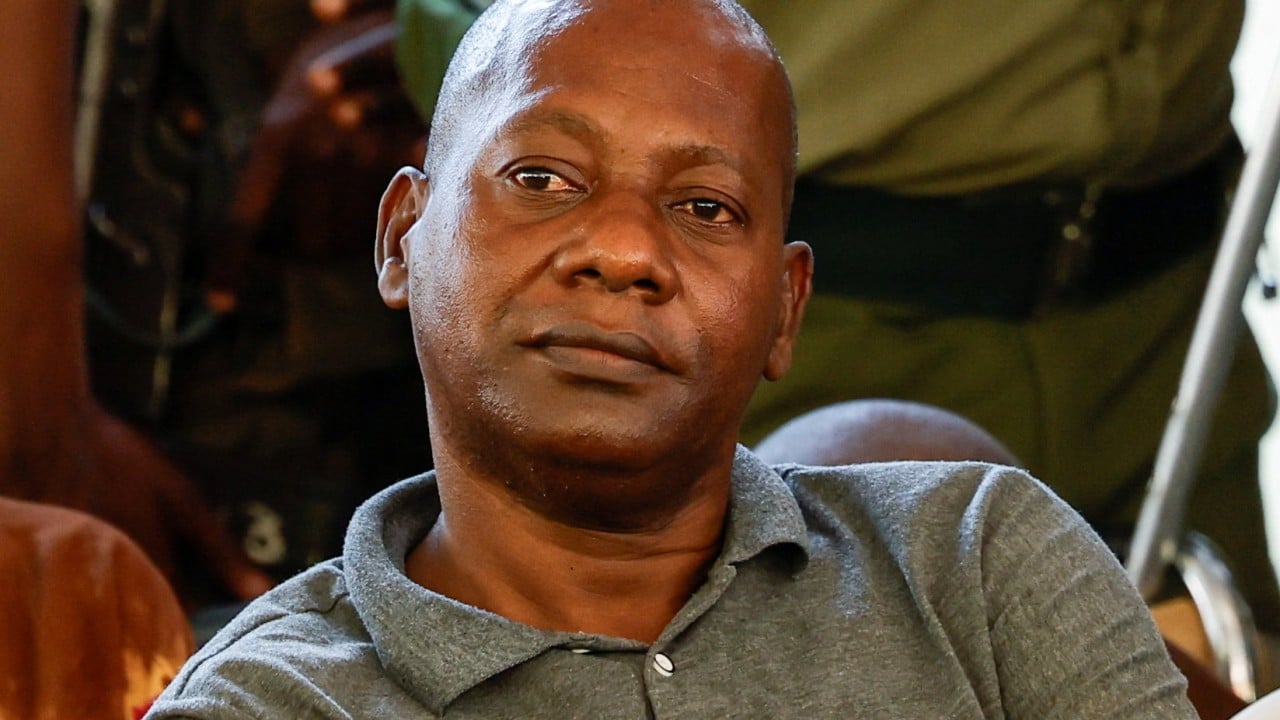
Two hundred years behind bars sounds like a neat, tidy ending to one of the darkest chapters in modern history. It isn't. When news broke that a Kenyan doomsday cult leader was jailed for 200 years for murdering 191 followers, headlines around the world treated the verdict like the final period at the end of a horror story.
I've spent years studying coercive control and high-demand religious groups, and I can tell you right now that massive prison sentences rarely capture the real story. People see a triple-digit prison term and assume justice is served and the threat is over. They miss the systemic failures that allowed hundreds of people to starve to death in a coastal forest while authorities looked the other way.
If you want to understand how Paul Nthenge Mackenzie and the Good News International Church pulled off the Shakahola forest tragedy, you have to look past the courtroom theatrics. You have to look at the mechanics of extreme coercion, the warning signs that were ignored for years, and what this specific ruling actually changes for Kenya's legal system.
Why the 200-Year Sentence Isn't What It Looks Like
Let's clear up the biggest misconception first. When a judge hands down a 200-year sentence in a case involving 191 victims, people picture a single, cinematic gavel strike that locks someone away for two centuries. In reality, sentencing in mass-casualty prosecutions is a messy, technical process built on consecutive and concurrent terms across dozens of individual counts.
Under Kenyan law, a prison term of that scale functions as a de facto life sentence without the possibility of practical release. Nobody lives to 250. Prosecutors pushed for maximum punishment across multiple charges—including murder, manslaughter, terrorism-related offenses, and child cruelty—specifically to guarantee that even if a higher court overturns a few counts on technicalities during appeal, the remaining decades still keep the defendants locked away until they die.
That legal strategy matters. Defense lawyers in complex mass-atrocity trials almost always attack the chain of custody on forensic evidence or question whether every single victim's death can be directly tied to a specific order. By stacking sentences across 191 confirmed victims, the prosecution built a firewall against appellate loopholes.
Still, a long prison term doesn't bring back the 191 children and adults pulled from shallow mass graves in Kilifi County, nor does it account for the hundreds of other bodies exhumed during the broader Shakahola investigation. The number 191 represents the specific counts tied to that conviction—not the total death toll of the entire forest compound, which climbed past 400 during months of grueling forensic exhumations.
How Paul Mackenzie Built a Death Trap in Shakahola
To understand how this happened, you have to stop thinking of cult victims as gullible people who suddenly lost their minds. That's lazy thinking. Honestly, it's also dangerous because it makes you believe you're immune to manipulation.
Paul Nthenge Mackenzie didn't start out telling people to starve themselves in the bush. Back in 2003, he founded the Good News International Church in Malindi as a fairly standard evangelical ministry. He drove a taxi, preached passionately, and used a local television channel—Times TV—to broadcast his sermons across coastal Kenya.
His shift toward apocalyptic extremism happened gradually. Over a decade, his theology hardened into absolute rejection of the modern world:
- Medical rejection came first, with Mackenzie preaching that hospitals and doctors were tools of evil and that prayer alone cured disease.
- Educational boycotts followed, convincing parents to pull their children out of school because formal education was supposedly demonic.
- Financial liquidation sealed the trap, as followers sold their land, homes, and businesses and handed the proceeds over to fund the move to an isolated 800-acre parcel in the Shakahola forest.
Once families moved into that remote stretch of scrubland near the Tsavo East National Park boundary, Mackenzie controlled everything. Food. Water. Information. Movement.
You don't need barbed wire to run a prison when people are miles from the nearest paved road and have burned every bridge back to their former lives. Survivors who escaped or were rescued by police described a strict hierarchy of starvation. Children were forced to fast first so they could "meet Jesus" before the adults, followed by women, then men, and finally the inner circle of enforcers—who, tellingly, kept eating while everyone else wasted away.
The Red Flags Kenyan Authorities Missed for Years
Here's the part that makes me furious every time I review the case timeline. This wasn't an undetectable underground operation. Mackenzie was arrested multiple times years before the mass graves were discovered in April 2023.
In 2017, police arrested him over his radical teachings and for encouraging children to drop out of school. He was charged, released on bond, and went right back to preaching. In 2019, authorities arrested him again—this time in connection with the deaths of children and the illegal distribution of extremist video material. Again, he walked out on bail.
Why didn't the system stop him? Three massive blind spots collided at once:
- Constitutional sensitivity around religious freedom. Kenya is a deeply religious country where churches operate with minimal state interference. Politicians and local administrators are routinely terrified of being accused of religious persecution, which creates a wide buffer zone for abusive leaders to operate unchecked.
- Fragmented local policing. When Mackenzie closed his Malindi church in 2019 and relocated his followers deep into the Shakahola forest, he moved across administrative boundaries into a sparsely populated area with thin police coverage.
- Slow judicial follow-through. Dropping charges or letting cases stall in magistrate courts gave Mackenzie years to consolidate his authority and isolate his followers completely from extended family members who were filing missing-person reports.
By the time police finally raided the Shakahola compound in April 2023—acting on a tip from human rights activists and a frantic father whose children had already died—emaciated survivors were begging rescuers to leave them alone so they could finish dying.
What Makes Coercive Starvation So Hard to Prosecute
Prosecuting someone who didn't personally pull a trigger or swing a machete is a nightmare in criminal court. Defense attorneys love to argue that adults have free will and chose to fast on their own.
Kenyan prosecutors had to prove beyond a reasonable doubt that Mackenzie and his co-defendants didn't just offer bad spiritual advice—they actively engineered lethal conditions and used physical force to prevent people from leaving or eating. Autopsy reports conducted by government pathologists led by Dr. Johansen Oduor became the backbone of the case.
Those autopsies revealed something critical. While starvation was the primary cause of death for most of the 191 victims, forensic examiners also found signs of strangulation, suffocation, and blunt-force trauma—particularly among children. When victims got too weak to cooperate or tried to sneak food and water, Mackenzie's enforcers stepped in to finish the job.
That forensic evidence blew up the defense's "voluntary fasting" narrative. You don't strangle someone who is voluntarily fasting.
Prosecutors also leaned heavily on Kenya's Prevention of Terrorism Act alongside standard penal code murder charges. Using anti-terrorism statutes allowed investigators to hold suspects longer during the massive forensic recovery operation and framed the forced starvation not as a private religious dispute, but as an organized, ideologically driven mass atrocity.
The Bigger Problem Nobody Wants to Fix
If you think locking up one man for 200 years solves the problem of deadly cults in East Africa—or anywhere else—you're kidding yourself.
Following the Shakahola discovery, the Kenyan government appointed a task force led by former legislator Mutava Musyimi to review the legal and regulatory framework governing religious organizations. The task force recommended stricter registration rules, mandatory theological training for clergy, financial transparency, and mechanisms to deregister rogue groups.
Almost immediately, mainstream religious leaders pushed back hard. Many legitimate pastors argued that state regulation of churches would hand the government a weapon to silence political dissent from the pulpit. That tension isn't unique to Kenya. Every democratic society struggles to draw the line between protecting religious liberty and preventing criminal abuse behind closed doors.
Yet while lawmakers argue over regulations, vulnerable people remain exposed to the exact same playbook Mackenzie used:
- Economic desperation pushes people toward charismatic leaders promising miraculous financial breakthroughs or end-times salvation.
- Digital echo chambers let fringe preachers radicalize followers privately on messaging apps long before anyone moves to a physical compound.
- Social isolation cuts victims off from family members who would otherwise notice rapid weight loss, sudden asset sales, or kids disappearing from school.
What You Can Actually Do If Someone You Know Is Being Pulled In
Reading about 191 deaths in a forest feels distant until you realize coercive groups use the exact same psychological levers on a smaller scale in cities and suburbs everywhere. Whether it's a fringe religious sect, a high-control wellness group, or an apocalyptic online community, the early warning signs look remarkably similar.
If a friend or family member is suddenly cutting off old relationships, handing over large sums of money, rejecting basic medical care, or adopting an "us versus the evil outside world" mindset, don't argue theology or logic with them. Confrontational debates almost always backfire because cult leaders train followers to view outside criticism as proof that the group is right.
Instead, keep a non-judgmental line of communication open so they know they have a safe exit when doubts creep in, document financial transfers or child welfare concerns quietly, and involve child protection services or local authorities immediately if minors are being denied food, schooling, or healthcare. A 200-year prison sentence punishes the monster after the graves are dug—staying alert to isolation and coercive control is the only thing that stops the graves from being dug in the first place.


