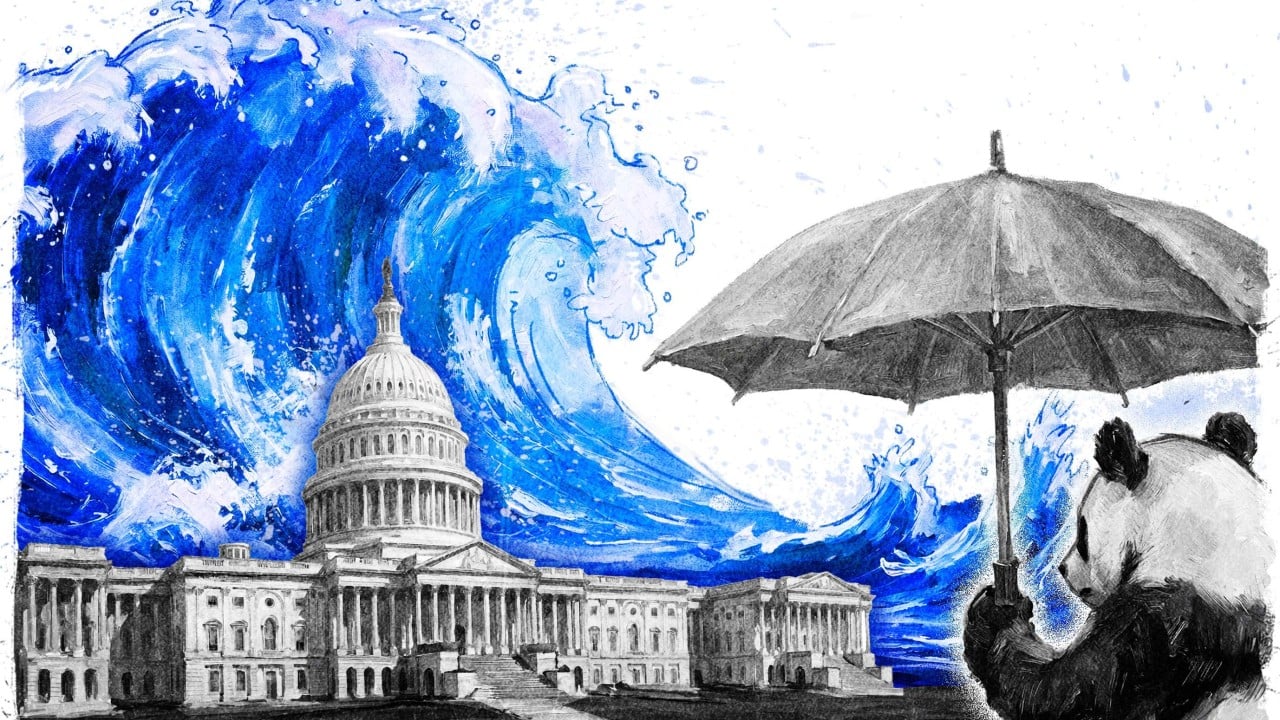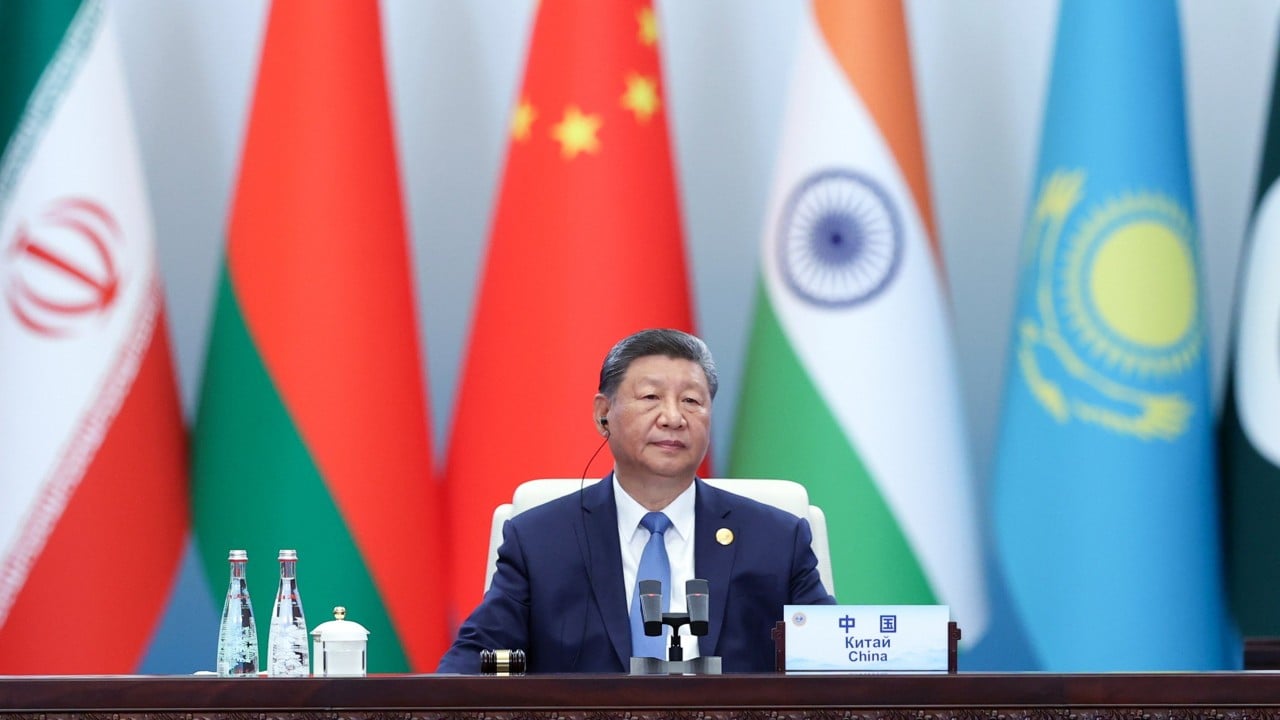
Beijing wants the microphone, and it wants the whole room to believe it's reading their script. That's the real tension behind the question of whether China can champion the Global South without speaking for it.
If you've spent time reading diplomatic cables or sitting through policy briefings in Washington, Brussels, or New Delhi, you've heard the same tired debate on repeat. Western analysts often treat the Global South like a passive audience waiting to be seduced by Chinese loans, while Beijing insists it's merely a humble member of the developing world standing up to Western hegemony. Both views miss the actual power dynamics on the ground.
China isn't just trying to lead developing nations. It's trying to define what their collective interests are in the first place, and countries from Brazil to Indonesia are quietly pushing back.
The Problem With Beijing's Self-Appointed Role
You can't claim to be an equal peer when your economy is roughly the size of the rest of the developing world combined. That's the elephant in every diplomatic room China enters.
When Chinese officials speak at the United Nations or during BRICS summits, they routinely use phrases like "we developing countries" and position Beijing as the natural voice of the historically marginalized. On paper, it sounds like solidarity. In practice, it creates an immediate structural mismatch. China is the world's second-largest economy, its largest manufacturing powerhouse, and a permanent member of the UN Security Council with veto power.
Smaller nations notice this gap immediately. A diplomat from a mid-sized African or Southeast Asian state knows that Beijing's core priorities—protecting its export markets, securing critical minerals, and isolating Taiwan—don't always line up with local development goals. When China frames its own geopolitical disputes with the United States as a broader struggle between the Global South and Western imperialism, it's effectively speaking for dozens of governments that never signed off on that framing.
Honestly, most capitals in the Global South aren't looking for a new ideological champion. They're looking for leverage. They want cheaper infrastructure financing, better market access for their agricultural and manufactured goods, and climate adaptation funds without political lectures attached.
Why the Global South Isn't a Monolith
The biggest mistake observers make is treating the "Global South" as a single unified bloc with one shared agenda. It isn't.
Think about what the term actually covers. It lumps together resource-rich Gulf monarchies, rapidly industrializing Asian tigers, debt-distressed sub-Saharan economies, and major democracies like India and Brazil. Their economic interests clash constantly.
Take trade policy as a concrete example. China's massive industrial overcapacity in sectors like electric vehicles, solar panels, and steel has flooded global markets. While Western nations slapped heavy tariffs on Chinese green tech, many developing economies found themselves in a bind too. Brazil, Turkey, and Indonesia have all introduced or raised tariffs on certain Chinese imports in recent years to protect their own domestic factories from getting wiped out.
How can you claim to champion the economic rise of the Global South while your own export machine makes it harder for neighboring countries to industrialize? You can't easily square that circle.
The India Factor
You also can't talk about who speaks for the Global South without looking at New Delhi. India has aggressively staked its own claim as the true voice of developing nations, especially during its G20 presidency in 2023 when it successfully pushed for the African Union to become a permanent member.
Unlike China, India doesn't carry the baggage of being a global superpower rival to the United States, nor does it hold a network of massive sovereign debt obligations across Africa and Asia. When Indian Prime Minister Narendra Modi hosts Voice of the Global South summits, the subtext is crystal clear: India sees itself as a bridge between the West and the developing world, not a battering ram against the international order. Beijing hates this dynamic because it breaks China's monopoly on the narrative.
Debt, Infrastructure, and the Reality of Leverage
For a decade, the Belt and Road Initiative gave China unmatched diplomatic clout across Asia, Africa, and Latin America. When you're the only lender willing to finance a deep-water port, a cross-border railway, or a national power grid, people listen when you talk.
That era of easy money is over.
Data from the Boston University Global Development Policy Center shows that Chinese overseas development finance dropped sharply from its 2016 peak as Beijing pivoted toward smaller, greener, and more commercially viable projects. At the same time, debt restructuring became a messy, drawn-out reality for countries like Zambia, Sri Lanka, and Ghana.
This shift changed the conversation entirely. When China was writing multi-billion-dollar checks, recipient governments were happy to echo Beijing's talking points on sovereignty and non-interference. Now that those same governments are stuck in multi-year negotiations with Chinese state banks over debt relief, the relationship feels much less like South-South solidarity and much more like a traditional creditor-debtor standoff.
It's hard to play the selfless champion when you're holding the IOUs.
Multilateral Forums Are Where the Friction Shows
Watch what happens behind closed doors at expanded blocs like BRICS+ or the Shanghai Cooperation Organization, and you'll see the limits of Chinese influence up close.
Beijing pushed hard for the expansion of BRICS, bringing in countries like Egypt, Ethiopia, Iran, Saudi Arabia, and the United Arab Emirates. China viewed this expansion as a way to build a heavyweight counterweight to the G7. Yet widening the table actually diluted Beijing's ability to steer the group.
Saudi Arabia and the UAE have deep security and financial ties to Washington. India and Brazil consistently resist any attempt to turn BRICS into an explicitly anti-Western alliance. Even countries that welcome Chinese investment refuse to be treated as junior partners in a geopolitical bloc run out of Beijing.
The same pattern plays out in climate negotiations at annual UN COP summits. China still classifies itself as a developing country under the 1992 UN Framework Convention on Climate Change, which shields it from the mandatory climate finance obligations placed on wealthy Western nations. Small island states and least-developed countries—the nations actually sinking or burning right now—increasingly question why the world's largest annual emitter of greenhouse gases gets to hide behind the same developing-nation label they use.
How Smart Analysts Track Real Influence
If you want to understand where China's influence in the developing world actually stands, stop listening to official communiqués and start watching behavior. State media from Xinhua or the Global Times will always paint a picture of harmonious South-South cooperation. Reality is much messier.
Pay attention to three specific indicators whenever Beijing launches a new global initiative:
- UN General Assembly voting patterns versus actual policy alignment. Many countries will vote alongside China on symbolic resolutions criticizing Western sanctions or defending state sovereignty. That costs them nothing. Look instead at who actually adopts Chinese technical standards, signs onto Beijing's Global Security Initiative in practice, or restricts Western military access in their territory. The gap between rhetorical support and concrete alignment is huge.
- Trade defense measures. Keep an eye on anti-dumping investigations filed by developing nations at the World Trade Organization. When countries like Thailand, Mexico, or South Africa launch trade probes against Chinese steel, textiles, or chemicals, it tells you that domestic economic survival outweighs diplomatic niceties.
- Hedging behavior in infrastructure and tech. Look at who wins the contracts for 5G networks, cloud data centers, and green energy grids across Southeast Asia and Latin America. Countries are increasingly splitting contracts—giving port construction to a Chinese state firm while handing telecommunications or AI infrastructure to American, European, or Korean companies. They're playing all sides against the middle.
Can Beijing Actually Pull It Off?
Championing the Global South without speaking for it requires a level of diplomatic restraint that authoritarian superpowers rarely possess.
To genuinely support developing nations without dominating them, China would need to accept outcomes that don't directly serve Beijing's strategic interests. It would mean backing UN Security Council reform that gives permanent seats to countries like India, Brazil, or an African representative—moves that would dilute China's own unique status as the only developing country with a permanent veto. It would mean opening its massive domestic consumer market to value-added imports from Africa and Latin America, rather than just buying raw commodities and selling finished goods back to them. And it would mean accepting debt haircuts faster in multilateral restructuring talks without insisting on opaque bilateral side deals.
Right now, Beijing wants the prestige of leading a global majority without paying the price of genuine power-sharing.
Developing countries aren't naive about this. Leaders in Jakarta, Nairobi, Brasilia, and New Delhi have spent decades navigating the demands of major powers. They know how to take Chinese infrastructure loans, welcome American tech investment, buy European defense equipment, and sell commodities to everyone. If you're analyzing global politics, stop asking whether China will win over the Global South—start tracking how the Global South is using China to get what it wants.