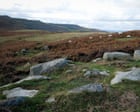
Thirty million pounds is a staggering amount of money to spend on dirt, heather, and sheep pasture. Yet that's exactly what the Wildlife Trusts just pulled off in Northumberland, hitting their fundraising target to buy the sprawling Rothbury Estate.
If you only skimmed the headlines, you might think this is just another feel-good story about planting a few trees and fencing off a nature reserve. You'd be completely wrong. Spanning roughly 9,500 acres—nearly 15 square miles of hills, moorland, and river valleys—this purchase represents the single largest land acquisition for nature recovery in England's modern history.
It isn't a neat, manicured park. It's a massive, messy, multi-generational experiment in handing a huge chunk of the English countryside back to natural processes. And honestly, the hardest work hasn't even started yet.
Why the Rothbury Estate Deal Actually Matters
To understand why conservationists are losing their minds over this, you have to look at the sheer scale of the land. Most nature reserves in the UK are tiny, isolated islands of habitat. A patch of woodland here, a sliver of wetland there, surrounded by intensive agriculture and roads. Wildlife gets trapped in these pockets, unable to migrate, adapt, or build resilient populations.
The Rothbury Estate changes the math entirely. Located in the heart of Northumberland, the estate stretches from the Simonside Hills down into the Coquet Valley. By securing all 9,500 acres in one piece, the Northumberland Wildlife Trust and the wider Wildlife Trusts federation haven't just bought a farm. They've bought an entire functioning catchment area.
Water falls on those high uplands, filters through peat bogs, runs down rocky streams, and feeds the River Coquet. When you control the whole system from ridge to river, you can fix problems at the source instead of slapping bandages on the symptoms downstream.
Here's what the acquisition actually covers on the ground:
- Massive habitat variety ranging from exposed sandstone crags and heather moorland to ancient semi-natural woodlands and lowland pastures.
- Critical waterways including miles of tributaries feeding the Coquet, one of England's finest salmon and sea trout rivers.
- Working farms that have been shaped by livestock grazing for centuries, complete with tenant farmers and existing rural infrastructure.
- Historic landmarks sitting right alongside fragile ecological zones that desperately need restoration.
Buying the land for £30 million was a monumental hurdle, especially given how quickly rural land prices have climbed due to corporate carbon-offsetting buyers. Raising that cash through a mix of major donors, public appeals, and philanthropic backing proves that public appetite for serious nature recovery isn't slowing down.
The Big Myth About Rewilding Northumberland
Whenever the word "rewilding" hits the British press, two predictable arguments erupt immediately. One side imagines wolves and bears tearing across the hills by Tuesday. The other side assumes conservationists are going to padlock the gates, kick out every farmer, and let the whole place turn into an impenetrable wall of brambles.
Both takes are nonsense.
Rewilding at Rothbury doesn't mean abandoning the land. In fact, total abandonment in modern Britain usually creates ecological deserts dominated by a few aggressive plant species like bracken or rhododendron. Because we wiped out apex predators and large wild herbivores centuries ago, ecosystems here need a gentle nudge to get their natural dynamics moving again.
Think of it less like locking a door and more like taking the training wheels off a bike while keeping a hand near the seat.
Instead of uniform sheep grazing that nibbles every tree sapling down to the dirt, the Wildlife Trusts will likely introduce low-density, naturalistic grazing. Hardy breeds of cattle, ponies, and pigs act as ecological engineers. Cattle tear up dense grass tussocks, creating bare soil where wildflower seeds can germinate. Pigs root around in the mud, mimicking wild boar and breaking up compacted ground. Ponies browse on tough scrub that other animals ignore.
Over decades, this creates a shifting mosaic of scrub, open glades, wetland, and thick woodland. It won't look tidy. British countryside aesthetics have been conditioned by centuries of manicured agricultural estates, so a genuinely wild piece of Northumberland looks scruffy to the untrained eye. Dead wood stays where it falls. Streams wind and flood across meadows instead of running down straight, dredged ditches.
What Happens to the Tenant Farmers?
You can't talk about 9,500 acres in Northumberland without talking about the people who live and work there. The Rothbury Estate wasn't an empty wilderness when it went on the market; it includes active farm tenancies and rural homes.
A heavy-handed eviction strategy would destroy local trust overnight—and rightly so. Northumberland's hill farming communities already operate on razor-thin margins, battling brutal weather and shifting government subsidy schemes.
The smarter approach, which the Wildlife Trusts have emphasized throughout their campaign, involves working directly with existing tenants. Farmers know the microclimates, soil quirks, and drainage patterns of their valleys better than any visiting ecologist ever could. Transitioning from intensive sheep production to conservation grazing, peatland restoration, and eco-tourism requires skilled local hands. If the Trusts get this right, Rothbury becomes a blueprint for how rural livelihoods survive alongside aggressive nature recovery. If they botch it, the backlash will set British conservation back twenty years.
The Real Ecological Payoff Takes Decades
Don't expect miracles next spring. Nature works on geological and generational clocks, not five-year funding cycles.
Right now, Britain ranks among the most nature-depleted countries on Earth. According to the State of Nature reports, nearly one in six species in Great Britain is threatened with extinction. Decades of industrial farming, upland drainage, and habitat fragmentation have hollowed out insect populations, which in turn starves birds, bats, and small mammals.
Restoring the Rothbury Estate targets several urgent ecological bottlenecks at once.
First, there's peatland restoration. Much of the upland moorland in northern England has been drained with artificial ditches—known locally as "grips"—to dry out the land for sheep and grouse. Drained peat dries out, oxidizes, and leaks massive amounts of stored carbon into the atmosphere. Blocking those grips turns the hills back into giant sponges. Wet peat stops releasing carbon, starts locking new carbon away, and holds back rainwater during heavy storms, reducing flood risks for towns further down the Coquet valley.
Second, woodland regeneration. Planting millions of trees in neat plastic tubes makes for great PR photos, but natural regeneration is almost always superior. When grazing pressure drops, birch, rowan, oak, and hazel seeds already sitting in the soil—or carried in by jays and wind—start sprouting on their own. Trees that grow where they naturally land develop stronger root systems and adapt better to local soil fungi than nursery-grown saplings hauled in on a truck.
Third, river recovery. By pulling fences back from riverbanks and letting native trees grow along the water's edge, the water temperature drops. Shade is life for Atlantic salmon and sea trout, which struggle to survive in warm, sun-baked streams. Tree roots stabilize eroding banks, while fallen branches create pools and riffles where young fish hide from predators.
Follow the Money Behind the £30m Price Tag
Let's be honest about the economics here. £30 million is a staggering sum, and it highlights a massive structural problem in UK conservation.
Over the past few years, land prices across Scotland and northern England have skyrocketed. Wealthy individuals and corporations—dubbed "green lairds" by critics—have snapped up vast estates to plant commercial conifer plantations or generate carbon credits to offset their emissions elsewhere.
That speculative boom has priced traditional conservation charities out of the market. When a regular charity tries to buy a valley, it's suddenly bidding against hedge funds and multinational corporations looking for ESG points.
Pulling together £30 million required the Wildlife Trusts to assemble a complex financial puzzle:
- Major philanthropic grants and foundational backing that anchored the initial bid and proved the project was viable.
- Public crowdfunding where tens of thousands of ordinary people chipped in whatever they could afford to keep the land in public-facing charitable hands.
- Blended finance mechanisms designed to generate long-term revenue from biodiversity net gain, sustainable grazing, and visitor infrastructure so the estate doesn't become a permanent money pit.
This last point is crucial. Buying the land is a one-off capital expense, even if it's a massive one. Managing 9,500 acres forever costs money every single year. Fences break, footpaths erode, invasive species creep in, and staff need wages. Relying purely on charity donations for ongoing maintenance is risky. By tapping into emerging nature markets—where developers pay for verified biodiversity improvements or water companies pay for cleaner catchment runoff—the estate can theoretically pay its own way without compromising its ecological mission.
What You Should Watch For Next
If you care about the future of the British countryside, keep a close eye on Rothbury over the next five years. This isn't just a local Northumberland story; it's a test case for the entire UK's "30 by 30" commitment—the pledge to protect and effectively manage 30% of land and sea for nature by 2030.
Right now, the UK is nowhere near hitting that target meaningfully. Counting national parks as "protected for nature" is mostly an accounting trick when vast stretches of those parks are overgrazed, species-poor uplands. Projects like Rothbury represent real, functional protection rather than lines drawn on a government map.
If you want to see how this unfolds—or even get involved—here's how to engage with it right now:
- Visit the area responsibly. Northumberland already draws walkers to the Simonside Hills, which sit adjacent to the estate. Stick to established rights of way, keep dogs on short leads during ground-nesting bird season from March to July, and support local pubs and shops in Rothbury itself so the community sees immediate economic benefits from nature tourism.
- Track the baseline ecological surveys. Over the next 12 to 24 months, ecologists will map every square meter of the estate to establish a starting point. Watching those baseline reports—and comparing them to wildlife counts five and ten years from now—will give you the clearest picture of whether large-scale British rewilding actually delivers on its promises.
- Support local Wildlife Trusts directly. The £30 million purchase price is met, but the long-term restoration work runs on ongoing memberships and local volunteering. Joining your regional trust gives them the financial stability to take on massive landscape-scale bids the next time a generational estate hits the open market.
The ink on the Rothbury deal is barely dry, and the transformation of those 9,500 acres will outlive everyone reading this today. For the first time in centuries, an entire Northumbrian landscape gets to decide for itself what it wants to become.