The steering wheel used to be a confession booth.
Every driver who ever drifted across a centerline, misjudged a rainy curve, or glanced down at a glowing screen for one fatal second carried a precise burden of guilt. The police arrived. Measurements were taken. Skid marks told a story of human failure, human distraction, human fatigue. We understood the grammar of the accident. It belonged to us.
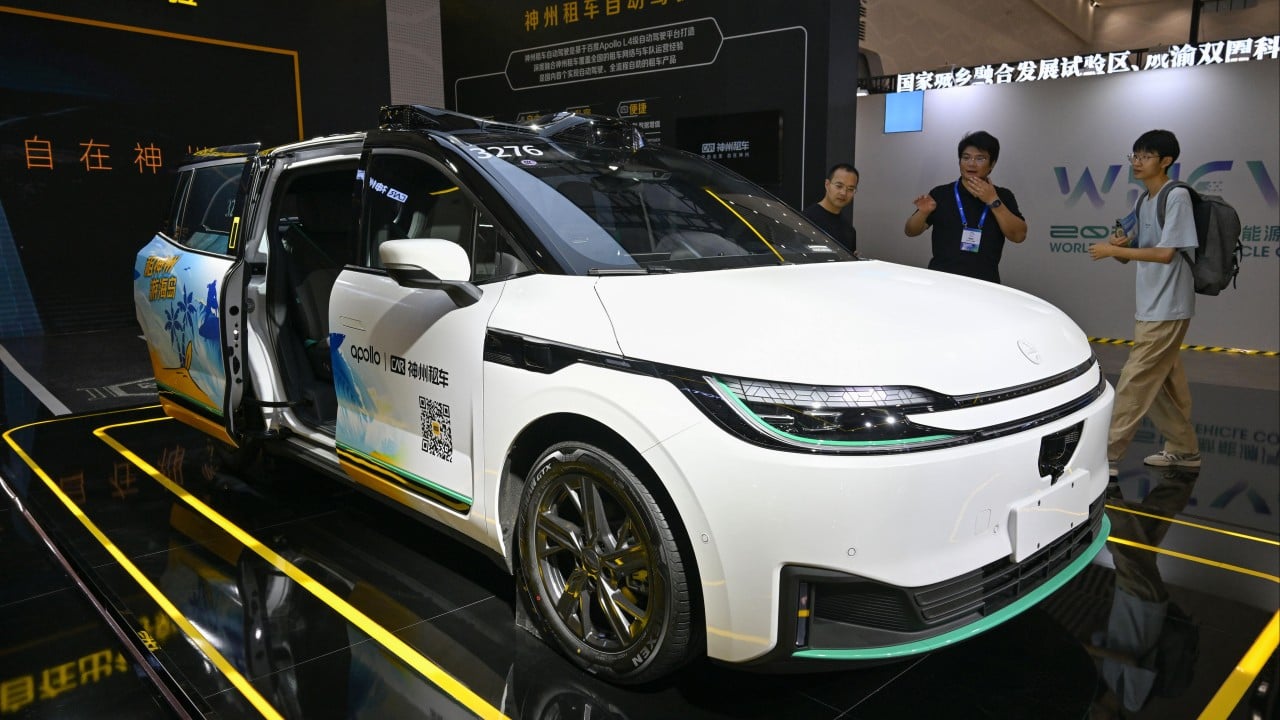
Now imagine sitting in the front seat of a car moving at forty miles per hour down a crowded Shenzhen boulevard while the wheel spins itself. Your hands rest loosely on your knees. Your eyes track the digital avatar of a cyclist rendering on the dashboard screen.
Then comes the crunch.
Metal meets metal. Glass stars across the windshield. The airbag deploys with the scent of burnt gunpowder.
Within milliseconds, the vehicle’s onboard computer logs the telemetry: sensor obstruction, pedestrian trajectory, braking latency of 0.14 seconds. The machine did everything right. Or did it fail in a way so complex that human logic cannot touch it?
When a fully automated car crashes, who gets the ticket? Who faces the judge?
For years, this question hovered like static over the entire autonomous vehicle industry. It was treated as a hypothetical thought experiment for philosophers in quiet university halls. But the future rarely waits for philosophy to catch up. China has drawn a sharp, permanent line through the fog, implementing a comprehensive traffic safety and liability framework specifically designed for fully automated vehicles.
It is a monumental shift. And it changes everything about how we move.
The Anatomy of an Invisible Pilot
To understand why this legal pivot matters so deeply, you have to spend time inside the transition.
I remember riding in an early-generation autonomous prototype a few years ago. It felt like sharing a cage with a ghost. The car hesitated at crosswalks with a weird, twitchy paranoia. It drove like an overly cautious sixteen-year-old who had read every safety manual ever printed but lacked a pulse. Every micro-adjustment of the tires felt alien.
Yet, technology outgrows its awkward adolescence with terrifying speed. Today's Level 4 and Level 5 autonomous vehicles do not just drive; they compute reality at a scale that leaves biological eyes in the dust. Lidar pulses paint the world in millions of points per second. Neural networks predict whether a toddler standing twenty feet away is about to drop a red rubber ball into the street.
Yet, code is written by humans. Algorithms are trained on flawed historical data. Edge cases lurk around every corner—a sun glare hitting a sensor just right, a patch of construction cones arranged in a chaotic pattern never seen in testing simulations.
When the machine hits the wall, the old legal frameworks shatter.
Under traditional tort law, liability chases human negligence. You were drunk. You were speeding. You were texting. But what happens when the entity behind the wheel is a silicon chip running proprietary firmware owned by a tech conglomerate headquartered a thousand miles away?
If you hold the passenger strictly liable, nobody will ever buy or ride in an autonomous vehicle. Why pay for self-driving technology if you inherit the criminal and civil liability of a test pilot every time you commute to work? Conversely, if you give manufacturers total immunity, safety standards erode into a marketing slogan.
China’s new regulatory framework cuts through this Gordian knot by shifting the center of gravity. It acknowledges a simple, radical truth: when a vehicle operates entirely on automated driving systems, the traditional driver becomes a passenger. And passengers do not hold the steering wheel of accountability.
Shifting the Weight of Blame
Let us walk through a hypothetical scenario to see how the gears of this new law grind into reality.
Consider a vehicle operating in autonomous mode on a wet evening in Guangzhou. The street is slick. A delivery scooter suddenly darts out from a blind alley, running a red light. The autonomous vehicle's collision-avoidance system instantly evaluates the physics. It cannot stop in time without skidding into a packed bus stop. It chooses the path of least harm, swerving into a parked electric bike, causing property damage and minor injuries.
In the past, the person sitting in the driver’s seat would face a nightmare of insurance claims, police interrogations, and potential court battles to prove they were not at fault despite having their hands off the controls.
Under the updated liability rules, the inquiry moves past the occupant entirely.
Investigators pull the black box data. They examine the software decision tree. Did the automated driving system function within its operational design domain? Was there a manufacturing defect in the sensor array? Did the software update deployed last Tuesday introduce a latency blind spot?
Liability now attaches directly to the vehicle owner, the fleet operator, or the manufacturer, depending on whether the incident stems from poor maintenance, a software glitch, or a structural design failure. The human occupant, provided they did not override the system maliciously or ignore explicit safety warnings to take manual control, steps out of the legal crosshairs.
This is not just a bureaucratic update. It is a psychological liberation.
For the average consumer, the fear of liability has been the single greatest psychological barrier to the adoption of autonomous transit. People do not fear dying in a crash as much as they fear being blamed for a disaster they had no power to prevent. By untangling personal culpability from machine operation, this legislation creates a protected space for trust to grow.
The Global Ripple Effect
No major economy exists in a vacuum. When the world's largest automotive market establishes clear liability rules for driverless cars, the shockwaves travel fast.
Western regulators have long wrestled with this exact problem, often paralyzed by political gridlock and the intense lobbying power of traditional insurance giants. In the United States, autonomous vehicle regulation is a patchwork quilt of state laws, municipal permits, and fragmented federal guidelines. One state welcomes robotaxis with open arms; the next bans them outright. Liability remains a messy game of precedent-chasing in civil courts, where juries decide the fate of multi-national tech firms one erratic verdict at a time.
China's approach offers a masterclass in systemic clarity. By codifying liability at the national level, it provides automakers and software developers with a predictable runway. Innovation thrives on certainty. When a company knows precisely where the legal boundaries lie—when they know exactly what insurance coverage is mandatory and how accident data will be audited—they can invest billions with confidence.
Watch what happens next in global supply chains. Foreign automakers operating joint ventures in the region must now align their software logging and safety architectures with these stringent legal standards. If your car wants to drive itself on public asphalt, it must be legally transparent. It must keep an uncorruptible diary of its digital thoughts, ready to be read by investigators who speak the language of code just as fluently as the language of traffic law.
The End of the Road
We are standing at the threshold of an era where the machine assumes the burden of our movement.
For over a century, the open road was a compact between human reflexes and machine mechanics. We paid for speed with our attention. Every time we turned the ignition, we accepted the unspoken contract that our lives and the lives of strangers depended on our individual vigilance.
That contract is expiring.
As automated cars take over our commutes, our highways, and our city streets, the definition of responsibility is being rewritten from the silicon up. We are handing over the wheel, and with it, we are handing over the blame.
The future of transportation will not be determined solely by how fast our computers can process a camera feed or how many miles of asphalt our sensors can map. It will be decided in the quiet rooms where lawmakers and engineers sit down to answer the hardest question of all:
When the machine decides to crash, who takes the fall?
The answer is no longer buried in the ambiguous reflexes of a terrified driver. It is etched into the code, recorded in the data logs, and borne by the creators who dared to build a world where humans finally stop driving.