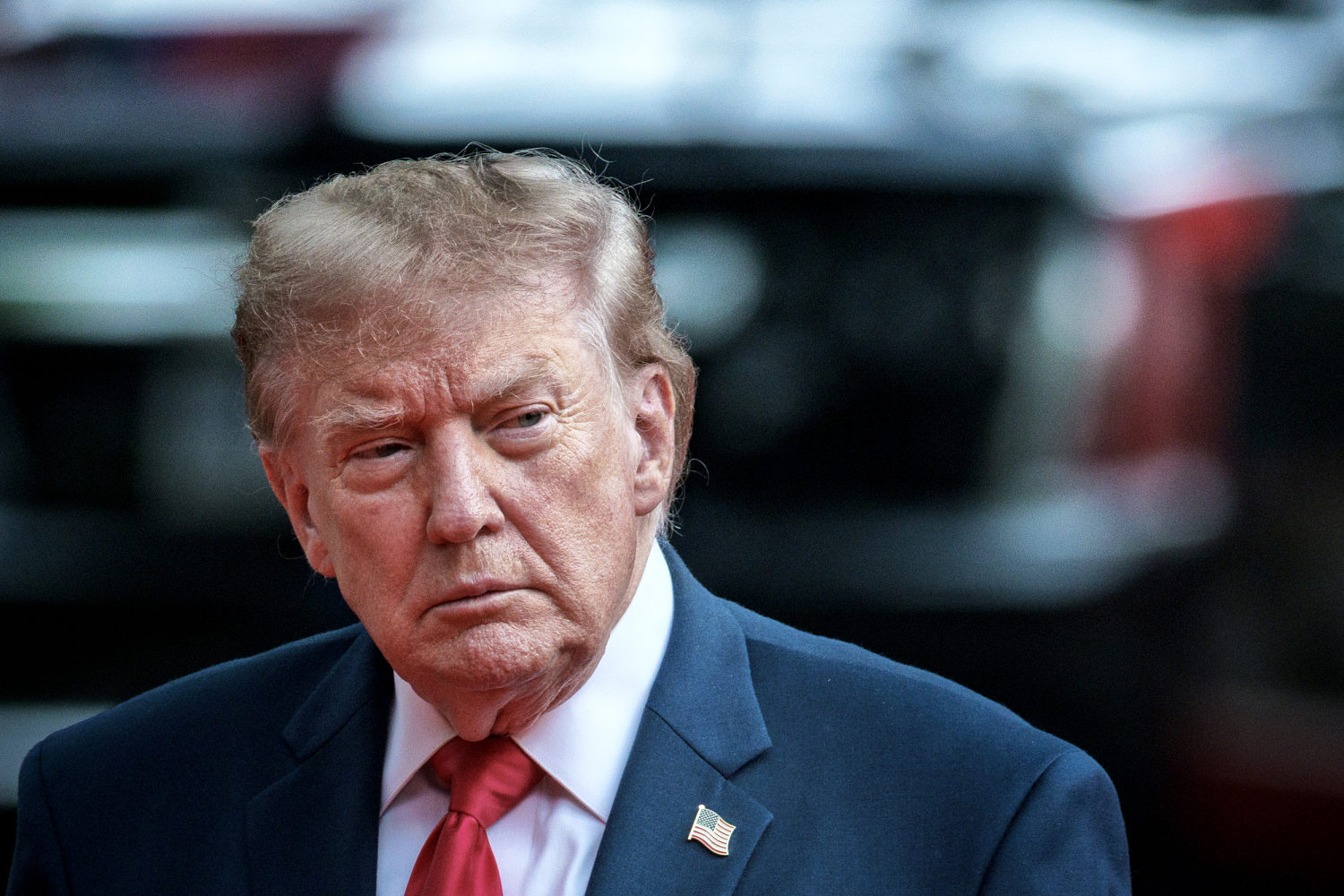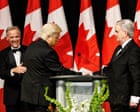
When Canadian Prime Minister Mark Carney shared a stage in Ottawa with a Donald Trump impersonator at the annual Parliamentary Press Gallery Dinner on November 21, 2026, the resulting laughter carried far beyond the ballroom walls. Comedian Mark Critch, dressed in an ill-fitting suit and a familiar blonde wig, lampooned the U.S. president's trade tariffs, annexation rhetoric, and erratic negotiating style while Canada's head of government stood smiling beside him. On the surface, it looked like standard rubber-chicken-circuit comedy. Underneath, it was a calculated diplomatic signal sent from a middle power to an unpredictable superpower.
Most coverage of the event treated the sketch as a lighthearted viral moment—a funny night out for Ottawa's political and media class. That reading misses the mechanics of how modern statecraft operates when traditional diplomatic channels turn volatile. Satire, when endorsed on stage by a sitting prime minister, stops being mere entertainment. It becomes a pressure valve for domestic anxiety and an asymmetric tool for managing a much larger neighbor.
The Anatomy of a Calculated Laugh
Political roasts in Ottawa and Washington share a superficial resemblance, yet they serve entirely different structural functions. In Washington, the White House Correspondents' Dinner has historically been an exercise in institutional self-preservation, where presidents and reporters signal that despite daily friction, everyone plays by the same rules. In Ottawa, the Parliamentary Press Gallery Dinner operates in the shadow of an existential asymmetry. Canada's economy, security, and cultural bandwidth are tied directly to decisions made in the West Wing.
By inviting Critch—a veteran cast member of the CBC satire program This Hour Has 22 Minutes—and comedian Mark McKinney, who appeared as a duplicate of Carney himself, the prime minister's team outsourced the sharpest barbs to performers who carry no diplomatic portfolio. Critch did not hold back. Mimicking Trump's cadence and aggressive handshakes, he joked that the only obstacle to a great bilateral deal was himself, because he was "crazy," and delivered the night's biggest punchline by admitting he does not call Carney "governor" to his face out of cowardice.
Plausible deniability is the currency of this arrangement. If Carney had stood at the podium and called the U.S. president a coward or unstable, the remarks would have triggered an immediate diplomatic crisis, retaliatory tariffs, or a freeze in cross-border talks. Having a sketch comedian say those exact words while the prime minister laughs in the background accomplishes two things at once. It satisfies a Canadian public frustrated by months of economic threats and sovereignty taunts, while leaving the Prime Minister's Office free to tell Washington that it was just a joke at a press dinner.
Carney kept his own 16-minute set focused on safer, though still pointed, territory. He mocked the gilded overhaul of the White House interior, telling the room that facing Ottawa's press corps was tough, though he had survived being alone in the Oval Office with its "new interior decorator". The line landed cleanly because it targeted aesthetics rather than policy, allowing clips to circulate across American cable news and social media without crossing into an official diplomatic insult.
Why Ottawa Reached for Comedy During a Trade Standstill
To understand why a technocrat like Carney leaned into broad physical comedy, you have to look at the timeline of friction between Ottawa and Washington leading up to November 2026. Throughout 2025 and 2026, the bilateral relationship endured repeated shocks. Washington floated the idea of turning Canada into a 51st state, threatened steep tariffs, disputed border infrastructure funding, and warned that Canada could take the blame if U.S. midterm elections went poorly.
Conventional diplomacy struggles against a strategy built on deliberate unpredictability. When a trading partner treats signed agreements as temporary suggestions and uses sovereign borders as rhetorical bargaining chips, white papers and sternly worded communiqués achieve very little. Silence, however, looks like weakness to voters back home.
Satire solves an immediate political problem for a Canadian leader walking that tightrope. Look at the competing pressures facing Carney's government:
- Domestic voter anger: Canadians expect their leaders to push back against bullying from Washington, particularly when tariffs threaten manufacturing and energy sectors.
- Economic vulnerability: Roughly three-quarters of Canadian exports flow south, meaning an all-out trade war inflicts disproportionate damage on Canada.
- Media optics: Viral clips of an American president being laughed at by an entire room of foreign lawmakers travel faster and hit harder on an ego-driven political stage than any policy speech ever could.
The Ottawa dinner turned that dynamic into theater. When Critch reenacted Trump's signature yanking handshake with both Carney and McKinney on stage, the bit mocked a well-documented power move that world leaders have spent years trying to neutralize during photo ops. Deconstructing a strongman's physical intimidation tactic in front of cameras strips it of its solemnity. Once a power play becomes a punchline, it is much harder to deploy seriously at the next summit.
The Domestic Truce Behind the Curtain
Focusing exclusively on the Trump impersonation also obscures what the dinner revealed about Canada's internal politics. For one evening, bitter partisan rivals used self-deprecation to lower the temperature in a deeply divided capital.
Conservative leader Pierre Poilievre used his turn at the microphone to address persistent leaks and criticism regarding his management style. Rather than deflecting reports that he yells at staff and treats journalists harshly, Poilievre leaned into them, joking that Carney was "stealing all my ideas". Newly appointed Governor General Louise Arbour poked fun at Carney's frequent international trips, comparing him unfavorably to God because God is everywhere while the prime minister is everywhere except Ottawa. New Democratic Party leader Avi Lewis, still without a seat in the House of Commons, mocked both his party's electoral slump and Carney's early departure from the banquet by noting that while he lacks a seat in Parliament, he at least stays in his dinner chair all night.
This ritual serves a vital function in parliamentary democracies. By forcing government ministers, opposition leaders, and the journalists who cover them into the same room to trade insults, the press gallery dinner reinforces a shared baseline of democratic norms. Everyone agrees, for a few hours, that power is temporary and public figures are fair game.
Yet the contrast between the domestic jokes and the Trump sketch was stark. Canadian politicians mocked themselves and each other over travel schedules, management temperaments, and seat counts. The satire aimed at the White House was rooted in genuine geopolitical anxiety—anxieties over annexation threats, trade coercion, and the stability of the North American alliance.
The Strategic Risk of Mocking a Thin-Skinned Superpower
Humor is a double-edged weapon in foreign policy, and history offers plenty of warnings about what happens when mockery reaches the wrong target at the wrong moment.
The most famous modern parallel sits just across the border. At the 2011 White House Correspondents' Dinner, President Barack Obama and comedian Seth Meyers spent several minutes mercilessly roasting Donald Trump as he sat stone-faced in the audience. Many political historians and observers have pointed to that evening as a catalyst that hardened Trump's resolve to pursue the presidency himself. Public humiliation rarely softens a populist leader; more often, it fuels grievance and retaliation.
Carney's team clearly understood that risk, which explains the careful choreography of the Ottawa event. There is a massive difference between a prime minister delivering an attack and a prime minister standing nearby while a public broadcaster's comedy troupe performs a sketch. Even so, the distinction is unlikely to matter much in an ecosystem driven by short video clips stripped of context.
Once footage of a foreign capital erupting in laughter at a U.S. president hits American television and social feeds, nuance disappears. Critics in the United States immediately framed the clips as evidence that traditional allies no longer respect American leadership. Supporters of the U.S. administration view such moments not as harmless comedy, but as proof that foreign elites are ungrateful beneficiaries of American security and market access.
What Happens When Comedy Becomes Policy
The deeper story out of Ottawa is not that a comedian did an accurate impression of Donald Trump. Critch has played the role on Canadian television for years, and audiences know the beats by heart. The real shift is the normalization of comedic proxy warfare between close allies.
For decades, U.S.-Canada relations were famously boring—a deliberate achievement built on quiet bureaucratic coordination, shared defense infrastructure, and predictable trade rules. Leaders disagreed over softwood lumber, dairy quotas, or pipelines, and they resolved those fights through tribunals and joint commissions. Nobody needed a sketch comedian to articulate the prime minister's frustrations because the diplomatic machinery actually worked.
When a prime minister steps onto a banquet stage alongside a fake U.S. president to laugh at jokes about cowardice and mental instability, it signals that traditional guardrails have eroded. Comedy fills the vacuum left when serious negotiation stalls. It gives an anxious electorate the catharsis of seeing a bully cut down to size, even if only under ballroom spotlights for a few minutes.
Whether that catharsis carries a price tag will not be decided by media critics or comedy writers. It will show up at the next round of tariff talks, border negotiations, and trade reviews, where the jokes end and the real leverage begins.
You can watch the full segment of the comedians and Prime Minister Mark Carney on stage in Mark Critch Channels Trump at Press Dinner with Carney, which captures the exact comedic timing and audience reaction inside the Ottawa ballroom.