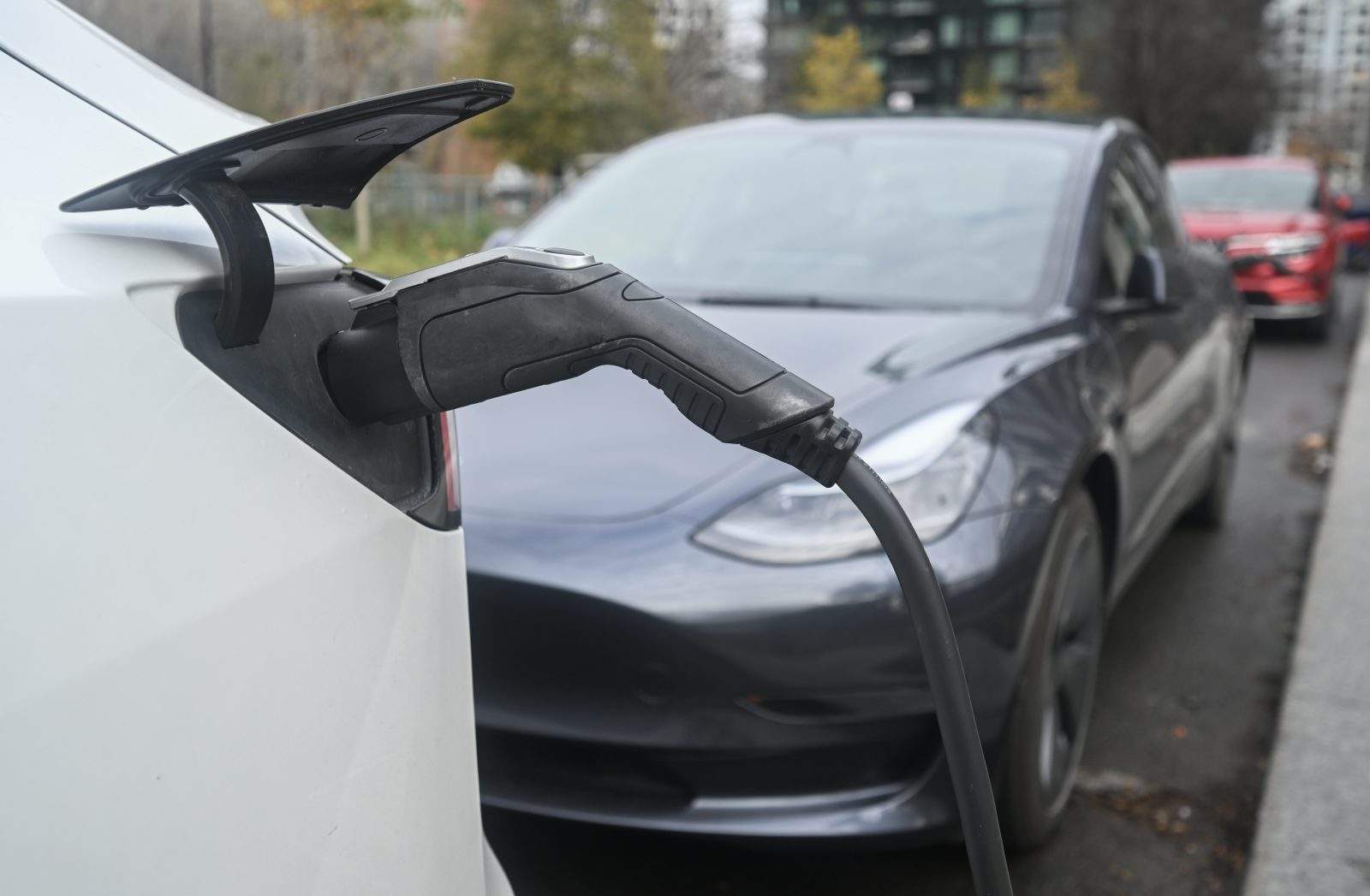
Ottawa finally admitted what anyone shopping for a decent three-row electric SUV in Canada has known since 2022. Treating a $105,000 family EV the same as a $300,000 V12 supercar made zero sense.
On November 12, 2026, Finance Minister François-Philippe Champagne announced a major rewrite to the Select Luxury Items Tax Act. Starting November 13, 2026, the federal luxury tax threshold for qualifying zero-emission vehicles jumped from $100,000 to $150,000. If you're shopping for a fully electric or hydrogen-powered passenger vehicle in Canada, that extra $50,000 of breathing room can shave up to $10,000 off your out-the-door bill.
Gas-powered cars didn't get the same break. Neither did plug-in hybrids.
Why the Old $100,000 Cap Was Broken for EVs
When Ottawa launched the federal luxury tax in September 2022, lawmakers drew a hard line at $100,000 for passenger vehicles, aircraft, and boats over $250,000. The goal sounded simple enough on paper. Tax ultra-wealthy buyers splurging on high-end toys.
Battery physics ruined that math almost immediately.
Heavy lithium-ion battery packs add tens of thousands of dollars to the base manufacturing cost of an electric vehicle compared to an equivalent gas model. According to the Canadian Automobile Association, the average price of a new EV in Canada sits around $50,000, yet the moment you step up to long-range crossovers, pickup trucks, or luxury sedans from brands like BMW, Mercedes-Benz, Cadillac, Rivian, or Audi, sticker prices blow past $100,000.
Buyers weren't trying to flaunt wealth. They were paying an upfront battery premium to cut fuel costs and tailpipe emissions, and Ottawa was punishing them with a surcharge designed for Ferraris and yachts. Even worse, because federal GST/HST and provincial sales taxes get calculated after the luxury tax is tacked on, a $100,001 EV got hit with cascading taxes that inflated the real penalty well past the sticker shock.
Ottawa has already had to walk back parts of this legislation once before. In November 2025, through Budget 2025, the federal government scrapped the luxury tax on aircraft and boats altogether after revenue collections fell way short of projections. Raising the EV ceiling in late 2026 follows the exact same pattern of adjusting policy to match actual market reality.
How the New $150,000 EV Luxury Tax Math Actually Works
Don't assume the tax vanishes entirely if you buy a $165,000 electric vehicle. The formula itself didn't disappear—only the starting line moved.
Under the proposed draft legislation for the Select Luxury Items Tax Act, Ottawa calculates the luxury tax on a qualifying zero-emission vehicle as the lesser of two numbers:
- 10 percent of the vehicle's full taxable value
- 20 percent of the amount above $150,000
Notice how dramatic that difference is in practice.
Say you're looking at a well-equipped Porsche Taycan, a Lucid Air, or a Cadillac Escalade IQ priced at $145,000 before sales tax. Under the old rules, 20 percent of the $45,000 overage meant you owed $9,000 in federal luxury tax alone—plus roughly $1,170 in extra HST if you live in Ontario. Under the November 13, 2026 rule change, your luxury tax on that exact same $145,000 car drops to $0.
What if you go higher? Take a vehicle priced at $170,000:
- Under the old $100,000 threshold, 20 percent of the $70,000 overage was $14,000, while 10 percent of the full $170,000 was $17,000. You paid $14,000.
- Under the new $150,000 threshold, 20 percent of the $20,000 overage above $150,000 equals $4,000, which is well below the $17,000 full-value calculation. You save $10,000 on the luxury surcharge alone, before even counting the provincial sales tax savings on top of it.
Once a qualifying EV crosses $300,000, the 10 percent full-value cap takes over, meaning the $150,000 threshold no longer saves you a dime compared to a gas supercar. Below $300,000, though, every buyer between $100,001 and $299,999 walks away ahead.
The Catch Most Dealerships Won't Highlight Right Away
Here's where buyers get tripped up. Not every car with a charging port qualifies for the $150,000 exemption.
Finance Canada's legislative text defines a "qualifying electric vehicle" strictly as a passenger vehicle that is fully electric or fully powered by hydrogen. Plug-in hybrid electric vehicles (PHEVs) and mild hybrids are completely left out. If you're eyeing a $125,000 Range Rover Sport PHEV, a Volvo XC90 T8 plug-in hybrid, or a Porsche Cayenne E-Hybrid, you're still stuck with the old $100,000 threshold. That discrepancy makes zero sense if you judge solely by local electric commuting range, yet the law draws a hard binary line between zero tailpipe emissions and everything else.
Watch your vehicle's weight rating too. The luxury tax only applies to passenger vehicles with a gross vehicle weight rating (GVWR) of 3,856 kg (8,500 lbs) or less. Heavy-duty commercial trucks and massive electric rigs like the GMC Hummer EV pickup or SUV actually exceeded that 3,856 kg GVWR limit from day one, meaning they were already exempt under the gross weight exclusion regardless of price.
Also pay close attention to what counts toward that $150,000 taxable value. Ottawa doesn't just look at the base MSRP advertised on a manufacturer's website. The taxable amount includes:
- Mandatory freight and pre-delivery inspection (PDI) fees
- Dealer-installed accessories and paint protection packages
- Factory options like upgraded battery packs, wheel packages, and driver-assistance suites
- Post-sale improvements made within a year of purchase if they push the cumulative value over the line
A car with a $147,500 base sticker can easily cross $150,000 once a dealership adds $2,500 in freight and $1,200 in winter floor mats and tint. You wouldn't trigger a massive tax at $151,200—only 20 percent of that $1,200 overage, or $240—but careless option bundling can still erase a clean zero-tax purchase.
How This Fits Into Ottawa's Broader 2026 EV Push
Raising the luxury tax threshold didn't happen in a vacuum. It rolled out one week after the federal government tabled Budget 2026 on November 5, 2026, alongside a broader push to keep Canada's auto sector and charging grid moving despite U.S. tariff headwinds.
Alongside the tax change, Budget 2026 committed $587 million over five years, starting in 2027–28, to install more than 55,000 public EV chargers across Canada through a renewed Zero Emission Vehicle Infrastructure Program. That comes on top of more than 50,000 chargers Ottawa has already helped fund, plus another $45 million earmarked for charging infrastructure research and development.
Honestly, the luxury tax tweak costs Ottawa very little political capital while delivering immediate relief to automakers struggling to move upper-trim EVs off dealer lots. High-end electric models like the Porsche Taycan, Lucid Air, Lucid Gravity, Mercedes-Benz EQS, BMW iX, and Cadillac Lyriq or Vistiq have faced sluggish showroom turnover in Canada precisely because buyers balked at paying a $6,000 to $15,000 federal penalty on top of high interest rates.
What You Should Do Before Signing a Bill of Sale
Because the November 13, 2026 effective date relies on parliamentary approval of the Budget 2026 legislative amendments, dealerships and importers are already applying the $150,000 threshold under standard Finance Canada administrative practice. Still, don't leave your wallet on autopilot at the finance desk.
First, audit the line-by-line worksheet before you sign. Make sure the dealership's software has actually updated its luxury tax calculation table from $100,000 to $150,000 for deliveries taking place on or after November 13, 2026. Accounting systems at smaller independent dealers lag behind federal announcements all the time.
Second, separate post-sale accessories from the main vehicle purchase agreement if your build sits right around $148,000 to $150,000. Keep your factory build under $150,000 including freight and PDI so you clear the threshold cleanly.
Third, double-check lease terms and imports. The luxury tax applies not just to cash or financed purchases, but also to leases and personal vehicle imports entering Canada. If you're leasing a $135,000 EV, verify that the capitalized cost in your lease agreement no longer bakes in the old luxury tax surcharge—because over a 36- or 48-month lease, eliminating a $7,000 luxury tax should drop your monthly payment by roughly $150 to $200 before sales tax.