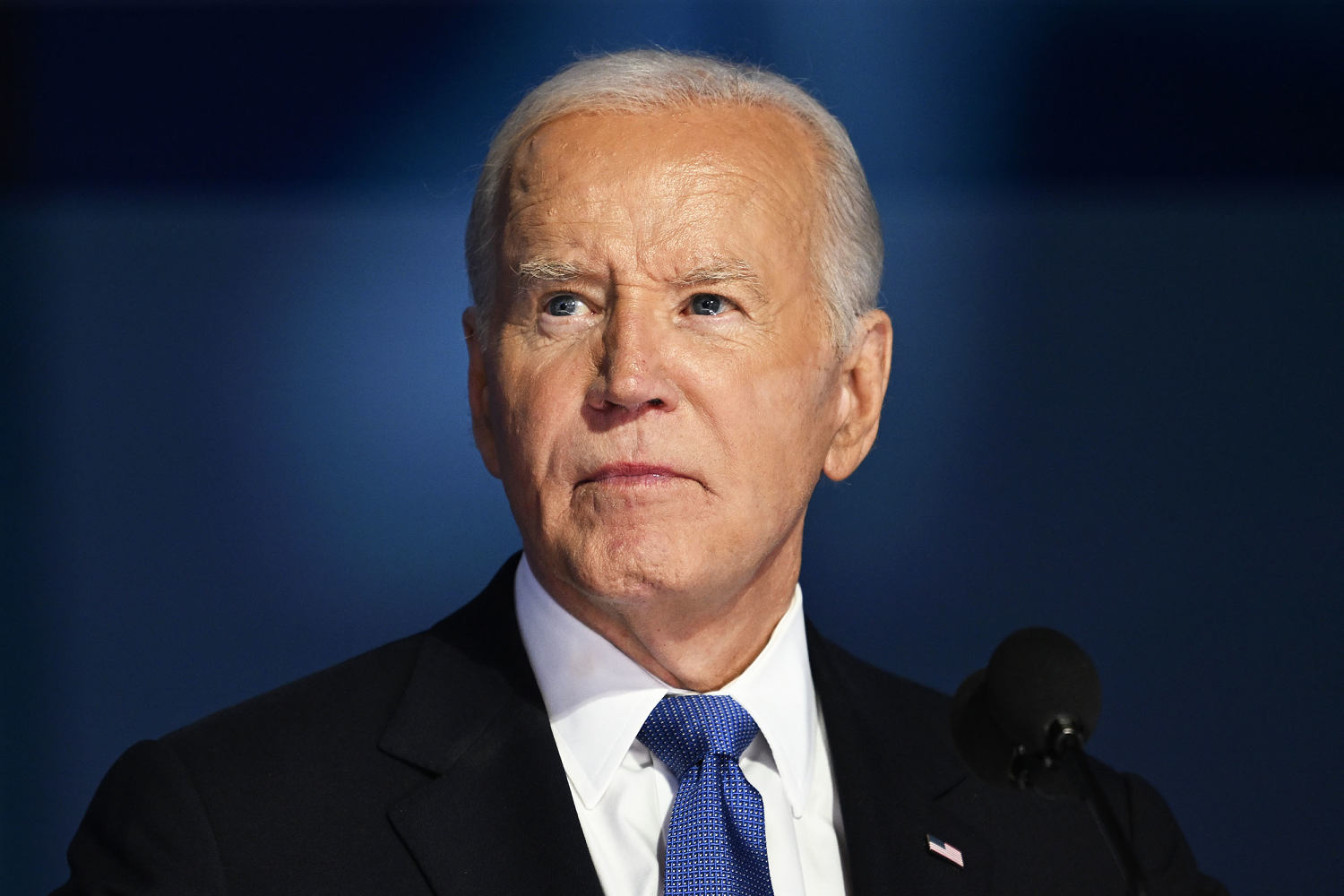
Scaling back a high-profile book tour due to a cancer diagnosis is not merely a personal health decision; it is an immediate operational restructuring of a multi-million-dollar media asset. When former President Joe Biden announced that cancer treatment "slows me down," forcing a reduction in his promotional schedule, standard news coverage framed the development purely as a human-interest story. That framing misses the structural mechanics of modern publishing, political legacy management, and executive energy allocation. A major political memoir relies on synchronized physical appearances, broadcast media saturation, and live ticketed events to amortize massive upfront capital commitments. When the principal asset—the author—experiences a sharp drop in physical bandwidth, the publishing apparatus must pivot from a high-touch, high-burn physical distribution model to a centralized, low-friction media strategy without collapsing book velocity.
The Economics of the Presidential Memoir
To understand the gravity of a tour contraction, one must first examine the unit economics of an A-list political memoir. Publishers do not pay eight-figure advances based on organic, passive discovery. Those advances are underwritten by an aggressive, front-loaded marketing engine designed to capture maximum market share within the first 30 to 90 days of release.
- Advance Amortization: A publisher's break-even point on a Tier-1 political advance requires hundreds of thousands of hardcover units sold at full retail margin before discounting erodes profitability.
- The Physical Multiplier: Live tour dates serve a dual purpose. First, they generate direct, guaranteed sales through ticket-and-book bundles at large venues. Second, each city stop acts as a localized public relations anchor, triggering regional television interviews, local print profiles, and social media amplification that cannot be replicated from a single studio.
- Scarcity and Access: For a former head of state, physical presence is the primary currency. Readers and political donors pay premium prices not merely to hear excerpts read aloud, but to share physical space with a historical figure.
When illness forces a contraction of this schedule, the publisher loses the localized PR multiplier. The marketing burden shifts entirely onto national broadcast hits, digital pre-order funnels, and institutional bulk sales. The underlying financial risk transfers from a diversified, multi-city revenue model to a concentrated, high-stakes reliance on a handful of major media appearances.
Energy Allocation and the Oncology Bottleneck
Cancer and its associated therapies introduce severe, non-linear constraints on human cognitive and physical endurance. Unlike a standard scheduling conflict, which can be resolved through logistical optimization, oncological fatigue operates as a hard physiological ceiling.
Standard political and promotional schedules are built on marginal time optimization—maximizing the number of touchpoints per 24-hour cycle. Under active cancer treatment or recovery, the optimization metric changes entirely. The objective shifts from maximizing output per hour to preserving baseline cognitive sharpness for high-leverage moments.
Travel is the primary destroyer of physical bandwidth. Commercial or even private aviation, hotel transitions, security sweeps, and rapid time-zone shifts impose an immense physiological tax. For an octogenarian managing an oncological condition, the transit itself consumes the energy reserves required for the actual performance. By cutting the tour, Biden's team is eliminating the highest-cost, lowest-yield variable in the promotional equation: transit friction.
This creates a secondary operational reality. Every remaining public appearance carries exponentially higher reputational stakes. When an author completes 30 tour stops, a single low-energy performance is statistically absorbed by the broader campaign. When that schedule is compressed to five or six high-profile engagements, any visible sign of fatigue immediately becomes the dominant media narrative, overshadowing the book's actual content.
The Three Pillars of Post-Contraction Media Strategy
When a principal figure can no longer execute a traditional roadshow, communications strategists and publishing executives deploy a containment and amplification framework built on three distinct pillars.
1. Hub-and-Spoke Broadcast Consolidation
Instead of moving the author to the media markets, the media markets are brought to a controlled environment near the author's primary residence. Network anchors, long-form podcast hosts, and print journalists travel to a pre-lit, acoustically controlled studio space close to Wilmington or Washington. This preserves the author's stamina, allows strict control over lighting and camera angles, and enables the recording of multiple segments within a tightly managed two-hour window. The resulting content is then metered out over several weeks to simulate continuous public presence.
2. Surrogate and Co-Author Deployment
Political memoirs are rarely solo endeavors in execution, even when written in the first person. When the primary author steps back, the promotional apparatus activates secondary validators. Former cabinet officials, senior campaign strategists, and the book's ghostwriter or research team assume the burden of cable news panels and literary festival appearances. While surrogates cannot command the ticket prices of the principal, they maintain topical relevance in the daily news cycle and defend the book's historical thesis against critics.
3. Institutional and Direct-to-Consumer Funneling
With live event ticket bundles reduced, the publisher must compensate for lost unit volume through institutional channels. This involves aggressive outreach to university systems, political action committees, non-profit foundations, and corporate sponsors to execute bulk purchases. Simultaneously, digital marketing budgets are reallocated from local event promotion to targeted direct-response advertising, leveraging signed bookplates—which can be completed at the author's own pace from home—to preserve the premium collectible value of a live signing.
Legacy Framing vs. Commercial Velocity
A unique tension governs a former president's book tour that does not apply to standard commercial authors: the divergence between commercial sales velocity and historical legacy preservation.
For a commercial publisher, success is measured strictly in net units sold and profit margin. For a former president, the book is a primary source document intended to cement an administration's historical narrative. If the promotional tour becomes a visual referendum on the author's physical decline, the medium destroys the message.
Biden's public acknowledgment that cancer is slowing him down represents a calculated strategic disclosure. In crisis and reputation management, unexplained cancellations trigger market speculation, rumors of acute medical emergencies, and aggressive investigative reporting into the principal's health. By proactively stating the cause—and framing it in straightforward, relatable terms—his team neutralizes the speculation cycle. They trade short-term commercial tour revenue for long-term narrative control and public sympathy.
This trade-off is not without friction. Publicly linking a memoir rollout to an ongoing cancer battle alters the tone of the entire campaign. Journalists are less likely to conduct adversarial interviews regarding policy failures when the subject is openly managing a serious illness, which insulates the author from harsh political critique. Conversely, that same dynamic can dampen the fiery, partisan media clashes that typically drive viral attention and spike book sales on algorithmic retail platforms.
Limitations of the Remote Promotional Model
While hub-and-spoke media consolidation and digital marketing can mitigate the damage of a scaled-back tour, these mechanisms have hard structural ceilings.
- The Parasocial Deficit: Digital interviews and pre-recorded segments lack the communal energy of a packed auditorium. Live events generate user-generated content—attendees posting photos, sharing emotional reactions, and creating organic word-of-mouth momentum. Remote appearances rarely trigger the same peer-to-peer sharing behavior.
- Algorithmic Decay: Retail algorithms on platforms like Amazon weight sudden spikes in regional search and purchase velocity heavily. A multi-city tour creates rolling waves of localized demand that repeatedly push a title back onto bestseller lists. A centralized media blitz produces a single, sharp spike followed by a steeper decay curve.
- Media Fatigue: Television producers prioritize dynamic, live environments. Once the initial news cycle around the health disclosure subsides, booking top-tier broadcast slots becomes significantly harder if the author is only available via remote satellite feed or pre-taped sit-downs.
Strategic Execution for the Revised Rollout
To prevent the scaled-back tour from resulting in premature commercial stagnation, the publishing and communications teams must execute a precise sequence of operational adjustments over the next 60 days.
First, convert all canceled live appearances into virtual town halls paired with guaranteed hardcover fulfillment, utilizing tiered pricing where higher-tier tickets include signed bookplates completed in controlled batches. Second, restrict national broadcast appearances exclusively to long-form, taped formats—such as prestige Sunday morning programs and top-tier podcasts—where editing protects against pacing lags and allows deep exploration of the text's historical arguments. Third, deploy senior administration alumni across regional media markets in battleground and major metropolitan areas to capture the localized press coverage lost by the cancellation of physical stops. By decoupling the book's commercial distribution from the author's physical travel, the operation protects both the principal's health and the asset's long-term market performance.


