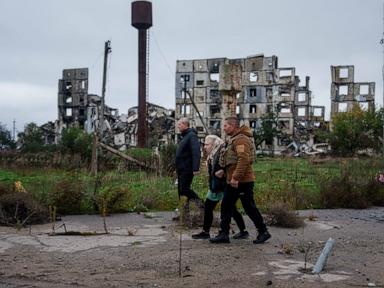
Localized ceasefires in active riverine combat zones do not restore peacetime equilibrium; they function as compressed logistical windows where civilian survival depends entirely on converting brief periods of kinetic silence into hardened physical and supply buffers before artillery and drone operations resume. In Kherson, the expiration of a localized truce immediately alters the risk calculus for every remaining resident, shifting daily activity from surface-level recovery back to subterranean endurance. Understanding how civilians prepare for the return of active hostilities requires stripping away emotive reporting and examining the exact mechanics of urban siege survival, supply chain compression, and micro-geographical threat avoidance.
The competitor analysis of Kherson during a ceasefire transition treats civilian preparation as a passive, reactive mood rather than a calculated, high-stakes resource allocation problem. When shelling pauses along the Dnipro River, residents face a strict optimization challenge. Every hour of silence represents a finite capacity to move mass, repair structural breaches, charge energy storage cells, and reposition vulnerable dependents. Once the ceasefire clock expires, the cost of movement spikes exponentially due to the immediate return of indirect fire, loitering munitions, and commercial quadcopter drop-attacks targeting civilian vehicles and pedestrians.
The Geography of Exposure and the Riverine Chokepoint
Kherson sits on the right bank of the Dnipro River, separated from opposing artillery and drone launch positions on the left bank by a water barrier ranging from several hundred meters to over a kilometer wide. This geography dictates every tactical reality on the ground. Unlike deep-rear cities threatened primarily by long-range ballistic or cruise missiles—which allow for radar detection and multi-minute air raid warnings—Kherson is exposed to short-range mortar fire, tube artillery, multiple launch rocket systems, and first-person-view (FPV) drones.
The time-of-flight for a mortar shell or artillery round fired from across the river is measured in single-digit seconds. Acoustic detection occurs simultaneously with impact, rendering standard air-raid siren networks useless for immediate kinetic evasion. Civilians operating in this environment do not rely on institutional warning systems; they rely on spatial geometry and line-of-sight denial.
During a localized ceasefire, the primary behavioral shift occurs in the "red zones"—the neighborhoods immediately adjacent to the riverfront, such as Korabelny district and the central embankments. In active combat phases, these areas experience near-total denial of movement. When a truce takes hold, residents briefly re-enter these exposed corridors to retrieve abandoned cold-weather gear, salvage undamaged household appliances, or inspect structural damage to roofs and windows. As the ceasefire nears its end, the population executes a predictable retrograde movement, pulling back from south-facing exposures and high-elevation apartment blocks into lower-floor, north-facing, or underground spaces.
The Four Pillars of Civilian Siege Logistics
Civilian survival during the transition from truce to active bombardment breaks down into four distinct operational pillars. Failure in any single pillar forces a resident to either evacuate the city entirely or accept lethal exposure risks during active shelling.
1. Thermal and Structural Hardening
In southern Ukraine, seasonal temperature drops transform damaged housing stock from an inconvenience into an acute survival threat. Blast waves from nearby impacts routinely shatter glazing even when buildings do not suffer direct hits. During a ceasefire window, the immediate priority is sealing the building envelope.
- Glazing replacement: Glass is rarely reinstalled in high-risk zones because subsequent concussions simply turn it back into shrapnel. Instead, civilians use oriented strand board (OSB), heavy-gauge polyethylene sheeting, and polyurethane expanding foam to seal window frames.
- Internal micro-climates: Heating an entire multi-room apartment with compromised insulation is thermodynamically inefficient when grid power is intermittent. Residents isolate a single interior room—ideally one without exterior walls, such as a central hallway or bathroom—using heavy blankets and foam boards to retain body heat and output from small portable heaters.
- Blast baffling: Sandbags, water-filled barrels, and stacked masonry are positioned against lower-level openings to absorb fragmentation from ground-bursting munitions.
2. Decentralized Energy and Water Buffering
Municipal infrastructure in a frontline city operates under chronic degradation. Electrical substations, water pumping stations, and gas distribution mains are prime targets or frequent collateral casualties once fire resumes. A localized ceasefire allows municipal crews to execute temporary splices and pressure restoration, which civilians immediately exploit to top off decentralized reserves.
- Potable and technical water separation: Residents maintain strict segregation between drinking water (stored in sealed 5-to-20-liter food-grade containers) and technical water used for sanitation and firefighting (stored in bathtubs and large plastic drums).
- Battery cascading: Rather than relying on single large generators—which emit acoustic and thermal signatures that can attract drone reconnaissance—households cascade smaller lithium-iron-phosphate (LiFePO4) power stations and standard automotive lead-acid batteries. During truce periods, these units are charged continuously from the grid so that critical communications devices and medical equipment can run silently for 48 to 72 hours after the next grid outage.
3. Medical Self-Sufficiency and Trauma Staging
When active shelling resumes, ambulance response times degrade sharply because emergency vehicles are frequently targeted by loitering munitions. Civilians remaining in Kherson compensate by decentralizing basic trauma care.
- Hemorrhage control: Standard domestic first-aid kits are inadequate for blast and fragmentation injuries. Prepared households stage tourniquets, hemostatic gauze, and pressure bandages in accessible, predictable locations rather than buried in closets.
- Chronic medication stockpiling: Supply chains for insulin, antihypertensives, and antibiotics contract immediately when highway corridors into the city come under drone surveillance. Ceasefire windows trigger rapid pharmacy runs to secure 60-to-90-day supplies, eliminating the need to cross open streets during active fire.
4. Mobility Compression and Route Discipline
Movement outside fortified structures is the single highest-risk activity in Kherson. During a ceasefire, residents compress weeks of errands into a tightly scheduled itinerary. Once the truce expires, mobility reverts to strict discipline:
- Vehicle camouflage and speed: Civilian cars operating near the river avoid bright colors, keep windows rolled down to hear incoming drone rotors, and maintain high speeds through open intersections to complicate FPV targeting.
- Pedestrian dispersion: Residents walk singly rather than in groups, hug building facades to minimize overhead visibility, and avoid predictable routines—such as visiting the same water distribution point at the exact same hour each day—which hostile drone operators track to set ambushes.
The Economic Friction of Intermittent Truces
A localized ceasefire does not revive a local economy; it creates a volatile spot market characterized by acute price elasticity and supply bottlenecks. Commercial logistics providers calculate freight rates into Kherson based on hull-loss probabilities and driver hazard premiums. When a truce is announced, transport costs drop temporarily, triggering a brief surge in wholesale deliveries of dry goods, fuel, and construction materials.
However, because localized ceasefires are historically fragile and often lack robust third-party verification mechanisms, merchants refuse to hold deep inventory inside the city. Stocking a warehouse with high-value goods right before a truce collapses exposes the business to total capital loss via incendiary shelling. Consequently, retail supply operates on a strict just-in-time model during the pause, followed by immediate shuttering and inventory drawdown hours before the deadline.
For civilians, this creates a severe liquidity and purchasing crunch. Those with cash reserves and physical mobility capture the brief influx of supplies at baseline prices. Elderly residents, the mobility-impaired, and households dependent on delayed state pensions face a steep welfare cliff. Once the ceasefire ends, volunteer humanitarian networks must shift from bulk distribution at central hubs—which become lethal targets for artillery strikes—to fragmented, door-to-door micro-deliveries executed under cover of darkness or overcast weather.
Distinguishing Verified Operational Patterns from Strategic Uncertainty
Analyzing civilian readiness in Kherson requires separating established behavioral realities from unpredictable military variables.
Established Operational Facts:
- Drone saturation: The tactical environment in Kherson is heavily defined by small, unmanned aerial vehicles used for both reconnaissance and direct kinetic strikes against individual civilians and vehicles. Unlike massed artillery barrages, drone operations require minimal logistical tail and resume within minutes of a ceasefire expiration.
- Demographic skew: The remaining population is disproportionately older and lower-income compared to pre-war baselines, as younger families with portable economic skills relocated earlier in the conflict. This demographic reality limits the physical labor available for rapid fortification and debris clearance.
- Infrastructure fragility: Repeated damage to regional power generation and distribution networks means the grid operates with zero redundancy. Any resumption of hostilities guarantees rolling blackouts.
Strategic Uncertainties and Analytical Limitations:
- Ceasefire compliance asymmetry: Localized truces frequently suffer from uneven adherence across different sectors of the front. Civilians cannot rely on official expiration timestamps; kinetic activity often resumes hours early via probing mortar fire or drone harassment, punishing anyone who waits until the final hour to complete preparations.
- Escalation thresholds: Analysts cannot reliably predict whether the end of a localized truce will trigger a return to baseline attritional shelling or a major amphibious or cross-river offensive. Civilian preparations optimized for static shelling—such as sheltering in reinforced basements—become liabilities if ground combat shifts into urban blocks, where basements can become traps without secondary egress routes.
- Humanitarian corridor viability: The assumption that evacuation routes out of the city will remain open after a ceasefire collapses is flawed. Primary highways leading north and west are routinely monitored by long-range reconnaissance drones, meaning the window for safe civilian egress closes before, not after, the truce officially ends.
The Evacuation Calculus and Decision Thresholds
For every civilian in Kherson, preparation for the return of war culminates in a binary decision: stay and endure the siege cycle, or evacuate. This is rarely an emotional choice; it is an assessment of personal carrying capacity against environmental hostility.
Residents who choose to stay generally possess three attributes: a structurally sound dwelling below the third floor with subterranean access, a reliable social or volunteer support network for resupply, and the physical capacity to manage manual heating and water hauling without municipal utilities. When any one of those three conditions fails—for example, when a neighboring building is struck and compromises shared utility lines, or when a household member develops an acute medical condition—the survival calculus breaks down.
Those who evacuate during the final hours of a ceasefire face their own set of logistical hurdles. Relocation requires liquid capital for transportation and initial rent in safer regions of central or western Ukraine, documentation for internally displaced person (IDP) registration, and the psychological willingness to abandon fixed property assets that represent a lifetime of accumulated wealth. Because state-sponsored evacuation buses are high-profile targets, departure must be timed precisely within the verified truce window, utilizing decentralized civilian transport networks before artillery observers re-establish fire control over the northern exit arteries.
Tactical Imperatives for Civilian and Humanitarian Operations
As a localized ceasefire expires in Kherson, survival and operational continuity depend on executing specific, time-bound protocols before kinetic activity resumes:
- Terminate bulk congregation immediately: Humanitarian agencies and municipal authorities must cease all open-air aid distribution, pension payouts, and public repair work at least six hours prior to the scheduled expiration of the truce. Any gathering of more than five people in an unshielded space presents a high-probability target for artillery or loitering munitions.
- Shift to asymmetric resupply schedules: Volunteer logistics teams delivering food, medicine, and fuel to homebound residents must abandon fixed routes and daytime schedules, transitioning exclusively to dispersed, low-signature vehicle movements during twilight hours or adverse weather conditions that degrade electro-optical drone sensors.
- Enforce subterranean egress audits: Residents sheltering in basements and ground-floor interiors must clear secondary exit routes—such as knocked-through partition walls or reinforced cellar windows—before bombardment begins, preventing entrapment if upper floors collapse onto primary stairwells.
- Prioritize communication redundancy over grid power: Households must fully charge all offline power banks, download local offline maps and emergency frequency lists, and establish predetermined physical check-in protocols with neighbors so welfare verification does not require exposed street travel when cellular towers lose backup battery power.