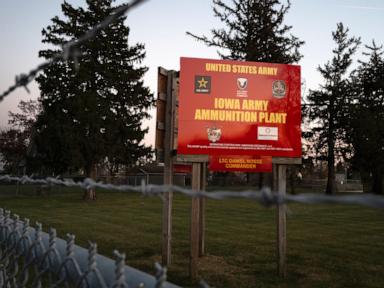
Rescheduling the controlled detonation of 10,000 pounds of lead azide from an initial target date to Wednesday represents a deliberate risk-minimization adjustment dictated by atmospheric physics, chemical stability thresholds, and perimeter safety protocols. Standard news coverage treats military ordnance disposal delays as simple calendar adjustments, missing the underlying engineering constraints that govern bulk primary explosive neutralization. In high-energy demilitarization operations, schedule fluidity functions as a primary safety control rather than an administrative failure.
The Physics of Lead Azide Instability
Lead azide ($Pb(N_3)_2$) is classified as a primary explosive, a category defined by extreme sensitivity to external stimuli including friction, impact, static electricity, and thermal fluctuations. Unlike secondary explosives such as TNT or C-4, which require a high-velocity shockwave to initiate detonation, primary explosives transition rapidly from deflagration to detonation upon minimal energy input. This operational reality dictates every logistical step when managing a 10,000-pound inventory.
At the molecular level, the azide ion ($N_3^-$) is linear and thermodynamically unstable, storing substantial potential energy in its nitrogen-nitrogen bonds. When subjected to mechanical shock or localized heating, these bonds cleave, releasing nitrogen gas ($N_2$) and heat at an accelerating rate. Because lead azide possesses a high crystal density and low activation energy threshold, the reaction front propagates almost instantaneously, generating detonation velocities exceeding 4,500 meters per second.
The management of bulk quantities introduces compound hazards that do not scale linearly:
- Crystal Growth and Spontaneous Detonation: Over prolonged storage, particularly in environments subject to temperature cycling, lead azide crystals can grow larger. Larger crystals exhibit internal lattice strain, drastically lowering the threshold required for spontaneous detonation without external mechanical contact.
- Hydrolysis and Hydrazoic Acid Formation: Exposure to atmospheric moisture triggers slow hydrolysis, producing hydrazoic acid ($HN_3$). Hydrazoic acid is both volatile and acutely toxic, and it reacts readily with copper, brass, or zinc fittings in storage containers to form copper azide—a compound orders of magnitude more sensitive than lead azide itself.
- Dust and Static Accumulation: Fine particulate matter generated during handling or container degradation creates an aerosolized hazard. A minor electrostatic discharge, often below the threshold of human perception, provides sufficient thermal energy to ignite dry lead azide dust.
Because mechanical transport multiplies friction and impact vectors, military explosive ordnance disposal (EOD) protocols mandate in-situ destruction or minimal-movement open detonation whenever bulk instability is suspected. Moving 10,000 pounds of degraded primary explosive across public infrastructure presents an unacceptable catastrophic risk profile.
The Three Pillars of Detonation Window Selection
When an EOD command shifts a scheduled detonation to a specific day like Wednesday, the decision rests on a multi-variable optimization model. The operational window is constrained by three non-negotiable physical and logistical pillars.
1. Atmospheric Acoustics and Overpressure Propagation
Open detonation of five tons of high-energy material generates a massive acoustic shockwave and airblast overpressure. The propagation of this pressure wave through the lower troposphere is governed by vertical temperature gradients and wind shear profiles.
Under standard atmospheric conditions, temperature decreases with altitude, causing sound waves and blast overpressure to refract upward, away from the ground. However, during a temperature inversion—where a layer of warm air traps cooler air near the surface—the speed of sound increases with altitude. This refracts the blast wave downward, focusing acoustic energy onto populated areas miles away from the detonation site.
Meteorological teams run acoustic ray-tracing models continuously prior to execution. If atmospheric soundings indicate an inversion layer or unfavorable upper-level winds capable of carrying overpressure toward civilian structures, the detonation is scrubbed. Shifting the operation to Wednesday signals that meteorological forecasts project a neutral or unstable lapse rate, ensuring upward refraction of the blast wave and compliance with structural damage thresholds (typically capped below 140 decibels or specific pounds-per-square-inch overpressure limits at the installation boundary).
2. Thermal Plume Dispersion and Particulate Fallout
Detonating lead azide produces a localized thermal plume containing lead oxide particulates and nitrogen oxides. Because lead is a persistent heavy metal neurotoxin, environmental compliance dictates strict dispersion modeling before ignition.
The dispersion rate of the plume depends on boundary-layer mixing height and surface wind velocity:
- Stagnation Risk: If surface winds fall below operational minimums (typically 3 to 5 knots), the toxic plume lingers over the detonation range, contaminating soil and exposing recovery personnel to inhalation hazards during post-blast clearance.
- Transport Risk: If winds exceed upper thresholds or blow directly toward adjacent municipalities, the plume transports heavy metal particulates outside the controlled federal perimeter before sufficient atmospheric dilution occurs.
The Wednesday schedule reflects a forecasted wind corridor that balances rapid vertical mixing with controlled horizontal drift, keeping ground-level lead deposition within designated range impact zones.
3. Perimeter Security and Airspace Deconfliction
Executing a 10,000-pound open detonation requires absolute spatial isolation across three dimensions: ground, subterranean, and aerial.
- Ground Exclusion Zones: Fragmentation and blast hazard arcs expand exponentially with net explosive weight (NEW). Establishing a secure cordon requires coordinating military police, local law enforcement, and emergency medical services to clear public roads, halt rail traffic, and evacuate non-essential installation personnel.
- Temporary Flight Restrictions (TFRs): The vertical shockwave and thermal column pose severe hazards to aircraft structural integrity and engine ingestion. The Federal Aviation Administration (FAA) must issue Notices to Air Missions (NOTAMs) and establish TFRs extending thousands of feet above the range. Rescheduling requires re-synchronizing these airspace closures with commercial aviation corridors to minimize systemic flight delays.
- Seismic Monitoring: Subterranean vibration from a five-ton surface or shallow-buried detonation mimics minor seismic events. Advance coordination with regional geological surveys prevents false earthquake alerts and ensures compliance with local vibration limits near sensitive infrastructure such as dams, pipelines, or historical structures.
The Cost Function of Delay vs. Execution
In demilitarization logistics, decision-makers operate within a strict asymmetric risk matrix. The financial cost of delaying a scheduled detonation—measured in personnel overtime, equipment standby charges, and administrative re-filing—is linear and bounded. Conversely, the cost of executing under suboptimal conditions is non-linear and potentially catastrophic.
Total Operational Risk = P(Premature Initiation) + P(Boundary Overpressure) + P(Plume Excursion)
Holding unstable lead azide in storage introduces a steadily rising probability of premature initiation due to ongoing crystal degradation. However, rushing the destruction into an unfavorable meteorological window guarantees boundary overpressure violations or environmental contamination. Therefore, command authority applies a rolling horizon optimization: the material is held under strict environmental and security monitoring only long enough to capture the next statistically valid weather and airspace window.
A shift to Wednesday indicates a narrow meteorological inflection point. Waiting until late week or the following week might expose the inventory to approaching weather fronts—such as precipitation, which complicates site access and alters blast dynamics, or high-pressure systems that lock in temperature inversions for days. Wednesday represents the mathematical intersection where the risk of continued storage meets the lowest available environmental propagation risk.
Execution Mechanics of Bulk Neutralization
Neutralizing 10,000 pounds of primary explosive rarely occurs as a single, monolithic blast unless the material is fused into an unrecoverable mass. Instead, EOD engineers employ structured engineering controls to manage energy release.
Donor Charge Architecture
Because lead azide is highly sensitive, personnel cannot safely pack secondary explosives directly around bulk containers using standard manual tamping methods. Engineers construct a donor charge configuration using precise standoff distances. Sheets or blocks of secondary high explosive (such as Composition B or C-4) are positioned around the lead azide containers to deliver a uniform, simultaneous shockwave. This ensures complete sympathetic detonation of the entire inventory, preventing a partial initiation (low-order detonation) that would scatter unexploded lead azide across the range.
Tamping and Energy Partitioning
When a charge detonates in the open air, energy partitions into three primary vectors: airblast overpressure, thermal radiation, and ground shock. To attenuate the airblast wave, engineers frequently utilize earth tamping—covering the charge layout with a calculated depth of soil or sand.
The soil overburden absorbs a substantial fraction of the initial kinetic energy, converting it into heat and mechanical displacement of the earth rather than acoustic overpressure. Furthermore, the soil acts as a physical scrubber, trapping a portion of the vaporized lead particulates within the crater ejecta and reducing airborne heavy metal dispersion. The trade-off is an increase in ground-coupled seismic energy, requiring engineers to calibrate the tamping depth against local geological transmission characteristics.
Remote Initiation Protocols
Personnel withdrawal to hardened bunkers or outside the maximum fragmentation radius occurs hours before the scheduled window. Initiation relies on redundant, non-electric shock tube systems or encrypted radio-frequency firing devices designed to prevent accidental triggering by stray electromagnetic radiation from nearby radar or communications arrays.
Operational Limitations and Residual Risks
No demilitarization protocol eliminates risk entirely. Relying on meteorological forecasting introduces inherent uncertainty; micro-weather shifts occurring within thirty minutes of firing can alter localized acoustic focusing despite accurate regional models. Additionally, open detonation remains a terminal disposal method with permanent environmental trade-offs, as heavy metal residues inevitably accumulate in range soils, requiring long-term environmental remediation and groundwater monitoring.
Closed-chamber detonation systems—reinforced steel vessels equipped with scrubbers that capture blast gases and heavy metals—offer superior environmental containment. However, these facilities possess strict net explosive weight limits, typically capping single-shot capacity between 50 and 500 pounds. Processing 10,000 pounds of unstable lead azide through a closed chamber would require dozens of individual handling, transport, and loading cycles, multiplying human exposure to friction and static hazards. Consequently, open detonation remains the only operationally viable method when bulk chemical instability prohibits repetitive mechanical handling.
Strategic Framework for High-Hazard Schedule Management
Organizations managing high-consequence, weather-dependent industrial or defense operations must abandon rigid calendar commitments in favor of dynamic windowing protocols.
- Establish Hard Go/No-Go Thresholds: Define quantitative environmental limits—specifically atmospheric lapse rates, wind vector corridors, and boundary overpressure ceilings—prior to mobilization. Strip subjective human pressure from the launch decision; if a single metric breaches the threshold, the scrub is automatic.
- Pre-Clear Multi-Day Regulatory Windows: When filing for airspace restrictions, road closures, and municipal notifications, secure rolling 72-hour to 96-hour contingency blocks rather than single-day permits. This eliminates administrative friction when meteorological shifts force a 24- or 48-hour delay.
- Invest in Real-Time Boundary Telemetry: Deploy portable acoustic sensors and particulate monitors at the perimeter during execution. Empirical data collected from each detonation refines local atmospheric propagation models, reducing the margin of error for future bulk neutralization events.