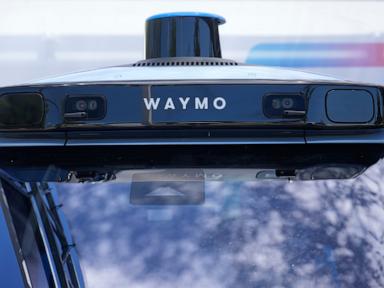
Regulatory containment of autonomous freeway operations exposes a fundamental mismatch between velocity-driven unit economics and the kinetic risk profiles enforced by state transportation authorities. When Waymo halts driverless taxi rides on California freeways following state intervention, the operational consequence is not a localized routing inconvenience; it is a direct compression of serviceable addressable market and an immediate degradation of fleet utilization metrics.
The Regulatory Architecture of Autonomous Freight and Passenger Transit
Operating an autonomous vehicle (AV) in California requires navigating a bifurcated regulatory structure that separates hardware validation from commercial passenger monetization. Understanding a freeway suspension requires isolating the distinct statutory mandates of the two agencies governing this operational domain.
- The California Department of Motor Vehicles (DMV) Mandate: The DMV governs vehicle testing and deployment permits. Their jurisdictional focus is the safety of the Autonomous Driving System (ADS) within a defined Operational Design Domain (ODD). The ODD specifies the exact environmental, geographical, and time-of-day conditions under which the ADS is engineered to function safely. Freeway operations require explicit ODD expansion approvals because the kinetic energy of collisions scales with the square of velocity ($E_k = \frac{1}{2}mv^2$), compressing sensor reaction windows and eliminating simple minimum-risk-maneuver (MRM) options like immediate curb pull-overs.
- The California Public Utilities Commission (CPUC) Mandate: The CPUC regulates commercial passenger service—specifically the collection of fares and the operational parameters of Transportation Network Companies (TNCs). Even if the DMV grants technical approval to operate on high-speed roadways, the CPUC retains authority over commercial deployment permits, data reporting requirements, and consumer protection protocols.
A suspension of driverless freeway rides occurs when regulatory friction compromises the alignment between DMV technical clearance and CPUC commercial authorization. Without simultaneous clearance across both bodies, an autonomous fleet is legally restricted to surface streets, regardless of the underlying software's technical readiness.
Deconstructing the Operational Design Domain Bottleneck
Freeways present a deceptive engineering paradox for autonomous systems. Compared to dense urban environments—characterized by unprotected left turns, erratic pedestrian behavior, double-parked delivery vehicles, and complex construction zones—highway driving appears structurally predictable. Lanes are clearly marked, traffic flows unidirectionally, and intersections do not exist.
This apparent simplicity masks three severe edge-case failure modes that trigger regulatory scrutiny and force operational retreats:
- Perception Horizon Compression: At 65 miles per hour (approximately 95 feet per second), a LiDAR and radar sensor suite must detect, classify, and track stationary debris or stalled vehicles at ranges exceeding 250 meters to execute a smooth deceleration curve. False negatives at extreme range result in abrupt, high-G braking events that create severe rear-end collision risks from human-driven vehicles trailing behind.
- The Minimum Risk Maneuver (MRM) Deficit: When an urban robotaxi encounters an unresolvable sensor ambiguity or hardware fault, its fallback protocol is to pull over to the nearest curb or stop in a low-speed lane. On a multi-lane California freeway lacking a continuous, wide shoulder, executing a zero-velocity MRM in an active travel lane converts the AV into a lethal stationary obstacle. First responders and state highway patrol agencies repeatedly cite stalled AVs blocking traffic lanes as a primary operational hazard.
- High-Velocity Merge Negotiation: Entering and exiting California freeways requires assertive cooperative game theory. Human drivers negotiate merges through micro-adjustments in speed and lane positioning. An ADS programmed with conservative collision-avoidance buffers can become trapped in acceleration lanes, unable to find a mathematically safe gap, or forced into erratic braking that destabilizes upstream traffic flow.
The Unit Economics of Surface-Street Containment
Removing freeways from a robotaxi network's ODD fundamentally alters the financial viability of commercial autonomous ride-hail. In sprawling metropolitan regions such as the San Francisco Bay Area and Los Angeles, point-to-point transit relies heavily on highway arteries to bridge suburban residential zones, commercial hubs, and international airports.
When a fleet is restricted to arterial and surface roads, three core financial metrics deteriorate simultaneously:
1. Deadhead Mileage and Utilization Decay
Fleet utilization—the percentage of total operating hours a vehicle spends carrying a fare-paying passenger—depends on rapid repositioning. Without freeway access, a vehicle dropping off a passenger in a peripheral zone cannot quickly deadhead back to a high-demand core. Transit times between pickup zones double or triple, inflating non-revenue-generating miles and accelerating hardware depreciation per dollar earned.
2. Trip Duration Elasticity and Consumer Defection
Ride-hail demand is highly elastic with respect to total trip time. A 15-mile trip from a downtown core to an airport takes roughly 20 minutes via freeway. Rerouting that exact trip onto surface streets through dozens of signalized intersections extends the duration to 45 or 55 minutes. Consumers facing a 150 percent time penalty immediately defect to human-driven TNCs (Uber, Lyft) or traditional taxis, capping the autonomous fleet's viable trip radius to short-hop urban micro-transit.
3. Compute and Energy Amortization
Autonomous vehicles carry massive capital expenditure burdens in sensor arrays (LiDAR, high-resolution cameras, imaging radar) and onboard inference compute stacks. Furthermore, the continuous power draw of the compute hardware—often consuming 1 to 3 kilowatts independent of drivetrain propulsion—depletes battery state-of-charge (SoC) based on operating time rather than distance traveled. Slower surface-street trips reduce the energy efficiency per revenue mile, forcing more frequent charging cycles and further reducing active fleet availability.
Risk-Asymmetry in Public-Private Infrastructure Governance
The conflict between Waymo and California regulators illustrates a structural asymmetry in risk tolerance. Technology operators evaluate safety through statistical aggregation: if an ADS demonstrates a lower crash rate per million miles than the human baseline, the system is deemed net-beneficial. This is an actuarial, population-level framework.
State regulators, municipal fire departments, and elected officials operate under a localized, incident-driven accountability model. A single high-profile freeway obstruction, an interference event with an emergency response vehicle, or a high-speed collision carries immediate political and public safety consequences that statistical averages cannot offset.
This divergence creates a predictable operational cycle:
- Phase 1: Incremental Expansion. The operator gradually widens the ODD, moving from low-speed geofenced suburbs to dense urban cores, and finally to controlled-access highways.
- Phase 2: Edge-Case Exposure. Increased fleet scale surfaces rare, high-visibility failure modes—specifically MRM stops in active lanes or erratic merging behavior during peak congestion.
- Phase 3: Regulatory Intervention. State agencies enforce immediate operational pullbacks, revocation of specific ODD endorsements, or mandatory software recall protocols.
- Phase 4: Telemetry Renegotiation. The operator must instrument new data-sharing pipelines, prove hardware or software remediation in closed-track simulations, and rebuild regulatory trust before incremental re-entry.
Limitations of Current Autonomous Scaling Strategies
Operators attempting to bypass regulatory friction through aggressive deployment strategies face hard structural limits. No software patch eliminates the physical constraints of infrastructure not designed for machine perception.
First, simulation fidelity reaches diminishing returns on public highways. While synthetic environments can replicate millions of miles of standard highway driving, they cannot reliably model the precise behavioral distribution of erratic human drivers, non-standard roadwork signage, or localized debris patterns specific to California's aging highway infrastructure.
Second, remote human assistance (teleoperations) fails under high-velocity latency. In urban environments, a stalled robotaxi can pause for three seconds while a remote operator reviews camera feeds and plots a path around a double-parked truck. On a 65-mph freeway, a three-second latency window equals nearly 300 feet of blind travel. Teleoperations cannot serve as a real-time safety net for highway-speed decision-making; the onboard stack must execute with 100 percent local autonomy.
Strategic Mandate for Autonomous Fleet Operators
To break the cycle of ODD expansion and regulatory retrenchment, autonomous operators must restructure how they validate and deploy high-speed transit.
Operators must decouple passenger monetization from freeway validation by running commercial-freeway freight or non-passenger deadhead repositioning corridors first. By moving empty vehicles between urban zones via highways during off-peak hours—under explicit DMV testing permits rather than CPUC commercial passenger authorities—the fleet accumulates real-world highway telemetry and refines MRM shoulder-pullover protocols without exposing fare-paying riders or triggering commercial TNC regulatory triggers. Simultaneously, operators must establish dedicated, automated telemetry APIs directly with state highway patrol dispatch centers, ensuring law enforcement receives real-time vehicle location, hazard status, and remote-immobilization overrides before any commercial freeway fare is ever collected.