You see a headline about a ship seizure in the Persian Gulf and assume it’s just another blip on the news ticker. You think it won't touch your wallet. Then you go to the gas station the next week and wonder why prices ticked up by fifteen cents.
The connection between a single tanker incident and your commute isn't some abstract financial theory. It’s a direct response to fear. Markets hate uncertainty more than they hate bad news. When the US pulls a ship out of a shipping lane or tensions flare over Iranian diplomatic talks, oil traders don't wait for a full analysis. They sell equities and buy crude futures immediately. It’s an automated, instinctual reaction to the risk that oil supplies might get choked off.
The Mechanics of Market Fear
When you see oil prices spike after a geopolitical confrontation, you are watching the "risk premium" manifest in real time. Traders aren't reacting to the lost cargo of one ship. That amount of oil is statistically irrelevant to the global supply. They are reacting to the precedent. They are betting on the possibility that this specific incident is the first domino in a chain reaction that closes the Strait of Hormuz.
This is the most important chokepoint on the planet for energy. Roughly twenty percent of the world's total oil consumption passes through that narrow stretch of water. If insurance companies decide it’s too dangerous to send ships through, they raise premiums. If they raise premiums, the cost of moving oil shoots up. If the cost of moving oil goes up, the price you pay at the pump follows.
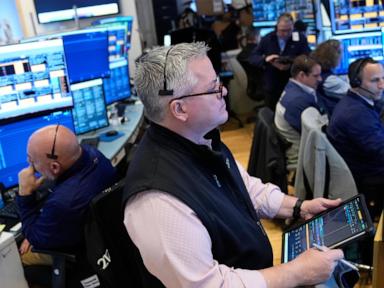
The dip in the stock market happens because investors view high energy prices as a tax on the consumer. When we spend more on gasoline, we spend less on everything else. Tech stocks, retail, travel—they all take a hit because a tanker seizure in the Middle East changes the spending power of a household in Ohio.
Why Peace Deals Are Never Simple
The media loves a clean narrative. They want to talk about "derailed peace talks" as if these negotiations were ever moving smoothly in a straight line. The reality is far messier. Diplomatic channels with Iran have been a cycle of tension and temporary de-escalation for decades.
Traders know this. When they see a headline about a "hit to peace deal hopes," they aren't surprised. They are annoyed. They price in the volatility because they know that progress is always tenuous. The real problem isn't the seizure itself. It’s the signaling.
If the US takes a ship, it signals that the administration is shifting toward a harder line, perhaps feeling domestic pressure to show strength. It forces the other side to respond to save face. It’s a calibration of posturing. Every action taken in these waters is a message, and every message has a price tag attached to it. Thinking of this as a simple diplomatic failure misses the point. It’s a constant, low-level war of optics that occasionally spills over into the futures market.
How Tanker Logistics Actually Work
Many people assume a ship seizure just means a company lost a cargo. It’s much deeper than that. You have to consider the P&I Clubs—Protection and Indemnity Clubs. These are mutual insurance associations that cover the massive liabilities of shipping.
If the environment becomes hostile, these clubs adjust their risk profiles. They might impose "war risk" surcharges on any vessel traversing the region. This is where the real cost lives. It’s not just the market hysteria; it’s the structural cost of doing business.
I’ve seen this pattern play out repeatedly. A headline breaks. The market panics. Prices jump five percent in a day. Then, two weeks later, the physical supply data comes out, and we realize that global inventories are stable and refineries are still running at full tilt. The price settles back down. The people who panic-sold their stocks or over-leveraged their positions are the ones left holding the bag.
Separating Noise from Signal
If you are an investor, you have to stop treating these geopolitical headlines as fundamental shifts in the global energy market. They are noise. They create short-term volatility that can be incredibly profitable for algorithmic traders and day traders who understand the range. For a long-term investor, they are a test of discipline.
Here is how you handle the volatility:
- Ignore the 24-hour cycle. If a story breaks about a tanker, wait 72 hours. Let the initial panic-buying or panic-selling wash through the system.
- Look at the spread. Don't just look at the headline price of crude. Watch the spread between different grades of oil and the futures curve. If the market is truly worried about a supply shortage, the futures curve will shift into "backwardation," where near-term contracts become more expensive than long-term ones. If the curve stays flat, the market knows it’s just noise.
- Monitor the real chokepoints. The only thing that actually matters is if physical tanker traffic through the Strait of Hormuz slows down. If you don't see a drop in traffic volume, the price spike is temporary.
The Reality of Our Energy Dependency
We spend a lot of time talking about the energy transition, but in 2026, we are still locked into the old systems. We run on a fuel source that is geographically concentrated in some of the most volatile regions on earth. This isn't a political statement; it’s just the current accounting of how our world functions.
Every time a ship is seized, it’s a reminder of that vulnerability. It’s a reminder that we haven't built enough redundancy into our supply chains to ignore what happens in the Persian Gulf. Until that changes, these price spikes will happen. They are a feature of our current energy model, not a bug.
If you are frustrated by the prices at the pump, direct that frustration at the global infrastructure. The politics are just the theater. The supply chain is the play. When the lead actors start fighting, the audience pays for the tickets. Stop trying to predict the outcome of the latest diplomatic spat. Start tracking the flow of physical barrels, watch the insurance premiums, and focus on the data that actually moves the needle. Everything else is just expensive noise.