Every financial calendar on earth treats retail sales and Federal Reserve minutes like a crystal ball. Watch the headline print. Parse every hawkish or dovish phrase. Trade the reaction.
That playbook is lazy. Worse, it is backward-looking theater disguised as macro insight.
When mainstream outlets run weekly roundups on retail sales and Fed minutes, they push a neat, comforting story: shoppers are either holding up the economy or buckling under higher prices, and the Federal Reserve is either about to hike again or hold its nerve to crush inflation. Look closer at the mechanics behind both releases, and the entire premise starts to rot.
The "Lazy Consensus" Around Retail Sales and Fed Minutes
The conventional wisdom treats retail sales as a clean, real-time pulse of the American consumer, and FOMC minutes as a live window into the central bank's next move. Neither claim survives basic scrutiny.
First, retail sales are nominal, backward-looking, and heavily distorted by price changes and seasonal noise. A retail report measures dollars spent at stores, restaurants, and online checkout pages—not unit volume, not real household purchasing power, and not total consumer spending, which leans heavily on services like healthcare, housing, and travel. When inflation pushes up prices at the pump or the grocery aisle, nominal retail numbers can look sturdier than actual physical demand. Conversely, a soft monthly reading right ahead of the holiday season can look like a collapse when shoppers are simply shifting timing, trading down, or absorbing higher bills elsewhere.
Second, Fed minutes are a sanitized, three-week-old lag indicator. They summarize a room of policymakers reacting to older data, often before fresh inflation or labor numbers hit the tape. Following the September 2026 rate hike—the first increase in three years—and the decision to hold the target range at 3.75% to 4.00% at the October 27–28 meeting, the minutes released on November 18 captured debates from late October. By the time traders dissect those minutes, newer data—such as the late-November personal spending and prices report showing October consumer spending stalling alongside stubborn goods and services inflation—is already reshaping the actual ground truth.
Chasing a three-week-old transcript while treating nominal store receipts as economic gospel is like steering a speedboat by looking at ripples in your own wake.
What People Actually Ask—and Why the Premise Is Flawed
"Do retail sales tell us if the holiday shopping season is safe?"
No—not the way most headlines frame it. Asking whether one monthly retail print proves the holiday season is "safe" or "doomed" confuses a noisy snapshot with a structural trend.
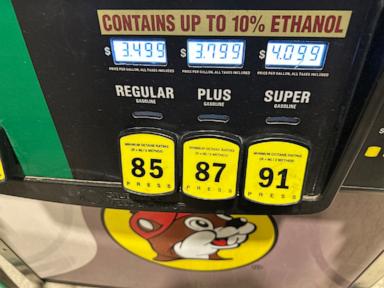
Retail sales capture goods and food-service spending, which are acutely sensitive to fuel costs, tariff pass-throughs, and promotional calendars. If gasoline prices cool off by tens of cents per gallon over a few weeks, households get a quiet real-income tailwind that shows up later, even if a prior month's sales print looked sluggish. Meanwhile, high-income households with equity and cash buffers behave very differently from lower-income households squeezed by rent, groceries, and borrowing costs. A blended aggregate hides that split completely.
"Do Fed minutes reveal what interest rates will do next?"
They show the distribution of argument at a past meeting, not a binding commitment. Even when minutes highlight that policymakers see inflation risks or weigh further tightening—with two policymakers favoring a 25-basis-point hike at the October meeting while leaving the benchmark range at 3.75% to 4.00%—the committee remains data-dependent.
Markets routinely overread single words like "many," "some," or "most" as if FOMC staff drafted them with a legal scalpel. In reality, minutes are negotiated summaries designed to reflect a spectrum of views without pre-committing the chair ahead of the next decision, such as the December 8–9 meeting.
"Should investors trade the immediate headline reaction to both releases?"
Only if you enjoy paying spread and getting whipsawed by algos. Knee-jerk trades on the first print frequently reverse within hours once revisions, core components, or subsequent commentary are digested. Real positioning requires looking at real disposable income, credit delinquencies, wage growth versus inflation, and front-end rate expectations over quarters, not five-minute candles.
A Thought Experiment: Two Economies, One Headline
Imagine a scenario where monthly retail sales rise 0.5% in a given month. At face value, commentators call it a booming consumer. Now split that gain in half:
- Case A: Unit volumes climb 0.5% while prices are flat. Real demand is expanding.
- Case B: Unit volumes fall 0.5% while prices on essentials jump 1.0%. Shoppers are buying less stuff and paying more for it.
Both cases print a 0.5% headline gain. One signals genuine demand; the other signals cost-of-living strain. Treating them identically is analytical malpractice.
Battle Scars, Real Mechanics, and the Blind Spots
I have watched trading desks and corporate finance teams burn serious money overreacting to single macro prints. I have seen companies blow millions on inventory builds because a bright retail headline convinced executives that demand was bulletproof—only to get stuck discounting unsold stock when real unit demand cooled and financing costs bit harder. I have also seen treasurers freeze capital allocation or hedge blindly off a hawkish sentence in Fed minutes, only for fresh inflation or labor data to flip market pricing weeks later.
Serious economists and market veterans—figures like Milton Friedman on monetary lags and real purchasing power, or modern macro analysts tracking real consumption rather than raw nominal sales—have warned for decades against mistaking noisy surface indicators for underlying economic momentum.
Still, my contrarian stance has real downsides, and pretending otherwise would be dishonest. If you fade every headline reaction or ignore Fed communication entirely, you can miss sharp short-term liquidity squeezes, positioning flushes, or sudden repricings in rate-sensitive sectors when consensus is caught offside. Even flawed data moves prices when everyone else crowds the same side of the boat.
What to Do Instead of Chasing Headlines
Stop treating calendar events as verdicts. Build a tighter operating routine:
- Deflate the story mentally: Whenever you see a retail sales number, ask whether prices or volumes drove it, and check broader personal consumption and real wage trends before changing a view.
- Read minutes for risk asymmetry, not certainty: Use FOMC minutes to see what worries policymakers most—sticky services inflation, tariff pass-through, energy shocks, or labor cooling—rather than trying to handicap exact basis points from phrasing alone.
- Anchor decisions to balance-sheet durability: Whether you run a business or manage capital, size exposure for higher-for-longer rate volatility and uneven consumer strain instead of betting the farm on one monthly print.
Ignore the noise. Track the real math.