Every time a suspect gets arrested on suspicion of plotting an attack ahead of a high-profile political visit—like the recent case involving an alleged plot targeting Donald Trump’s visit to Scotland—cable news and legacy outlets run the exact same script.
They zoom in on the individual. They dissect his search history, his social media posts, his alleged manifesto, and the specific weapons or materials found in his apartment. They frame the arrest as a dramatic, narrow escape from catastrophe, a Hollywood thriller paused seconds before the timer hits zero.
That framing is lazy, sensationalist, and fundamentally misunderstands how modern threat assessment and executive protection actually work.
The real story isn't the individual suspect. The real story is the predictable ecosystem of online radicalization, the severe limitations of reactive policing, and the massive, unsexy security apparatus that actually neutralizes threats long before a motorcade ever hits the tarmac.
When media outlets treat every thwarted plot as an isolated anomaly, they blind the public to the structural realities of modern security. If you want to understand what actually happens when a former or sitting U.S. president travels abroad—especially to a politically charged environment like Scotland—you have to stop looking at the sensational headlines and start looking at the mechanics of threat mitigation.
The Myth of the Mastermind
Mainstream reporting loves a villain. It’s much easier to sell clicks with a narrative about a cunning, lone-wolf operative outsmarting intelligence agencies until a lucky break brings him down.
In reality, the overwhelming majority of domestic and international terror plots disrupted in the West follow a depressingly familiar, almost amateurish pattern. Having spent years analyzing security briefings and protective intelligence failures, I can tell you that true operational brilliance in lone-actor terrorism is extraordinarily rare.
Most suspects caught in the pre-operational phase fail because of basic tradecraft errors, not because of cinematic heroics. They buy restricted precursors using traceable credit cards. They brag in encrypted chat rooms that have been infiltrated by intelligence assets for months. They conduct clumsy, obvious physical reconnaissance around high-security perimeters.
By focusing obsessively on the individual’s alleged intentions, standard news coverage elevates an inept actor into a mythical threat. It gives the suspect the exact notoriety they crave while obscuring the systemic vulnerabilities that allowed them to get radicalized in the first place.
Operational Reality vs. Media Narrative
To see how wide the gap is between media sensationalism and actual security operations, look at what gets reported versus what actually matters on the ground:
- What the headlines focus on: The specific target, the dramatic nature of the alleged plot, and the suspect's personal grievances.
- What protective intelligence focuses on: Leakage behaviors, digital footprints, local extremist networks, and perimeter vulnerabilities.
- The public takeaway: Fear, polarization, and a false sense that the system only works by luck.
- The operational reality: Layered defense protocols designed to assume an attack is already in motion.
Why Scotland Is a Unique Protective Nightmare
When Donald Trump visits Scotland—whether for business at Turnberry or Aberdeen, or for political engagements—the security challenge isn't just about one person. It is a jurisdictional and logistical meatgrinder.
Scotland is not Washington, D.C. The U.S. Secret Service cannot simply roll in, suspend local laws, and lock down entire regions with unilateral authority. Every single protective layer requires intense, friction-heavy coordination with Police Scotland, MI5, the Metropolitan Police’s Royalty and Specialist Protection command, and local municipal authorities.
Think about the geography and the legal framework.
- Strict Firearms Laws: Unlike in the United States, where protective details operate in an environment saturated with legal and illegal firearms, the UK’s stringent gun control shifts the threat matrix heavily toward bladed weapons, vehicles, improvised explosive devices, and unmanned aerial systems (drones).
- The Right to Protest: Scottish law and policing culture place a heavy emphasis on facilitating peaceful protest. Managing massive, vocal demonstrations in cities like Edinburgh or Glasgow while simultaneously maintaining a sterile security bubble around a polarizing figure is a high-wire act.
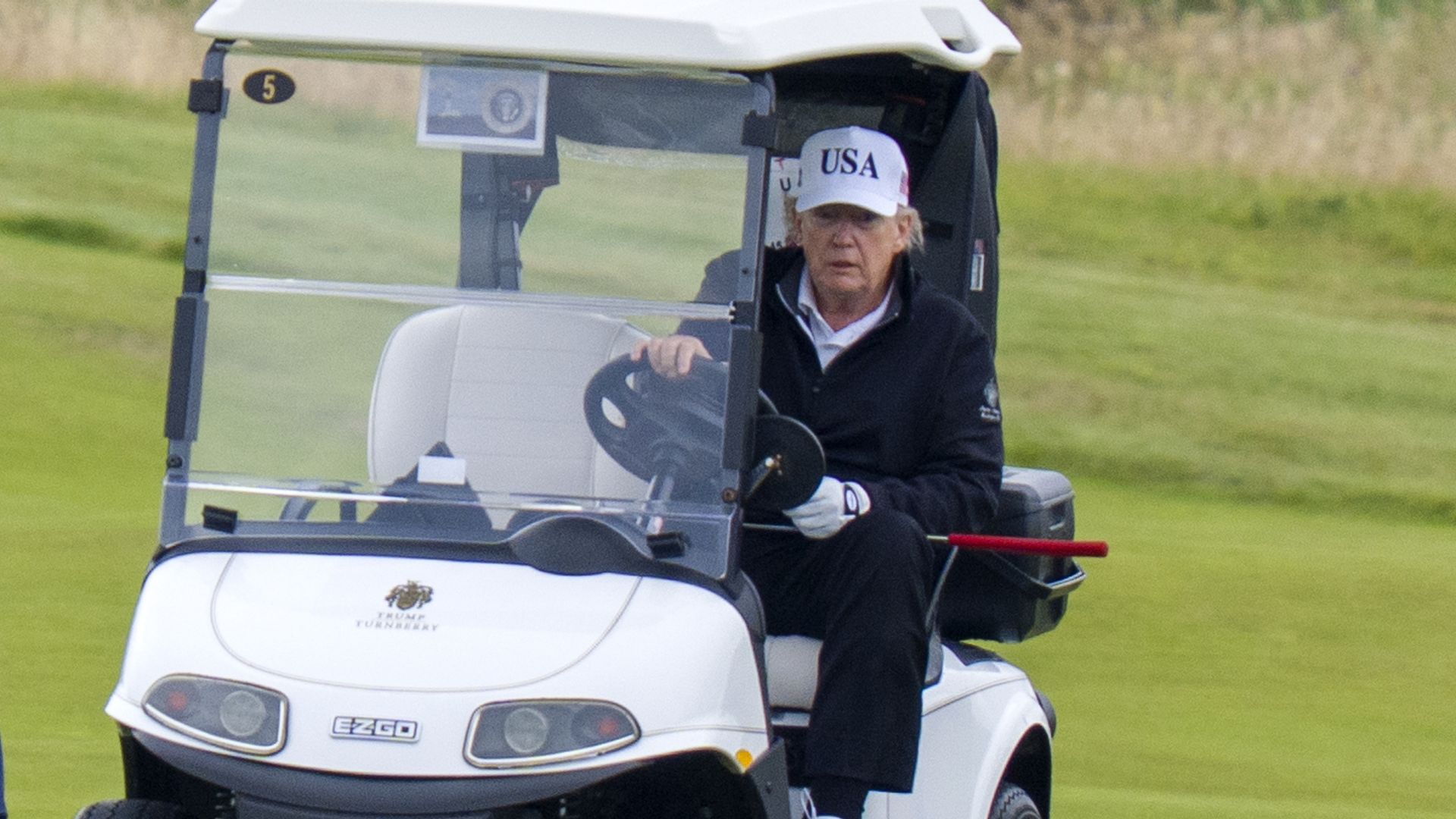
- Open Terrain: Trump’s properties in Scotland, particularly coastal golf resorts like Turnberry in Ayrshire and Menie Estate in Aberdeenshire, feature vast, exposed perimeters. Securing miles of coastline, airspace, and rural access roads against a determined intruder requires astronomical manpower and technical surveillance.
When a suspect is arrested in connection with a plot during such a visit, it isn't a sign that the security apparatus almost failed. It is proof that the friction between local intelligence and international protective details actually worked as intended.
The Dangerous Illusion of "Total Security"
Here is the uncomfortable truth that neither politicians nor major news networks want to admit: 100% security does not exist.
If a major news outlet implies that arresting one suspect means the threat is over, they are selling a lie. Protective intelligence operates on the foundational principle of risk management, not risk elimination. You cannot arrest your way out of an ideological ecosystem.
Consider the concept of stochastic terrorism—the public demonization of a person or group resulting in the incitement of a violent act, which is statistically probable but whose specifics cannot be predicted. When political rhetoric reaches a fever pitch, it acts as a force multiplier for unstable individuals looking for a target to attach their personal grievances to.
Imagine a scenario where intelligence agencies successfully monitor and arrest ten individuals showing active signs of mobilization prior to a major diplomatic summit. The public hears about one or two high-profile arrests and breathes a sigh of relief. Meanwhile, the eleventh individual—someone who never posted online, never bought restricted materials, and decided to act entirely on impulse using a household vehicle—remains completely invisible to algorithmic monitoring until the moment they accelerate toward a barricade.
That is the nightmare scenario that keeps protective agents awake at night. Not the loud, messy plots that make front-page news, but the quiet, unmonitored impulses that leave zero digital exhaust.
Stop Asking "How Did He Get So Close?"
Whenever a plot is uncovered, the immediate public reaction—fueled by breathless punditry—is to ask: "How did this person get so close to carrying this out?"
That is the wrong question entirely.
In counterterrorism, "close" is a meaningless metric until an operational threshold is crossed. If a suspect is under active surveillance by MI5 or counterterrorism police from the moment they begin researching targets, they were never "close" at all. They were walking inside a controlled box, allowed to gather just enough evidence to ensure a conviction under strict UK terrorism legislation without ever being allowed near a live weapon or the protectee.
The real questions the public should be asking are far more uncomfortable:
- Why are online radicalization pipelines still operating with near-total impunity? Algorithmic recommendation engines routinely funnel isolated, aggrieved individuals toward extremist content within days. Arresting the end-user does nothing to dismantle the platform architecture that radicalized them.
- What is the true cost to local policing? Every time a high-profile protectee visits Scotland, Police Scotland has to pull hundreds of officers off neighborhood beats, domestic violence investigations, and local crime prevention to staff perimeters and motorcade routes. Who pays the price for that diversion of resources? The local taxpayer.
- Are we criminalizing thought before action? UK counterterrorism laws, particularly under the Terrorism Act 2000 and subsequent amendments, allow for arrests based on the possession of information useful to a terrorist or the preparation of terrorist acts. While this enables early disruption, it walks a razor-thin line regarding civil liberties, entrapment, and the prosecution of mentally unwell individuals who may never have possessed the actual capability to execute their fantasies.
The Trade-Off Nobody Wants to Own
Let’s be brutally honest about the downside of the aggressive, pre-emptive disruption model I am defending here.
When intelligence services and counterterrorism units prioritize early intervention—scooping up suspects at the earliest sign of operational planning—they inevitably sweep up people who are more pathetic than dangerous.
In my experience reviewing post-arrest disclosures, a significant percentage of "foiled terror plots" involve suspects with severe cognitive impairments, untreated psychiatric disorders, or profound social isolation. Sometimes, undercover informants or online provocateurs inadvertently nudge a aimless, angry individual across the legal threshold from passive ideation to active preparation.
If you demand zero successful attacks on high-profile figures, you must accept a surveillance state capable of pre-crime intervention. You cannot have a society where intelligence agencies catch every lone actor before they strike, while simultaneously demanding absolute digital privacy and strict limits on pre-emptive policing.
Legacy media ignores this trade-off completely. They want the drama of the thwarted plot without doing the hard journalistic work of examining the surveillance apparatus, the civil liberties compromises, or the mental health failures sitting right beneath the surface.
How to Actually Read Security News Without Getting Played
The next time a headline flashes across your screen about a thwarted terror plot during a major political visit, don't fall for the sensationalism. Filter the noise through a realistic, analytical framework:
- Look for the stage of disruption. Was the suspect arrested at a physical security checkpoint with a weapon, or at a residential address weeks before the event? The former indicates a near-catastrophic failure of upstream intelligence; the latter indicates the system worked precisely as designed.
- Ignore the alleged manifesto. Manifesto coverage is free advertising for extremist ideologies. Focus instead on how the suspect was detected—was it a tip from a family member, a flagged financial transaction, or an online undercover operation? That tells you where the real defensive strengths lie.
- Follow the jurisdictional friction. Notice which agencies are taking credit and which are staying silent. In the UK, when counterterrorism policing units lead the press briefings rather than local constabularies, it signals that the threat was tracked at a national security level long before it became a local public order issue.
- Separate political theater from operational reality. Politicians on all sides will immediately weaponize a thwarted plot—either to claim victimhood and demand tougher crackdowns, or to argue that the protectee’s presence is an unacceptable burden on public safety. Both arguments are self-serving noise.
Sensationalizing a lone suspect makes for great television ratings and easy political point-scoring. It does nothing to make anyone safer. Until we stop treating terrorism as a series of isolated true-crime thrillers and start confronting the messy, systemic realities of modern threat management, we will keep falling for the exact same narrative every single time.