Kim Jong Un isn't interested in your olive branch. If you've been following the recent headlines regarding the Korean Peninsula, you’ve probably noticed a shift that goes way beyond the usual missile tests and fiery rhetoric. We’re witnessing a fundamental divorce. For decades, the working assumption in global diplomacy was that both North and South Korea ultimately wanted the same thing—reunification—even if they couldn't agree on how to get there. That's over. Kim Jong Un has officially labeled South Korea as the "primary foe" and "invariable principal enemy." He’s not just being difficult; he’s rewriting the national identity of North Korea to ensure there is no path back to the bargaining table.
The recent rejection of Seoul's diplomatic overtures isn't a temporary tantrum. It's a calculated, structural change. When Kim says, "We have no dealings with our enemy," he's signaling to his own people and the world that the era of the Sunshine Policy or any "pro-unification" sentiment is dead and buried. He’s literally tearing down monuments to South Korean cooperation. He’s closing agencies dedicated to inter-Korean travel. This is a cold, hard pivot toward a permanent two-state reality where the South isn't a long-lost brother, but a foreign occupier that needs to be deterred with nukes.
Why the old rules of Korean diplomacy don't work anymore
Most analysts keep waiting for the pendulum to swing back. They think if the right administration takes office in Washington or Seoul, Kim will come back to the table for sanctions relief. I think that's wishful thinking. The internal logic in Pyongyang has shifted. Kim Jong Un has watched what happens to dictators who give up their leverage. He’s also looking at the shifting global order. With Russia and China providing a more reliable economic and diplomatic shield, the "need" for South Korean investment or American recognition has plummeted.
Look at the numbers. North Korea’s trade with Russia has surged, particularly with rumors of munitions transfers for the war in Ukraine. This gives Kim a lifeline that doesn't require him to make nice with Seoul. In the past, South Korea could use economic aid as a carrot. Now? That carrot is rotten. Kim has made it clear that "peace" through negotiation is a trap. He's choosing "peace" through absolute military superiority.
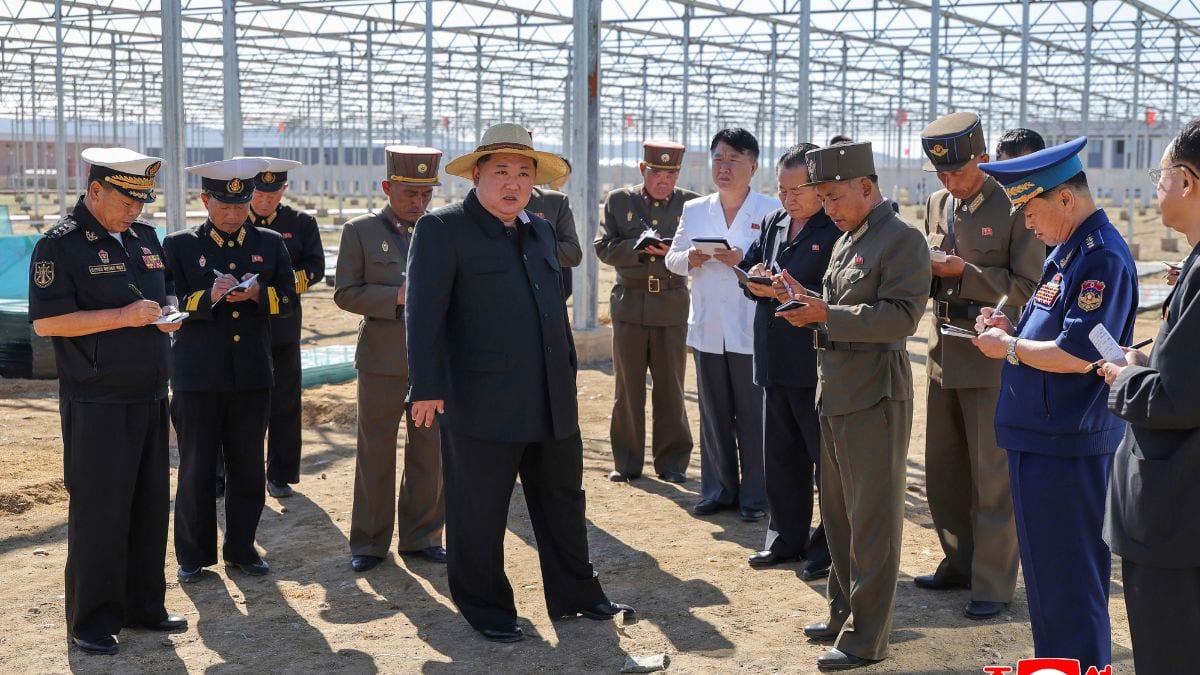
The rhetoric coming out of the Korean Central News Agency (KCNA) isn't just for show. When Kim toured major munition factories recently, his message wasn't just "we're strong." It was "the South is a foreign state." This is a huge shift. If you're a foreign state, you're not part of a "special relationship." You're just another target.
Understanding the death of the Sunshine Policy
The policy of engagement—famously known as the Sunshine Policy—is what most of us grew up with. The idea was that if you flooded North Korea with enough aid, culture, and business, they'd eventually open up. It’s been a spectacular failure. Kim Jong Un sees this not as a friendly gesture, but as a "Trojan Horse" designed to undermine his regime with "impure" South Korean culture.
Kim’s recent moves are a preemptive strike against the soft power of Seoul. He’s seen K-pop, K-dramas, and the economic prosperity of the South as the greatest threat to his rule. By declaring the South an "enemy," he can justify even more brutal crackdowns on anyone who consumes South Korean media. It’s an ideological iron curtain. He’s telling his people that there is no shared future. There is only "us" and "them."
The strategic realignment with Russia and China
Kim’s bold rejection of Seoul is backed by more than just his own nukes. He’s leveraging the new Cold War. By aligning himself closer with Vladimir Putin and Xi Jinping, he’s creating a bloc that doesn't care about UN sanctions or human rights.
- Military Tech Exchange: Russia needs North Korea's artillery and short-range missiles. In return, Pyongyang is likely getting the satellite technology and advanced submarine know-how it’s been desperate for.
- Economic Insulation: Trade with China remains the backbone of the North's economy. As long as China doesn't want a collapsed state on its border, Kim stays afloat.
- Diplomatic Cover: No new UN sanctions are getting through a Security Council where Russia and China have a veto and a grievance with the West.
This "no dealings" stance is a product of Kim feeling more secure than ever. He’s not acting out of desperation. He’s acting from a position of relative strength and strategic clarity. He knows that as long as he has his nukes and his friends in Moscow and Beijing, he can ignore the West and its olive branches.
The risk of miscalculation on the border
When you stop talking, you start guessing. And guessing on the Korean Peninsula is a dangerous game. The removal of "reunification" as a goal means that the "special status" of the border is also gone. This raises the risk of accidental escalation. If a North Korean boat crosses the Northern Limit Line (NLL), it’s no longer an "internal dispute." It’s a border violation by a hostile foreign power.
The South, under President Yoon Suk Yeol, hasn't backed down either. Their "peace through strength" approach is the mirror image of Kim's. We’re seeing more drills, more US carrier groups, and more talk of South Korea developing its own nukes. It’s a classic security dilemma. Both sides think they're deterring the other, but they're really just making the stakes higher.
Why the US election cycle matters for Kim
Kim is also playing the long game with the US political calendar. He knows that a different administration in Washington might be more willing to deal with a "nuclear-armed North Korea" as a reality rather than a problem to be solved through denuclearization. By rejecting Seoul now, he's setting the stage for a future where he only talks to the "Big Boss" in Washington, completely bypassing the "puppets" in Seoul.
This isn't just about 2024 or 2026. This is about the next twenty years. Kim is a young leader. He’s planning to rule for decades. He’s building a fortress, not a bridge. He’s betting that the world will eventually get tired of the Korean problem and just accept North Korea as a permanent, nuclear-armed reality.
What this means for the average observer
If you’re looking for a peaceful resolution or a sudden breakthrough, don't hold your breath. The era of summits and handshakes at the DMZ is over. We’re entering a new, much colder phase of the conflict. This is a time of "active deterrence."
- Expect more missile tests: These aren't just for testing technology; they're for reinforcing the new "hostile nation" narrative.
- Watch the maritime borders: The NLL in the West Sea is the most likely flashpoint.
- Don't ignore the rhetoric: When Kim says he’s rewriting the constitution to define the South as an enemy, believe him. He’s not joking.
Kim Jong Un is essentially saying, "We’re good on our own." He’s convinced himself that North Korea can survive and even thrive as a hermit kingdom with a few powerful friends. It’s a massive gamble. But for now, the "olive branch" from Seoul is just more fuel for his fire.
If you want to stay ahead of this, stop looking at what the diplomats are saying and start looking at what Kim is building. Look at the new missile silos. Look at the trade routes to Russia. That’s the real story. The talk of "one Korea" is a ghost. The reality is two states, one border, and a whole lot of high explosives.
The immediate next step for anyone following this is to monitor the upcoming South Korean legislative actions and how they respond to Kim’s constitutional changes. The South may be forced to formally abandon its own unification ministries soon. That would be the final nail in the coffin. Keep an eye on the official statements from the Blue House regarding the "North Korea-Russia Comprehensive Strategic Partnership" treaty, as that’s the real power shift behind Kim’s new-found confidence.