Norges Bank’s decision to tighten monetary policy in response to escalating conflict in the Middle East is not a simple reaction to geopolitical instability; it is a calculated response to the specific vulnerability of the Norwegian Krone (NOK) and the subsequent inflationary pressure driven by imported goods. While Norway is a net energy exporter, its domestic economy remains highly sensitive to the Risk-Premium Channel, where global volatility triggers a flight from "minor" currencies. This creates a divergence between Norway's fiscal position—which strengthens with higher oil prices—and its monetary stability, which weakens as the NOK depreciates against the USD and EUR.
The Tri-Factor Transmission Model of Geopolitical Shocks
When conflict involving Iran escalates, the impact on Norwegian interest rates follows three distinct logical paths. Understanding these paths is essential to deciphering why a central bank would raise rates when the nation's primary export is simultaneously increasing in value.
1. The Krone Depreciation Paradox
Norway operates within a specialized economic framework where the NOK often behaves as a "high-beta" risk asset rather than a traditional safe-haven commodity currency. In periods of Middle Eastern conflict, global investors move capital into the US Dollar and Gold. This capital outflow forces a depreciation of the NOK.
The mechanics of this depreciation are direct:
- Imported Inflation: A weaker Krone increases the cost of all imported goods (which account for a significant portion of Norwegian consumer spending).
- Core Inflation Stickiness: Because Norway has high labor costs, any increase in the cost of imported intermediate goods creates a floor for inflation that the central bank cannot ignore.
2. The Energy-Price Wage Loop
Higher global oil prices, triggered by potential disruptions in the Strait of Hormuz, create a dual-pressure system on the Norwegian economy. While the Government Pension Fund Global (the wealth fund) swells, the domestic petroleum sector experiences a surge in investment and activity.
This creates a "tightness" in the labor market. High demand for specialized engineering and technical labor in the oil sector spills over into the mainland economy, driving up nominal wages. Norges Bank must use interest rates to suppress domestic demand to prevent this wage growth from spiraling into a permanent shift in the inflation target.
3. Supply-Chain Risk and Risk Premia
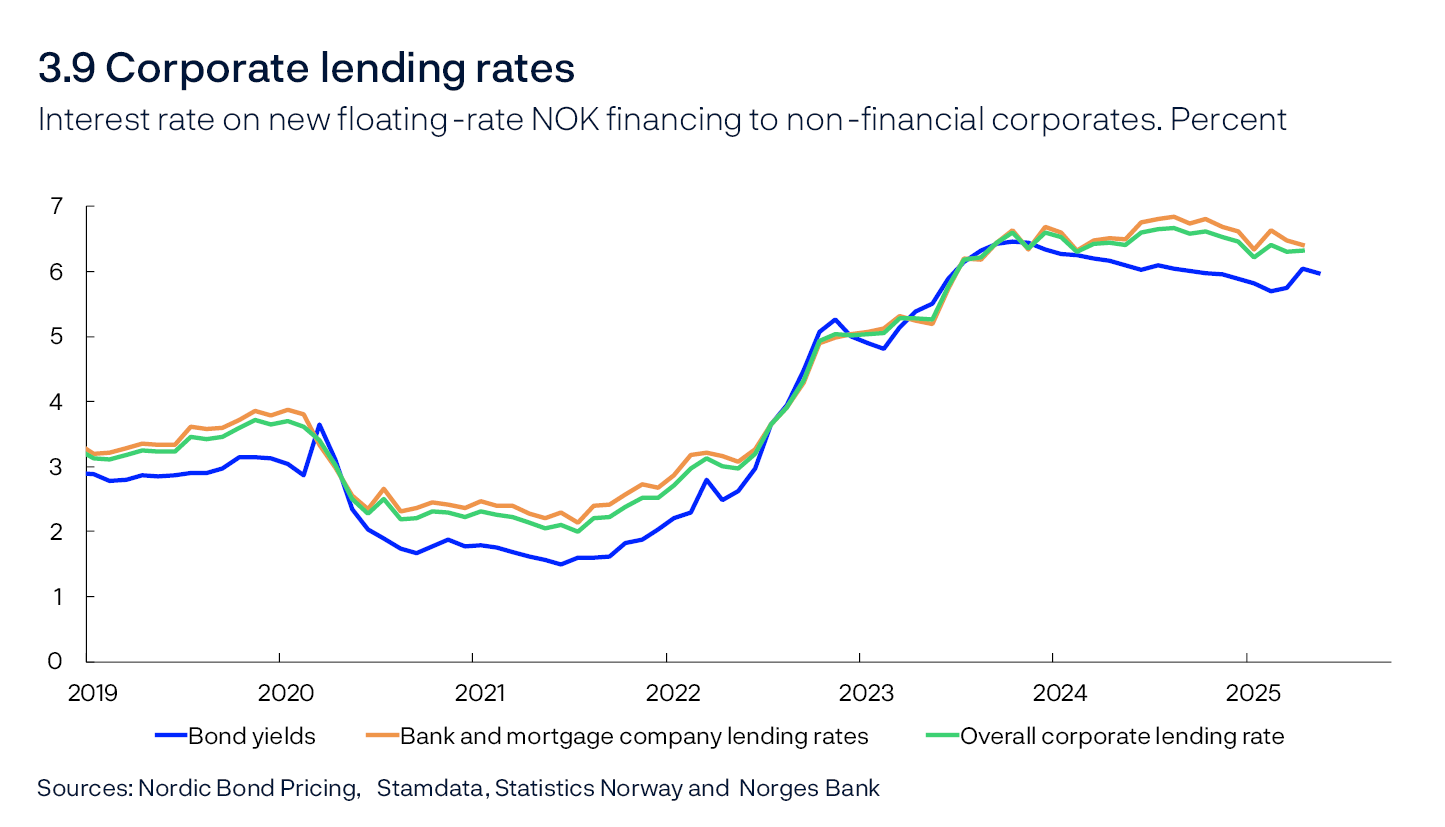
Conflict-related disruptions to shipping lanes increase the "Risk-Adjusted Cost of Capital." Banks and lenders price in the uncertainty of global trade, which naturally tightens financial conditions. By raising the policy rate, Norges Bank aligns domestic credit costs with these global realities, preventing an artificial credit expansion that could occur if domestic rates remained low while global risk surged.
The Monetary Policy Function under Geopolitical Stress
Norges Bank utilizes a specific reaction function to determine the magnitude of a rate hike. This can be expressed conceptually as a balance between the Output Gap and the Inflation Deviation, adjusted for the Exchange Rate Delta.
The Currency Support Threshold
The central bank does not have a formal exchange rate target, yet it possesses an implicit "pain threshold." If the NOK falls beyond a specific percentile relative to its historical trade-weighted index (the I-44), the inflationary pass-through becomes the dominant variable in the interest rate equation. Raising rates serves to increase the "carry trade" appeal of the Krone, incentivizing investors to hold NOK despite the geopolitical risk.
Defensive vs. Proactive Tightening
A "Defensive Hike" occurs when the bank raises rates primarily to stop currency bleeding. A "Proactive Hike" occurs when the bank anticipates that the wealth effect from higher oil prices will overheat the domestic housing market. Current conditions indicate a hybrid approach. The Iranian conflict serves as a catalyst that accelerates the need for tightening that was already latent due to persistent domestic service inflation.
Structural Bottlenecks in the Norwegian Economy
A rigorous analysis must acknowledge the structural limitations that make interest rate hikes a blunt and sometimes painful instrument for the Norwegian population.
- High Household Debt-to-Income (DTI) Ratios: Norwegian households hold some of the highest debt levels in the OECD, primarily in floating-rate mortgages. Each 25-basis-point increase has an immediate impact on disposable income.
- The Mainland-Offshore Divorce: The "Offshore" economy (oil and gas) thrives during Middle Eastern conflicts, while the "Mainland" economy (retail, construction, services) suffers from higher borrowing costs and energy prices. Norges Bank's policy must find a middle ground that does not crush the mainland while attempting to cool the offshore-driven inflation.
Quantifying the Iran Conflict Impact on Term Premia
The conflict specifically affects the "Term Premium"—the extra compensation investors demand for holding long-term debt. As the threat to Middle Eastern oil infrastructure grows, the volatility in energy markets increases. This volatility is not linear; it is exponential.
When Iran is involved, the market prices in a "tail risk" event: the total closure of the Strait of Hormuz. This would result in a global supply shock that interest rates alone cannot fix. However, Norges Bank's strategy is to manage the expectations of that shock. By signaling a hawkish stance now, they anchor inflation expectations, preventing businesses from preemptively raising prices in anticipation of future energy costs.
Technical Execution of the Rate Path
The "Rate Path" (Renteplan) issued by Norges Bank provides a forecast of the policy rate over the next three years. In the context of the Iran conflict, this path has been shifted upward. This shift is not merely a response to today's oil price but a recalibration of the "Neutral Rate"—the interest rate that neither stimulates nor restricts the economy.
If geopolitical instability becomes a permanent feature of the mid-2020s, the neutral rate must be higher to account for the constant "Insecurity Premium" embedded in global trade.
The strategic imperative for Norges Bank is to decouple the Norwegian domestic economy from the volatility of the Krone. As long as the NOK remains a proxy for global risk appetite, the central bank is forced into a "Reactive Tightening" posture. For investors and businesses operating in this environment, the takeaway is clear: the correlation between Middle Eastern conflict and Norwegian interest rates is mediated through the currency market, not just the oil market.
To hedge against this, firms must prioritize liquidity in NOK and anticipate that Norges Bank will remain "Higher for Longer" to defend the currency, even if the domestic mainland economy shows signs of cooling. The bank has signaled that it would rather risk a mild recession than allow the Krone to become a permanent casualty of geopolitical realignment.