The Geneva rain always feels different in May. It is cold, precise, and entirely indifferent to the panic of the human beings walking through it. Inside the glass and concrete walls of the World Health Organization headquarters, the air conditioning hums with a sterile, mechanical confidence. But on this specific morning, the confidence is a lie.
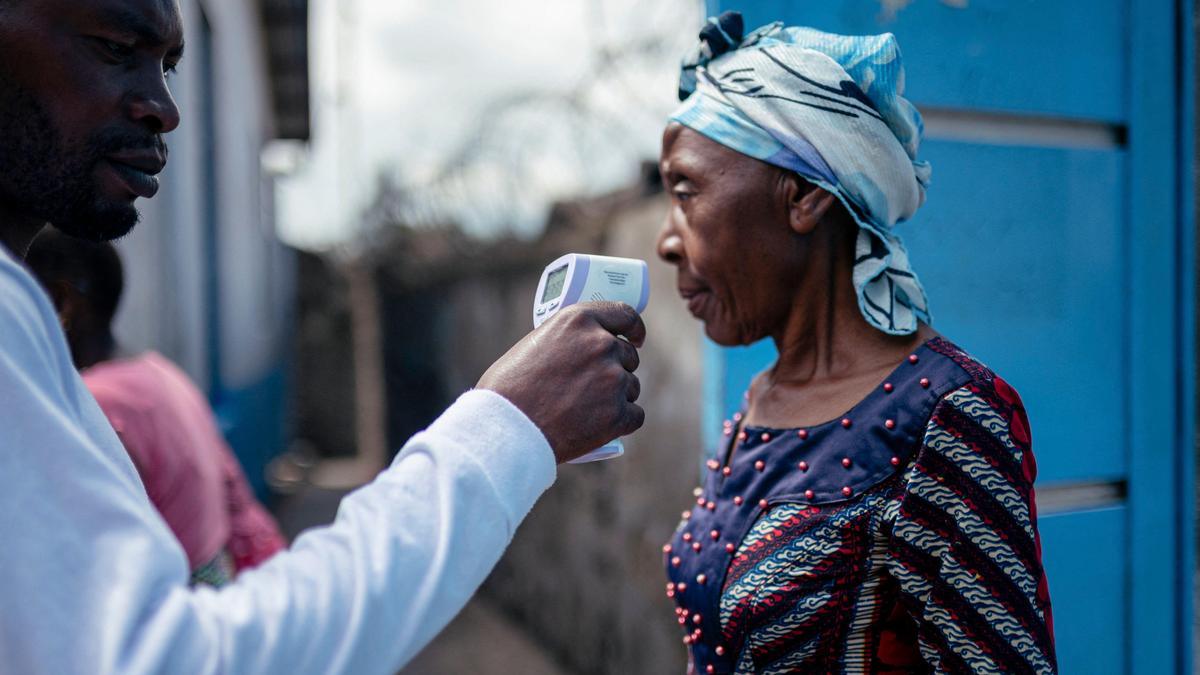
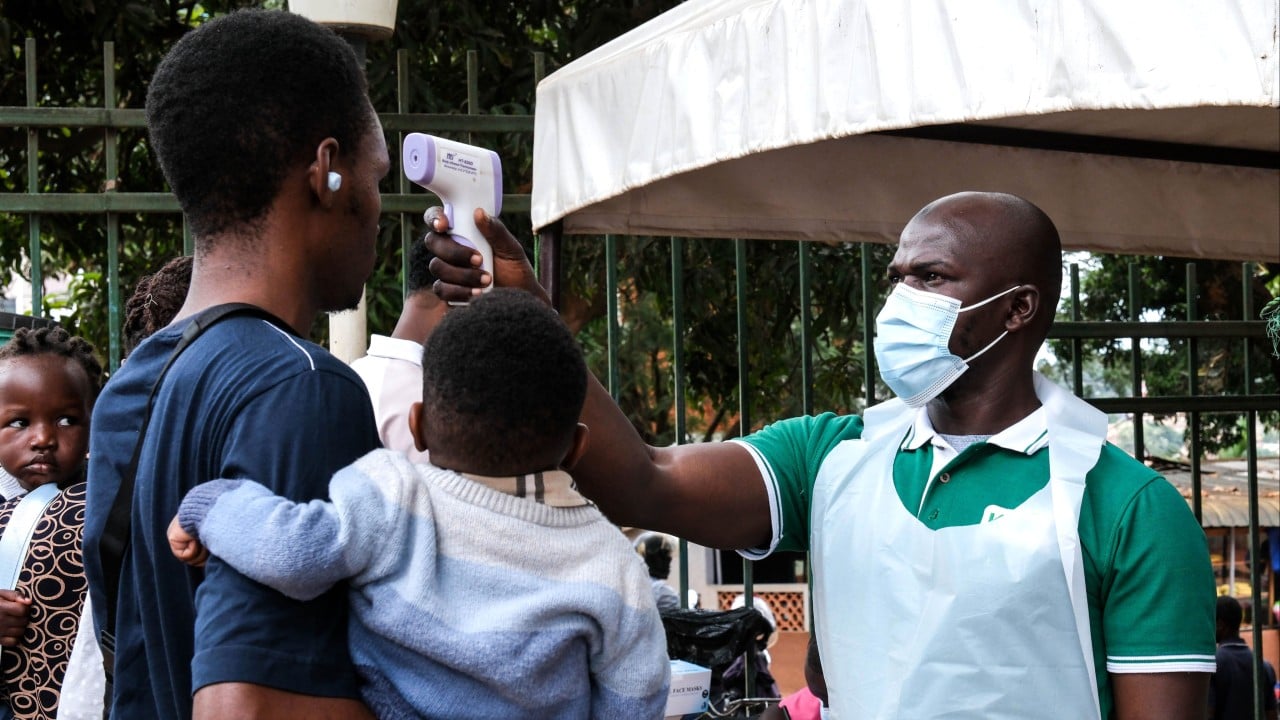
Picture a woman named Marie. She does not exist as a single biological person, but she represents three thousand frontline nurses whose names we will never know. Right now, Marie is standing in a makeshift isolation ward in the North Kivu province of the Democratic Republic of Congo. The air smells of sweat, chlorine, and the distinct, metallic tang of blood. She is wearing three layers of protective gear. The thermometer in her hand reads 39.5 degrees Celsius for the child shivering on the cot before her. It is Ebola. Again. Marie knows that if her mask slips, or if the supply chain of experimental therapeutics breaks down for even forty-eight hours, she becomes the next statistic.
Marie believes, with a fierce and desperate certainty, that the suits in Geneva have her back. She thinks that the annual World Health Assembly—the massive gathering of global health ministers happening at this very moment thousands of miles away—is a shield.
She is wrong. The shield is cracking.
The Invisible Fault Lines
While Marie fights a virus that liquefies human tissue, the bureaucratic machinery meant to support her is suffocating under the weight of geopolitical spite. This year’s assembly did not begin with a unified battle cry against disease. It began with a ledger of grievances.
The headlines focus on numbers, but numbers are just a bloodless way of talking about tragedy. The United States, historically the largest financial engine behind global public health, has signaled its intent to walk away. It is a divorce executed in the middle of a house fire. Imagine a local fire department trying to contain a blaze that spans three neighborhoods, only to have its wealthiest benefactor suddenly drive away with the main water tanker because they disagreed with the chief's communication style.
That is the reality of the American withdrawal. It leaves a gaping hole of hundreds of millions of dollars in the WHO’s operational budget.
But the financial bleeding does not stop with Washington. Across the globe, member states are quietly tightening their purse strings, implementing funding cuts under the guise of fiscal responsibility. They talk about efficiency. They talk about optimization. They use clean, corporate words to disguise a dirty reality: when you cut funding to a global health organization during a multi-front pandemic response, people in forgotten villages die.
The math is brutal. The WHO relies on two types of funding: assessed contributions (the predictable dues countries pay) and voluntary contributions (money earmarked for specific projects). Over the decades, governments have intentionally starved the predictable budget, choosing instead to control the organization through voluntary donations. It is a leash. If the WHO investigates something a superpower dislikes, the superpower simply snaps the wallet shut.
A Bestiary of Modern Plagues
We like to think of history as a straight line of progress. We conquered smallpox. We contained polio. We assumed the future would be clean.
Nature, however, does not read our triumphalist history books.
As delegates in tailored suits debate budget allocations in Geneva, the microbes are mutating. The current crisis is not a singular threat; it is an overlapping ecosystem of terror. In one corner of the globe, the Democratic Republic of Congo is wrestling with the resurgence of Ebola, an old monster that we know how to fight but lack the consistent resources to permanently defeat.
In another corner, a quieter, stranger killer is waking up. Hantavirus.
To understand hantavirus, you have to look away from the crowded cities and toward the rural edges of human civilization. Imagine a farmer clearing out an old barn. The air is thick with dust and the microscopic dried remnants of rodent droppings. The farmer inhales. A few weeks later, their lungs fill with fluid. They drown on dry land. Hantavirus Pulmonary Syndrome carries a mortality rate of roughly 40 percent. It does not spread easily from person to person like the flu, but when it strikes, it is devastatingly efficient.
The presence of hantavirus on the global assembly's agenda is an admission of vulnerability. It is proof that we are encroaching further into the wild, breaking the barriers between human habitats and zoonotic reservoirs. We are inviting the wilderness inside.
The danger lies in treating these outbreaks as isolated incidents. They are connected. They are symptoms of a planet whose immune system is failing. When the WHO is forced to cut its emergency response teams because a global superpower refuses to pay its bills, the response time to a hantavirus flare-up in South America or an Ebola cluster in Africa doubles.
In the world of infectious disease, a doubled response time is the difference between a contained headline and a global lockdown.
The Architecture of Betrayal
There is a profound loneliness in watching a system fail from the inside.
Decades ago, the global community built the WHO on a simple, radical premise: health is not a national luxury; it is a collective security requirement. A virus in a crowded market in East Asia or a rural village in Africa is a threat to a suburban family in Ohio. The system was designed to be blind to borders.
Now, we are watching the return of medical nationalism.
When a country withdraws its funding, it isn’t just saving money. It is hoarding data. It is signaling that it would rather protect its own perimeter than contribute to a global early-warning system. But a perimeter is an illusion in an age of commercial aviation. You cannot build a wall high enough to keep out a respiratory droplet.
The tragedy of the current assembly is that the debate has shifted from how do we save lives to who owns the infrastructure.
Consider the sheer hypocrisy of the geopolitical theater on display. The very nations that criticize the WHO for being too slow or too political during outbreaks are the ones who stripped the organization of its independent investigative powers years ago. The WHO cannot force its way into a country to investigate a new pathogen; it must wait for an invitation. It is a police force that is legally required to knock on a burglar’s door and ask for permission to look around.
When the system fails because of these built-in handcuffs, the member states point their fingers and yell, "Look! It doesn't work!"
The Cost of the Empty Chair
The American chair at the World Health Assembly is not just a piece of furniture. It is a symbol of a specific kind of global stability that is now evaporating.
Without that presence, and without that funding, the power dynamics shift. Other nations, eager to project influence, step into the vacuum. They offer loans instead of grants. They tie medical aid to infrastructure contracts. The objective health of humanity becomes a bargaining chip in a cold war of economic dominance.
Meanwhile, the people who actually run the programs—the epidemiologists who track mosquitoes through swamps, the logisticians who figure out how to keep vaccines frozen in hundred-degree heat without electricity—are updating their resumes. The brain drain has begun. When an organization faces arbitrary, politically motivated budget slashes, the brightest minds leave for the private sector. They go where the funding is stable.
We are losing the architects of our survival.
Think back to Marie in North Kivu. The child on the cot is not thinking about the American budget deficit. The child is breathing in shallow, ragged gasps. Marie adjusts the intravenous line. She knows that the medicine in that bag exists because scientists across three continents shared data through a network funded by global cooperation.
If that network dies, the next generation of medicine never leaves the lab.
The Final Reckoning
We have arrived at a strange moment in human history where we possess the technology to map a virus's genome in hours, but lack the political maturity to share the cost of distributing the cure.
The rain in Geneva eventually stops, leaving the streets slick and reflective under the streetlights. The delegates will leave the glass halls. They will board their flights back to capital cities across the globe, carrying folders filled with resolutions, amendments, and watered-down compromises. They will tell their citizens that they protected national interests.
But viruses do not have nationalities. They do not respect treaties, and they do not care about budget cycles. They only care about finding a vulnerable host.
As the lights go out in the plenary halls, the true cost of this fractured assembly remains unwritten. It will be recorded later, not in the minutes of a committee meeting, but in the fever charts of overcrowded clinics, in the quiet grief of families who were told the medicine ran out, and in the slow, irreversible realization that when the world needed to stand together, it chose to fall apart alone.