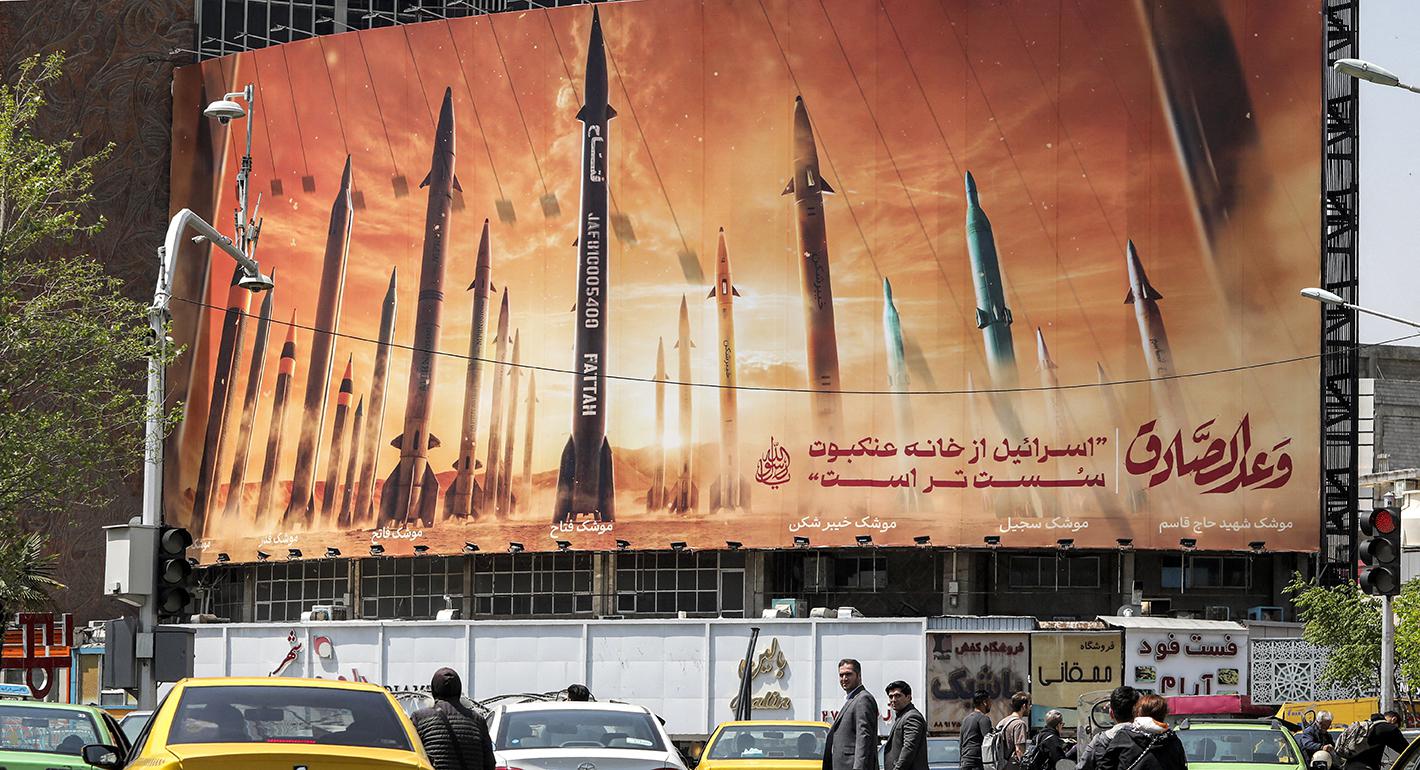
The desert at night is never truly silent, but on January 8, 2020, the Al-Asad Airbase in Iraq hummed with a specific, jagged anxiety. Soldiers moved through the shadows not as warriors, but as people waiting for a hammer to fall from the stars. When it finally did, it wasn't a single strike. It was a rhythmic, bone-shaking erasure of the world they knew.
We were told, in the immediate, sun-drenched aftermath, that everything was fine. The official word from the podium in Washington was a sigh of relief: "No Americans were harmed." It was a tidy narrative. It fit into a tweet. It suggested that a barrage of Iranian ballistic missiles—each carrying a warhead the size of a refrigerator—had somehow managed to turn the earth into fire without touching a single human soul. In related developments, we also covered: Why the attack on China's tanker in the Strait of Hormuz changes everything.
The reality was much louder. And much, much darker.
The Physics of a Shattered Mind
To understand why the "no casualties" narrative was a lie of omission, you have to understand what happens to a room when a Qiam missile strikes the ground nearby. It isn't just the fire. It’s the overpressure. The New York Times has analyzed this fascinating subject in great detail.
Imagine the air around you suddenly becoming as dense and hard as a sheet of granite. This wall of invisible force slams into the human body at supersonic speeds. It doesn't always break bones. Instead, it ripples through the softest parts of us. It flows through the skull like water through a sponge, stretching and tearing the delicate axonal fibers that allow our brain cells to talk to one another.
At Al-Asad, men and women huddled in bunkers designed for a different era of warfare. They felt their teeth rattle. They felt the air sucked out of their lungs. When the dust settled, they crawled out. They looked at their limbs. They were all there. No blood. No missing fingers. By the standard metrics of 20th-century combat, they were "fine."
But the lights were flickering behind their eyes.
The Slow Leak of Human Capacity
Days passed. Then weeks. The "zero" in the casualty column began to twitch. First, it was eleven soldiers. Then thirty-four. Then sixty-four. By the time the final tally was acknowledged, over 100 American service members were diagnosed with Traumatic Brain Injury (TBI).
This wasn't a "headache."
Consider a hypothetical specialist—let’s call him Miller. In the days after the strike, Miller finds he can’t remember his mother’s middle name. He looks at a digital clock and the numbers seem to be vibrating, refusing to settle into a coherent time. He drops his coffee because his hand forgot how to grip. At night, the silence of the barracks feels like a physical weight, and every slamming door sounds like the end of the world.
The damage wasn't "hidden" because of a grand conspiracy. It was hidden because TBI is an invisible wound. You cannot apply a tourniquet to a memory. You cannot stitch a personality back together once the blast wave has frayed it. By downplaying the damage to keep the gears of geopolitics turning, the administration traded the long-term health of these soldiers for a short-term headline of "peace."
The Precision of the Ghost
There was another damage report that didn't make the front pages, one that fundamentally changed how the Pentagon views the sky. For decades, the West operated under the assumption that Iranian missile technology was a collection of shaky, Soviet-era knockoffs—loud, scary, but ultimately inaccurate.
The Al-Asad strike shattered that arrogance.
The missiles didn't just hit the base; they hit specific hangars. They hit fuel depots. They hit maintenance sheds with the surgical precision of a scalpel. They avoided the living quarters not by accident, but by a chillingly calculated choice. Tehran wasn't trying to kill thousands; they were trying to prove they could hit anything they wanted.
This was a demonstration of a digital evolution. The "hidden blow" was the realization that the technological gap had closed. The invisible stakes were no longer about whether a missile would land in the desert, but whether our missile defense systems—the billion-dollar shields we've built our security on—were suddenly obsolete against a neighbor who had learned how to code.
The Ghost in the Machine
When we talk about "damage," we usually count craters. We count the charred remains of a Black Hawk helicopter or the twisted rebar of a collapsed roof. We rarely count the cost of a lost sense of invincibility.
For the soldiers who lived through those eighty minutes of bombardment, the damage is a permanent guest in their homes. It is the vertigo that hits when they try to play with their children. It is the sudden, inexplicable rage that bubbles up during a trip to the grocery store.
The military-industrial complex is excellent at replacing hardware. A hangar can be rebuilt in a month. A missile can be countered with a newer, faster interceptor. But the human element is not a modular component. When you subject a brain to the pressures of a ballistic impact, you are changing the fundamental chemistry of a life.
The deception of the "bloodless strike" wasn't just a political maneuver; it was a betrayal of the lived experience of the people on the ground. It framed a catastrophic event as a mere hiccup in the news cycle. It taught a generation of service members that if their wounds don't bleed, they don't count.
The dust at Al-Asad has long since settled, and the scorched earth has been paved over. But in darkened rooms across the country, men and women are still sitting in those bunkers, waiting for the vibration to stop. They are the living evidence of a blow that landed much harder than we were ever supposed to know.
They are the price of the silence.