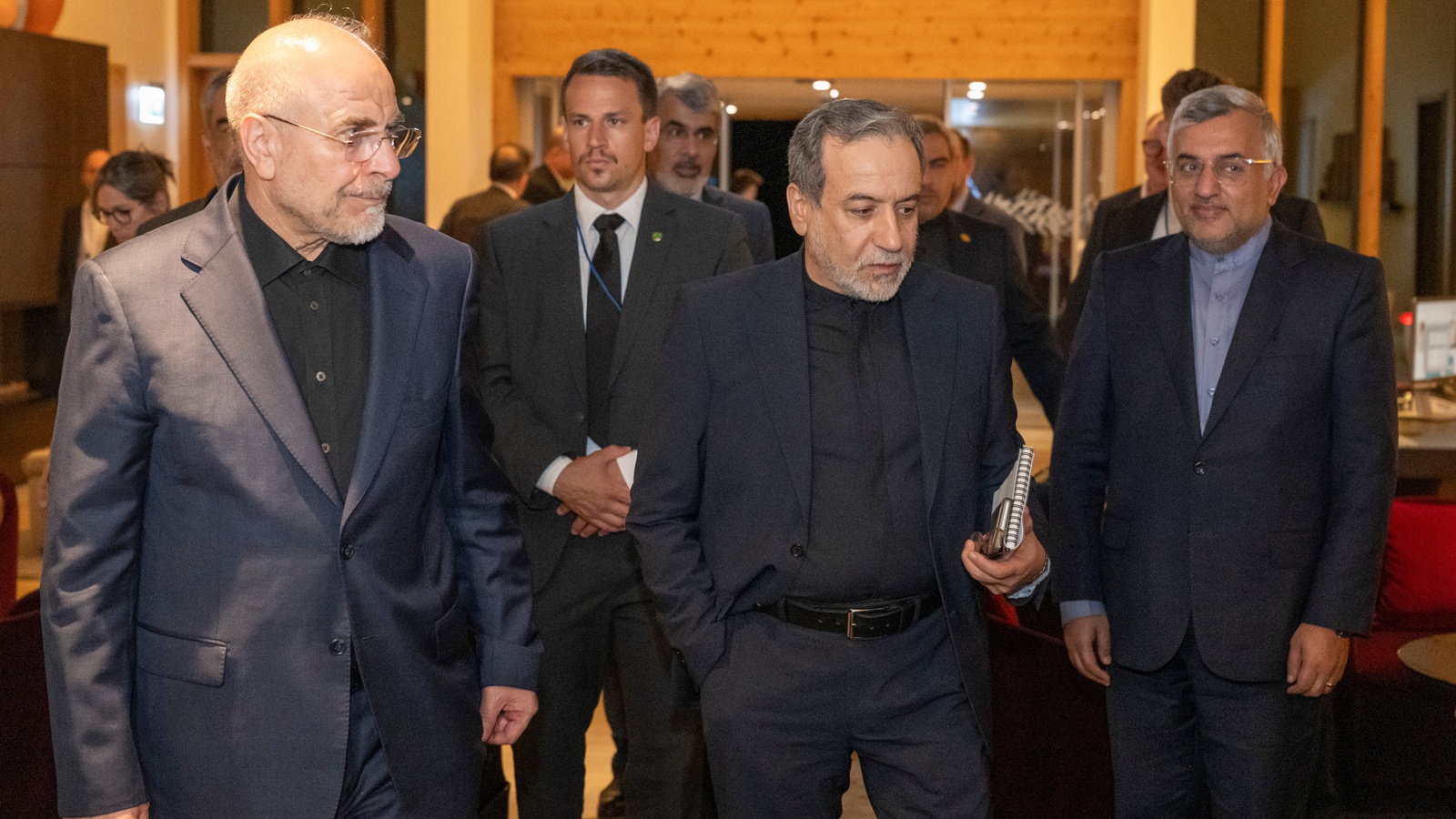
The days of treating the Strait of Hormuz as an open, neutrally managed global highway are over. Anyone hoping the maritime chokepoint would just slip back into its old rhythm after the recent military flareups received a harsh dose of reality this week. Mohammad Bagher Ghalibaf, Iran’s Parliament Speaker and chief negotiator, made it clear upon his return from high-stakes talks in Switzerland that the old status quo is dead. Iran intends to run the show.
His exact words should rattle global energy markets. Ghalibaf stated that the governance framework of the Strait of Hormuz will never return to its pre-war state. While he noted that international shipping regulations will be respected, he explicitly asserted that Iran will manage and administer the waterway under its own arrangements. This isn't just standard political posturing. It marks a fundamental shift in how the world's most critical oil transit route operates, right after the United States and Iran supposedly cooled down hostilities.
For anyone trying to map out global trade or energy security for the rest of 2026, this announcement changes the math. You can't look at the recent Switzerland talks as a return to normal. They're a blueprint for a new, Iranian-managed reality in the Persian Gulf.
Inside the Switzerland Negotiations
The announcements followed the wrapping up of technical talks between Washington and Tehran in Switzerland. These discussions resulted from a 14-point memorandum of understanding designed to end the hot conflict that erupted three months ago when the US and Israel launched strikes inside Iran, triggering immediate Iranian retailiation against Israel and Gulf bases.
Instead of a simple ceasefire, the two sides set up a High-Level Committee and a strict 60-day roadmap toward a final agreement. To keep the gears moving, they broke the remaining issues down into four distinct working groups. One group handles sanctions termination. Another tackles nuclear affairs. The remaining two focus on reconstruction and economic development, alongside monitoring the implementation of the deals already struck.
Ghalibaf doesn't view these talks as a diplomatic compromise. He explicitly described negotiation as a method of struggle, a direct continuation of the battlefield. In his eyes, the Iranian armed forces secured a victory on the field, and his job in Switzerland was simply to lock those gains into international legal frameworks.
The Logistics of Iranian Management
What does an Iranian-administered Strait of Hormuz actually look like? For starters, it means Western naval forces will face a much different environment when escorting commercial tankers.
Iran has already agreed to set up a direct communication channel regarding ship movements through the strait. The stated goal is to prevent misunderstandings and sudden security incidents. But a communication channel run on Tehran's terms means every commercial vessel transiting the area will effectively have to check in with Iranian authorities, giving them ultimate oversight over twenty percent of the world's petroleum liquids consumption.
Ghalibaf tried to reassure the international community by stating that Iran wants to keep the strait fully functional for transit to help the global economy. Yet, the underlying message is clear. Access is a privilege Tehran grants, not an inherent right the West can guarantee. If implementation issues pop up during the 60-day roadmap, Ghalibaf warned that Iran can respond both with missiles and through negotiations.
The Financial Price of Peace
Washington didn't walk away from these talks without making massive concessions. The most immediate win for Tehran is the finalization of an agreement to release $12 billion in frozen Iranian assets. These funds, split into two separate $6 billion tranches, are being unlocked immediately.
At the same time, the US agreed to lift the ongoing oil blockade. Sanctions tied to Iranian oil exports, petrochemicals, banking, insurance, and maritime transportation are officially eased until a final agreement is locked in.
The economic fallout travels both ways. US Vice President JD Vance suggested that the Trump administration might agree to unfreeze these assets specifically so Iran can purchase American agricultural goods like wheat, corn, and soy. It’s a pragmatic transaction. Washington gets economic relief for its domestic farmers, while Tehran secures vital food supplies and billions in hard currency to stabilizing its domestic economy after months of conflict.
The Social Media Clash and Deep Distrust
The atmosphere behind closed doors in Switzerland was anything but friendly. Ghalibaf repeatedly emphasized that Iran maintains a deep, permanent distrust of the United States. Because of this, the Iranian delegation insisted on tight, legally binding safeguards requiring immediate American action before Iran pulled back its own measures.
To prove his point about Iranian leverage, Ghalibaf shared an incident involving a social media post by US President Donald Trump. According to the Iranian Speaker, Trump published a post threatening Iran against supporting its regional proxy groups, specifically pointing at Lebanon. The post claimed the Strait of Hormuz would be completely free immediately.
The Iranian team immediately pushed back during the active session. Within an hour, the US side revised the statement. Iran forced the edit by showing they would only open the waterway on their own timeline and under their own specific terms. For Tehran, this was a massive symbolic victory, proving they could force the White House to adjust its public narrative in real-time.
The Spillover into Lebanon
The naval dispute is inextricably linked to the broader regional war. Ghalibaf noted that the moment the Switzerland talks began, enemy attacks against Lebanon stopped. This pause allowed thousands of displaced people to begin returning to their homes in Lebanese territory.
The technical talks explicitly covered Lebanon’s territorial integrity and regional ceasefire arrangements. A joint US-Iran de-confliction cell was established specifically for the Lebanese theater. Tehran is using its control over the Strait of Hormuz as leverage to protect its regional allies, signaling that any renewal of hostilities in the Levant will immediately trigger a shutdown or disruption in the Persian Gulf.
Power Structures in Tehran
Understanding Iran's next steps requires looking at who is actually calling the shots. Ghalibaf handles the public diplomacy, but he openly reminded state media that the final authority rests with the Supreme Leader, Ayatollah Seyyed Mojtaba Khamenei.
Ghalibaf stressed the absolute necessity of internal political unity, stating that the Supreme Leader's directives are final. This means the strategic posture regarding the Strait of Hormuz isn't the policy of a single political faction. It's a unified state doctrine backed by the highest levels of the clerical and military establishment. Western analysts expecting internal political divisions to soften Iran's stance on the waterway are miscalculating.
Immediate Steps for Maritime Shipping
Global shipping firms and energy traders must adapt to this shift immediately. Waiting for a return to the pre-war security framework is a losing strategy.
First, update transit protocols to factor in the new Iranian communication channel. Vessels must treat compliance with Iranian maritime notifications as a operational necessity, not an optional courtesy.
Second, re-evaluate insurance premiums for Persian Gulf transit. While formal sanctions on insurance and shipping are eased under the interim agreement, the reality of permanent Iranian administration means risk profiles remain high.
Third, monitor the 60-day roadmap deadlines closely. Any diplomatic breakdown in the four working groups will instantly manifest as disruptions or inspections in the strait. Secure alternative supply routes or buffer stocks ahead of these key diplomatic markers.


