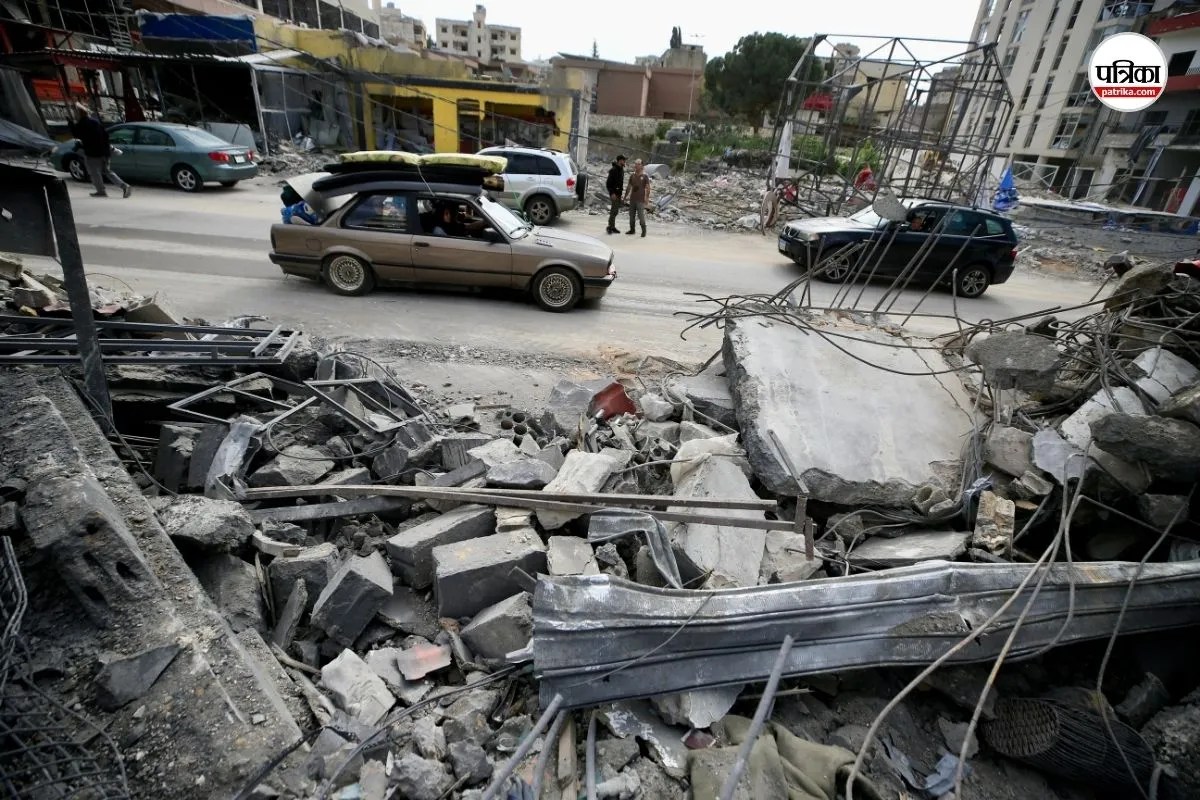
The ink is barely dry on the latest US-mediated diplomatic paperwork, and everyone is pretending we just witnessed a breakthrough. Israel and Lebanon just agreed to renew their incredibly fragile ceasefire. They are even talking about creating "pilot security zones" in southern Lebanon where Hezbollah operatives are banned.
It sounds great on paper. But let's look at the reality on the ground.
While diplomats were shaking hands at the State Department in Washington, Israeli troops were extending their positions near the Zahrani River, and Hezbollah was launching fresh rounds of rockets. The central condition of this deal is massive. Hezbollah must completely stop its fire and evacuate every single operative from areas south of the Litani River. If you think a militant group heavily backed by Iran is going to pack up its bags and hand over total control to the weak Lebanese Armed Forces, you haven't been paying attention to the Middle East.
The Big Condition Hezbollah Will Never Accept
Let's unpack what this agreement actually demands. The core of this updated truce relies on a simple, yet practically impossible premise. The Lebanese Armed Forces are supposed to take exclusive control of specific pilot zones, completely freezing out non-state actors.
This isn't just about moving rocket launchers back a few miles. It's a direct attempt to strip Hezbollah of its territorial dominance in the south. The joint statement from the talks explicitly says the deal rejects any attempt by state or non-state actors to hold Lebanon's future hostage. That's a poorly hidden swipe at Iran.
Historically, the Lebanese army doesn't have the political will or the firepower to forcefully disarm Hezbollah. When the UN Resolution 1701 tried something similar years ago, it failed miserably. Hezbollah simply blended into the local population, rebuilt its tunnels, and accumulated an even bigger arsenal. Expecting them to voluntarily exit the stage now, especially after months of brutal fighting, is wishful thinking. In fact, senior Hezbollah officials have already stated they won't accept partial ceasefire terms that feel like a surrender.
Why Israel's Military Strategy Contradicts the Peace Talks
Prime Minister Benjamin Netanyahu isn't acting like a man who expects peace to last. Just days ago, he ordered the Israeli Defense Forces to expand their ground maneuvers in Lebanon.
Israeli troops recently took control of the historic, 900-year-old Beaufort Castle and secured strategic high ground in the south. The goal is obvious. Israel wants to create a buffer zone through sheer military force because they don't trust international guarantees.
- Israel claims its operations are defensive necessities to protect northern citizens.
- Over 1.2 million Lebanese civilians have been displaced by the ongoing strikes.
- Rocket and drone fire from Hezbollah keeps shutting down schools and businesses in northern Israel.
Look at the political landscape inside Israel. Netanyahu is facing intense pressure from political rivals like Naftali Bennett, who are demanding an even tougher stance against Lebanon. If a single rocket breaches the border during this "truce," the Israeli military is fully prepared to launch deep strikes into Beirut's southern suburbs again. They have explicitly kept the right to act in self-defense against what they perceive as imminent threats.
The Washington Illusion and the Iran Factor
The negotiations in Washington feature high-ranking diplomats, American mediators, and plenty of optimistic press releases. But there's a glaring issue. Hezbollah isn't even a formal signatory to these talks. The Lebanese government is negotiating on behalf of a country it doesn't fully control.
Then you have Iran. Tehran is watching its primary proxy network get squeezed. While US officials claim progress, Iranian officials have openly threatened to pull the plug on separate diplomatic backchannels if Israeli operations continue to degrade Hezbollah's infrastructure. It's a complex chain reaction. You can't fix the conflict on the Israel-Lebanon border without addressing the fact that Tehran pulls the financial and logistical strings.
This entire pilot zone experiment is an attempt to transition into a broader peace treaty. It's the first time since the failed 1983 agreements that direct sovereignty talks have reached this level. But a ceasefire built on conditions that the main fighting force rejects isn't a peace plan. It's just a temporary pause for both sides to rearm.
To track if this deal has any real teeth, watch the Lebanese army deployment in the coming days. If regular Lebanese troops don't immediately move into those southern pilot zones and physically push back militant positions, the ceasefire will collapse before the week ends. Don't expect the rockets to stay quiet for long.