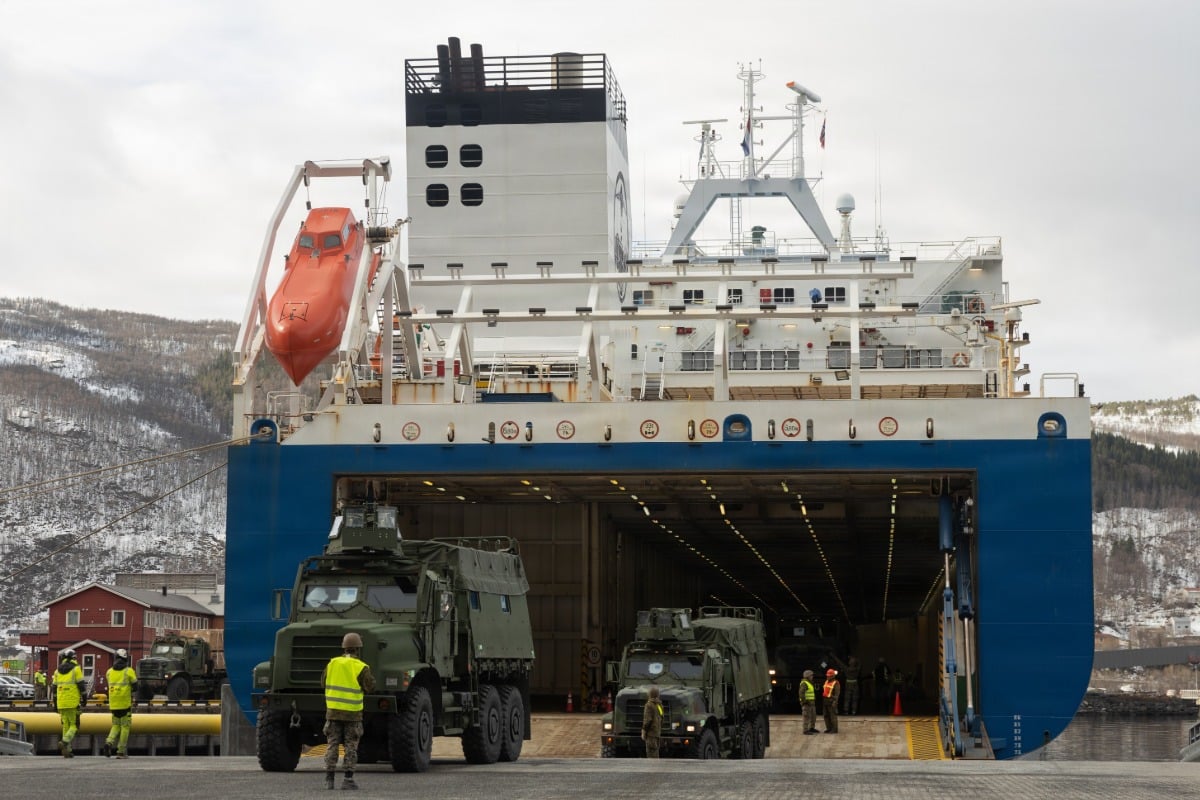
The U.S. Navy just made a move that tells you exactly how worried the Pentagon is about logistics in the Pacific. Military Sealift Command quietly finalized charters for four civilian cargo ships, specifically picking vessels capable of driving military vehicles directly onto beaches. These aren't your typical high-tech grey hulls. They're commercial roll-on/roll-off ships hired to backstop operations around Okinawa, Japan.
If you're tracking the region, the intent is clear. This isn't about routine transport. It's about surviving a fight where permanent docks might get blown to pieces on day one.
The Logistics Crisis Hiding in Plain Sight
Pentagon planners have a massive problem in the Indo-Pacific. They call it the tyranny of distance, but the real issue is infrastructure. Standard transport ships require deep-water ports, giant gantry cranes, and secure piers to unload heavy armor and ammunition. In a conflict over Taiwan or the East China Sea, those static ports become high-priority targets for long-range ballistic missiles.
By chartering civilian vessels equipped with bow ramps or stern ramps that drop right onto a beach or an austere pier, the Navy is bypassing the vulnerable bottlenecks.
I've watched these types of commercial integration contracts for a long time, and the biggest mistake observers make is thinking the military can rely solely on its own gray-bottomed amphibious fleet. The truth is the existing fleet of San Antonio-class LPDs and older amphibious ships is overworked, under-maintained, and flat-out insufficient for the sheer volume of material needed to sustain island defense.
The U.S. Marines on Okinawa recently stood up Marine Littoral Regiments, which are highly mobile units designed to hunt enemy warships from land using unmanned ship-killer missiles. But mobility requires logistics. If you can't move the launchers, the fuel, and the reload missiles from island to island without relying on a massive, easily targeted naval port, the entire strategy falls apart.
What Commercial Ships Bring to the Front Line
These four chartered vessels serve as an immediate force multiplier without the ten-year wait time of a naval shipyard build. Commercial mariners run them, which frees up scarce Navy personnel. More importantly, they blend into the background noise of global maritime trade. A civilian hull carrying rolling stock is far harder to track and single out in a crowded shipping lane than a massive Navy amphibious assault ship.
The tactical reality boils down to distributed maritime operations. Instead of stacking all supplies at major bases like White Beach Naval Facility in Okinawa, the Navy can distribute assets across smaller, remote islands in the Ryukyu chain.
[Commercial RORO Ship] -> Drops Ramp -> Delivers NMESIS Launchers -> Moves Out
This approach changes the math for any potential adversary. When your logistics can land on an unpaved beach or a tiny concrete fishing pier, every single island becomes a potential launchpad for anti-ship missiles.
The Risks No One in Washington Wants to Discuss
Hiring civilian ships isn't a flawless fix. There's a glaring legal and operational gray area here. Commercial crews are merchant mariners, not active-duty sailors. While they sign up for hazardous duties, sending unarmed or lightly armed merchant ships into an active combat zone filled with drones and submarines is a massive gamble. During World War II, the Merchant Marine suffered a higher casualty rate than any branch of the military. We're looking at a setup that risks repeating that exact history.
Then there's the question of defensive capabilities. These chartered ships don't carry Phalanx close-in weapon systems or missile decoy launchers. If a drone swarm or a cruise missile tracks them down, they rely entirely on whatever Navy or Marine escort happens to be nearby. It's a calculated risk. The Pentagon is betting that the ability to disperse forces rapidly outweighs the vulnerability of individual hulls.
The move also exposes the critical shortage in the U.S. flagged commercial fleet. The fact that the Navy has to scramble to secure specific landing-capable civilian ships shows just how thin the domestic maritime industry is stretched.
If you want to understand where the next conflict will be won or lost, stop looking at the stealth fighters and look at the cargo ramps. The acquisition of these four charters proves that the Pentagon is done treating logistics as an afterthought. They're actively preparing for a scenario where the docks are gone, and the only way to stay in the fight is to drive right into the sand.
For those tracking maritime security or defense supply chains, the next logical step is monitoring how these specific ships integrate with Third Marine Expeditionary Force exercises over the coming months. Watch the smaller islands surrounding Okinawa. The frequency of beach-landing drills using these commercial hulls will tell you exactly how fast the military expects this timeline to accelerate.


