The Romanticizing of Maritime Pollution
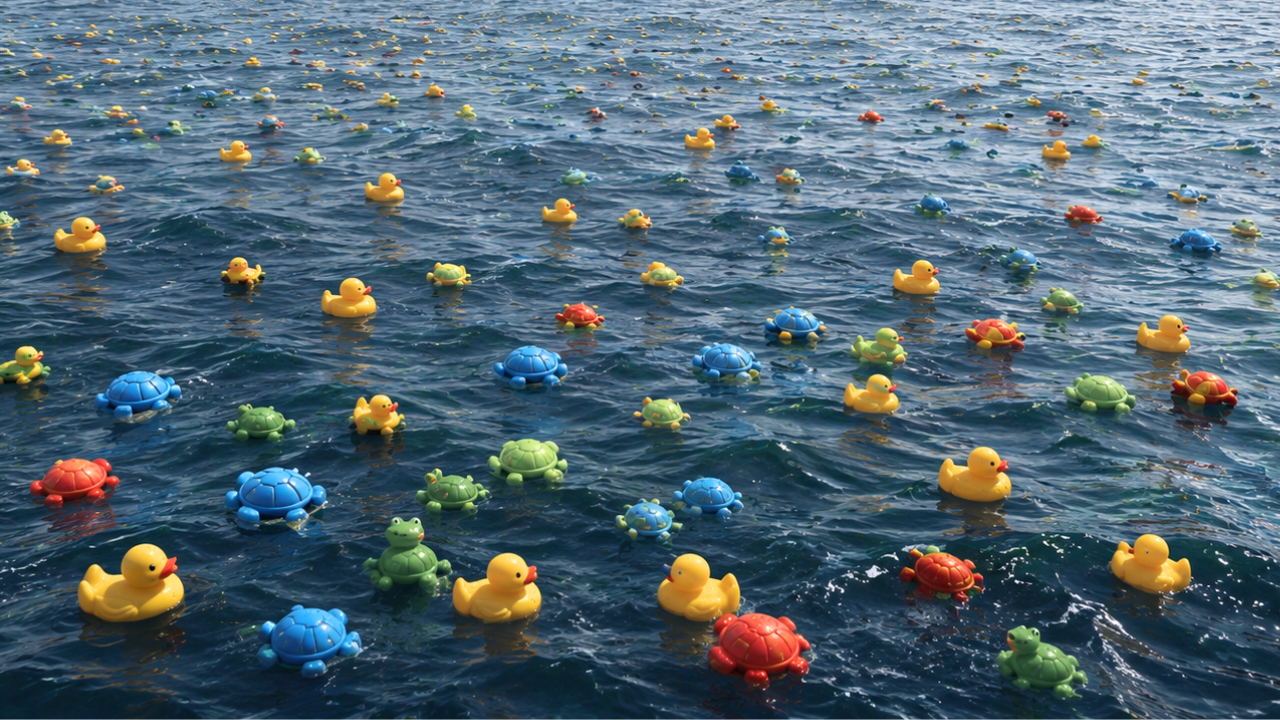
Every pop-science writer loves the story of the "Friendly Floatees." In 1992, a container ship dropped 28,800 plastic bath toys—ducks, turtles, beavers, and frogs—into the middle of the Pacific Ocean. The standard narrative claims this accident was a miraculous boon for science. Writers gush about how these little yellow ambassadors mapped the global conveyor belt, tracked the Great Pacific Garbage Patch, and gave oceanographers a data set money couldn't buy.
It is a comforting, cute story. It is also completely wrong.
The lazy consensus treats a major industrial pollution event as a whimsical science experiment. Curtis Ebbesmeyer, the oceanographer who famously tracked them, did brilliant work with the data available. But let's stop pretending that tracking rigid, wind-blown hollow plastic toys tells us how actual marine ecosystems move. The myth of the rubber duck has distorted public understanding of ocean currents for over three decades, masking the harsh physics of fluid dynamics behind a wall of corporate-friendly nostalgia.
The Sailboat Fallacy: Why Toys Are Bad Data
The fundamental flaw in celebrating the Friendly Floatees is a concept fluid dynamics engineers call windage.
When an object floats on the surface of the sea, it is subject to two competing forces: hydrodynamic drag (the current pushing the underwater mass) and aerodynamic drag (the wind hitting the exposed topside).
Standard oceanographic drifters—the multi-million-dollar tools used by organizations like the National Oceanic and Atmospheric Administration (NOAA)—are engineered with precision. They use underwater "hole-y sock" drogues that sit meters below the surface. This ensures they measure the actual movement of the water column, not the breeze.
A hollow plastic rubber duck possesses massive windage. It sits high in the water. It acts less like a water molecule and more like a sailboat without a rudder.
[Wind Vector] -------->  O (Exposed Toy Body = High Windage)
                        ~~~
[Current Vector] =====> |_| (Submerged Mass = Low Drag)
When those 28,800 toys drifted across the Pacific, they weren't mapping deep-ocean conveyor belts. They were mapping surface winds. A strong gale could push those toys entirely out of a current trajectory, leading to false positives about where the water itself was moving. Relying on them to chart global currents is like tracking a hurricane by watching which way empty potato chip bags blow down a highway. It tells you something is moving, but it gives you zero actionable data on the system's underlying mechanics.
The Great Pacific Garbage Patch Illusion
The rubber duck narrative directly feeds into the most broken premise in environmental journalism: the idea that the Great Pacific Garbage Patch is a literal island of trash.
People ask, "Why can't we just go scoop up the ducks and the bottles?"
Because the ducks are anomalies. The real threat is invisible, and the physics of the ocean ensure it stays that way.
The Pacific trash vortex is not a landfill floating on the water; it is a thick, soup-like suspension of microplastics. Sunlight, waves, and salt do not preserve plastic; they degrade it through photo-fragmentation. The Friendly Floatees that didn't wash up on Alaskan beaches didn't remain cute little ducks. They broke down into billions of microscopic, toxic shards.
I have talked with marine technicians who spend months collecting water samples in the gyres. They do not find floating toys. They find a sludge of polyethylene and polypropylene particles smaller than a grain of rice, suspended throughout the top hundred meters of the water column.
By focusing on the macro—the intact toy that traveled thousands of miles—the media shifted public attention away from the micro. We began looking for floating objects on the surface when we should have been looking at the chemical destabilization of the upper water column.
The Cost of Casual Oceanography
Let's look at how actual oceanographic tracking works today, compared to the chaotic drifting of 1992.
| Feature | The Rubber Duck Method | Modern Drifting Buoys (Global Drifter Program) |
|---|---|---|
| Primary Driver | Wind (High Windage) | Ocean Currents (Subsurface Drogue) |
| Data Collection | Human beachcombers reporting months/years later | Real-time satellite telemetry (Argos/Iridium) |
| Depth Profile | Surface only (0 meters) | Adjustable (typically 15 meters depth) |
| Sample Size Control | Unknown degradation and loss rates | Calibrated sensors measuring salinity and temperature |
The Global Drifter Program maintains an array of roughly 1,300 drifting buoys worldwide. They do not rely on beachcombers in beach towns to mail in reports three years after the fact. They ping satellites hourly. They tell us about sea surface temperature, barometric pressure, and actual velocity vectors.
The defense of the rubber duck story is usually, "But it inspired a generation of scientists!"
Maybe. But it also inspired a wave of low-effort citizen science projects that claim dumping tracking tags or floating blocks into rivers and oceans is a viable way to study hydrology. It isn't. It is littering disguised as data collection.
Imagine a scenario where an automotive manufacturer tests a car's aerodynamic efficiency by throwing handfuls of loose feathers out the window at 60 miles per hour. It looks dynamic. It gives you a vague sense of air movement. But no serious engineer would base a chassis redesign on where a goose feather landed.
Dismantling the Premise of "Accidental Discovery"
The narrative loves an accident. It suggests that human error is the ultimate catalyst for scientific breakthroughs. This is a comforting lie because it absolves us of the need to fund systematic research.
The Friendly Floatees incident did not discover the North Pacific Gyre. Oceanographers already knew it was there. They already knew the subpolar gyre moved counterclockwise and the subtropical gyre moved clockwise. The toys merely confirmed the known velocity models of surface winds, which we already possessed from centuries of naval logbooks and commercial shipping data.
The downside to our obsession with this story is that it normalizes container spills. Every year, thousands of shipping containers fall off cargo vessels. They open up, spilling millions of units of Nike sneakers, computer monitors, and plastic components into the ocean. Calling these events "accidental data sources" softens the blow for the shipping conglomerates. It reframes a systemic failure of maritime logistics as a quirky win for academic research.
Stop looking for the yellow duck on the beach. The real science of the ocean is dark, microscopic, highly mathematical, and completely unphotogenic. It cannot be bought for the price of a bath toy, and it will not be solved by waiting for another cargo ship to lose its load.