The media loves a monster. They need the "Coupeur de doigts"—the Finger Cutter—to be a cinematic villain, an elegant shadow moving through the Belgian underworld with a taste for violence and fine tailoring. It makes for great headlines. It sells the illusion that if we just lock up the man with the gruesome nickname, the "empire" crumbles.
It won't. It never does.
The trial of Flor Bressers and his associates isn't the dismantling of a criminal mastermind’s throne. It is a forensic audit of a failed logistics firm. The biggest mistake observers make is treating the Antwerp cocaine trade as a story of morality and deviance. It isn't. It is a story of supply chain optimization where the commodity happens to be illegal. When you stop looking at the gore and start looking at the balance sheets, the reality is far more disturbing: the "Empire" is actually a decentralized, franchised network that thrives on the very systems meant to stop it.
The Kingpin Fallacy
The "Kingpin" is a narrative tool used by law enforcement to justify massive budgets. If there is a head of the snake, you can cut it off. But the modern drug trade isn't a snake; it’s a hydra with a thousand interchangeable heads.
Bressers is described as "elegant," a man who bridged the gap between raw brutality and high-society discretion. This isn't a personality trait. It’s a business requirement. In the 1990s, you could be a thug. In 2026, you need to navigate international maritime law, shell company registration in Dubai, and the shifting geopolitical sands of the Port of Antwerp.
The "Finger Cutter" isn't a title of power. It’s a symptom of a low-trust environment. In a legal business, if a partner steals your cargo, you sue them. In the Antwerp docks, where an estimated $100 billion worth of product moves annually, you don't have a legal recourse. Violence is the only available contract enforcement mechanism. When the press focuses on the "cruelty" of the torture, they miss the economic function: it is a high-cost signal to prevent future shrinkage in the supply chain.
Why Antwerp is the Boardroom, Not the Battlefield
The "Empire" isn't built in the jungles of South America. It’s built in the bureaucratic loopholes of the European Union.
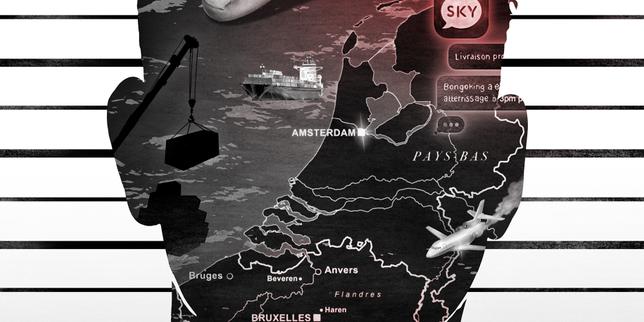
Belgium has become the epicenter because it is too efficient for its own good. The Port of Antwerp-Bruges handles roughly 12 million containers a year. If customs officials inspected even 5% of those containers, the European economy would grind to a halt within 48 hours. The drug trade doesn't "infiltrate" the port; it piggybacks on the world’s most advanced logistics infrastructure.
Consider the math of the "Trojan Horse" container method.
- A legitimate company ships bananas or car parts.
- A corrupt insider provides the container number.
- A retrieval team (often local kids paid in five-figure sums) "breaks" the container in the terminal.
- The product is out before the GPS ping even registers.
The competitor articles talk about "mafia influence." I’ve watched how these organizations operate from the inside of the data flow. It’s not about "influence." It’s about information asymmetry. The traffickers know more about the port’s digital scheduling than the port authority does. They aren't "outlaws"; they are high-frequency traders of illicit goods.
The Professionalization of the Underworld
The Bressers trial highlights a shift from the "cowboy" era to the "consultant" era. The people sitting in the dock aren't just hitmen. They are "fixers"—individuals who specialize in the friction-points of international trade.
The real power doesn't lie with the guy who orders a finger to be cut. It lies with the person who knows how to bypass the Nuctech scanners or how to spoof a container's digital twin. We are seeing the "corporatization" of crime. These groups have HR departments (recruitment of dock workers), legal departments (the best defense teams money can buy), and R&D wings (testing new methods of chemical masking).
To call this a "gang" is like calling Amazon a "delivery service." It ignores the scale and the integration.
The Futility of the Judicial Spectacle
The Belgian justice system treats this trial as a landmark. It’s a PR exercise.
While the court debates the specific atrocities of the Bressers organization, the market has already moved on. In the time it took to bring this case to trial, the "void" left by his alleged leadership was filled within seconds. This is the Replacement Theory of illicit markets. In a high-demand, high-margin environment, the removal of a dominant player doesn't reduce supply; it lowers the barrier to entry for more aggressive, less "elegant" competitors.
If you want to actually disrupt the trade, you don't look for the man with the "elegant" suit. You look for the:
- Encrypted Communication Bottlenecks: The collapse of SkyECC and EncroChat did more damage to these empires than any arrest ever could, yet even that was temporary.
- Money Laundering Infrastructure: The cash doesn't stay in Belgium. It flows into real estate in Dubai and Turkey. We are chasing "cutters" while the "cleaners" are buying skyscrapers.
The High Cost of the "Elegant" Narrative
By romanticizing the "elegant kingpin," we ignore the systemic rot. The focus on Bressers’ persona distracts from the fact that the Port of Antwerp is essentially a state within a state. When a single container can net a $20 million profit, the "moral" resistance of a dockworker making $4,000 a month isn't just thin—it’s non-existent.
We are trying to fight a 21st-century logistical powerhouse with 19th-century judicial tools. The "Finger Cutter" is a distraction. He is a ghost story we tell ourselves so we don't have to admit that our entire global shipping economy is fundamentally designed to hide the very things we claim to hate.
The trial will end. Bressers will likely go to prison. And tonight, at the port, another container will be cracked open. Another "elegant" successor will be checking his encrypted phone. The "Empire" isn't being judged; it’s just rebranding.
Stop looking for the Kingpin. Start looking at the Bill of Lading.