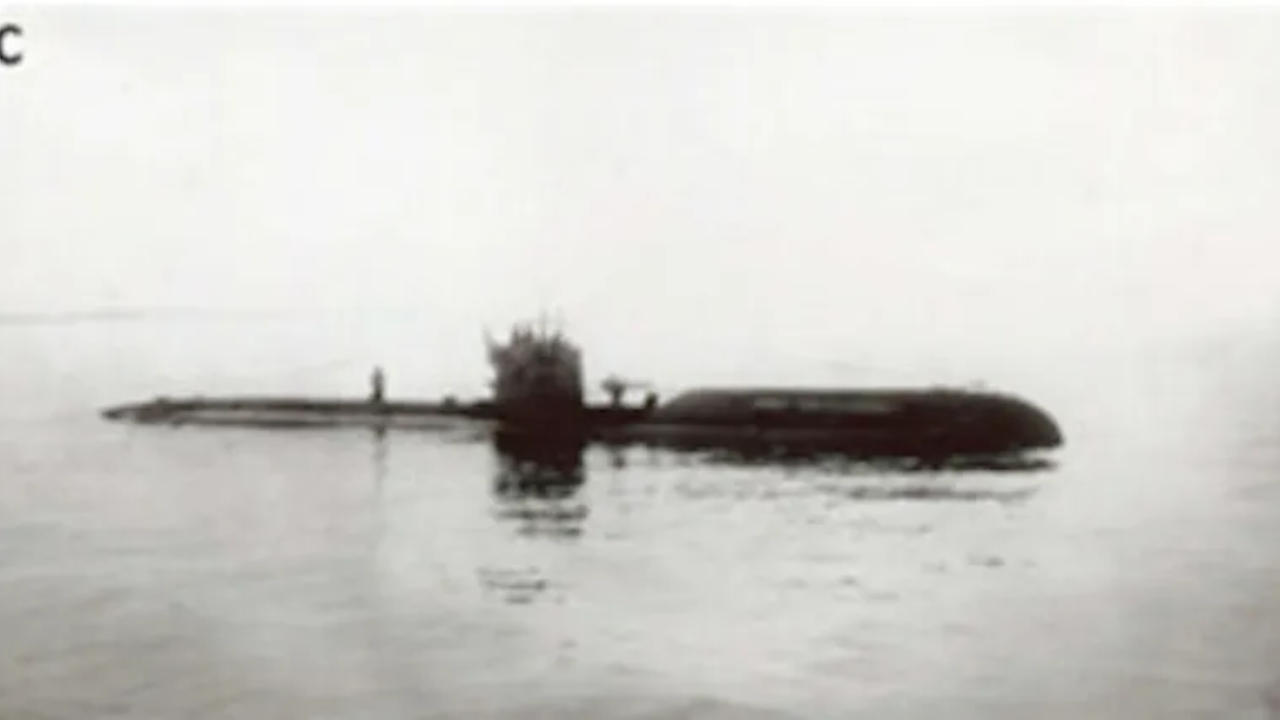
More than 4,400 pounds of trinitrotoluene (TNT) sits inside the deteriorating steel hull of a 1917 German submarine off the coast of Denmark, actively leaching toxic compounds into the North Sea ecosystem. This specific wreck represents a broader systemic failure across European coastal waters: the predictable metallurgical breakdown of World War I and World War II unexploded ordnance (UXO) after a century of saltwater submersion.
Standard reporting treats a leaking submarine as an isolated environmental anomaly. Operational reality dictates otherwise. Underwater munitions follow a deterministic decay curve governed by marine electrochemistry, hydrographic current patterns, and biological uptake. Understanding this threat requires separating known physical mechanisms from unverified ecological projections, evaluating the exact chemical pathways of TNT degradation, and assessing the severe engineering constraints of deep-water remediation.
The Electrochemistry of Hull Failure
A sunken submarine does not remain a sealed containment vessel. From the moment a steel hull settles onto the seabed, it enters an aggressive electrochemical environment where seawater acts as an electrolyte.
The structural degradation of a 1917 vessel relies on three primary mechanisms:
- Galvanic Corrosion: Imperial German U-boats were constructed using dissimilar metals—primarily carbon steel for the pressure hull, paired with bronze, brass, and copper alloys for propellers, valves, and torpedo tubes. When submerged in saline water, these dissimilar metals form a galvanic cell. The less noble metal (steel) acts as the anode and corrodes at an accelerated rate to protect the more noble metals (bronze and brass).
- Microbiologically Influenced Corrosion (MIC): Anaerobic sulfate-reducing bacteria thrive in the oxygen-depleted sediments of the North Sea seabed. These microorganisms metabolize sulfates and produce hydrogen sulfide as a metabolic byproduct. Hydrogen sulfide reacts directly with iron in the steel hull, creating iron sulfides that pit the metal and strip away protective oxide layers.
- Hydrodynamic Scouring: The North Sea is characterized by strong tidal currents and frequent storm surges. Moving water transports abrasive seabed sediments across the exposed hull. This mechanical scouring continuously removes rust scales that might otherwise slow down oxidation, exposing fresh steel to seawater.
Once corrosion breaches the outer pressure hull and the internal torpedo casings, seawater makes direct contact with the main explosive charges. For a 1917 German submarine, the primary explosive payload consists of cast TNT, often mixed with ammonium nitrate (amatol) or hexanitrodiphenylamine. While ammonium nitrate dissolves almost instantaneously upon contact with water, cast TNT possesses low water solubility—roughly 130 milligrams per liter at 20 degrees Celsius. This low solubility does not prevent contamination; instead, it creates a slow-release toxic reservoir that persists for decades.
Chemical Pathways and Biological Uptake
When researchers detect TNT leaking into the North Sea, they rarely measure pure, unaltered trinitrotoluene in the surrounding water column. Instead, environmental chemists track a specific cascade of transformation products.
As TNT dissolves at the boundary layer between the exposed explosive block and seawater, microbial communities in the water and sediment begin reducing its nitro groups. This biochemical reduction converts TNT into aminodinitrotoluenes (specifically 2-ADNT and 4-ADNT) and diaminonitrotoluenes (DANT).
This chemical transformation drives the primary ecological risk through three distinct stages:
- Sediment Adsorption: Pure TNT and its amino-metabolites bind moderately to organic matter in seabed sediments. Fine-grained muds common in parts of the Danish straits and the North Sea trap these compounds, creating localized toxic hotspots around the wreck site.
- Benthic Bioaccumulation: Bottom-dwelling organisms—such as polychaete worms, bivalves, and flatfish—ingest contaminated sediment and filter the boundary water. Because TNT metabolites are lipophilic (fat-soluble) to varying degrees, they cross biological membranes and accumulate in marine tissues.
- Trophic Transfer and Mutagenicity: Laboratory toxicology establishes that TNT and its metabolites induce oxidative stress, disrupt liver function, and act as mutagens in marine vertebrates. While acute mortality occurs only immediately adjacent to the leaking casing, chronic sub-lethal exposure impairs reproduction and immune function in local fish populations.
A critical distinction separates known chemical facts from current scientific hypotheses regarding this specific 1917 wreck. It is an established fact that TNT and its degradation metabolites are present in the water and biota surrounding leaking North Sea wrecks, and that these compounds are toxic to aquatic organisms. However, quantifying the exact rate of mass loss from the 4,400-pound reserve—and calculating the precise concentration that enters the commercial human food chain via North Sea fisheries—remains an active area of scientific modeling rather than a settled measurement. Dilution factors in open marine environments complicate direct attribution once plumes travel beyond a few hundred meters from the hull.
The Remediation Bottleneck
Identifying a leaking munition dump is straightforward compared to neutralizing it. Maritime authorities and salvage engineers face a rigid operational trilemma when addressing sunken World War I explosives: leave the wreck in place, detonate the ordnance in situ, or extract the explosives for surface disposal. Every option carries severe technical and environmental penalties.
1. The Baseline Failure of Monitored Natural Attenuation
Leaving the submarine undisturbed—often termed monitored natural attenuation—is the default policy for most historic wrecks. The rationale relies on the ocean's vast dilution capacity. Yet this approach fails when dealing with concentrated payloads exceeding two tons of high explosive. As the hull structure collapses further, sudden structural shifts can crush brittle, degraded explosive blocks. Crushing increases the surface-area-to-volume ratio of the TNT, causing a massive spike in dissolution rates and overwhelming local dilution capacities.
2. The Ecological Cost of Blow-in-Place (BiP)
Historically, naval explosive ordnance disposal (EOD) teams have neutralized underwater munitions through controlled in situ detonation, placing a donor charge next to the UXO and triggering a high-order explosion. In modern marine management, this method is increasingly rejected for large payloads. A detonation of 4,400 pounds of TNT generates an immense acoustic shockwave capable of causing fatal internal injuries to marine mammals, including harbor porpoises and seals, across several kilometers. Furthermore, underwater detonations rarely achieve 100 percent combustion efficiency. Low-order detonations pulverize the remaining TNT, scattering unburned explosive particles across the seabed and accelerating chemical leaching by orders of magnitude.
3. The Mechanical Hazards of Extraction
Physical recovery requires remotely operated vehicles (ROVs) or saturation divers to cut into a compromised steel hull, extract century-old warheads, and hoist them to a salvage vessel. Over 100 years, explosives undergo chemical sensitization. If picric acid or unstable detonator boosters (such as mercury fulminate or lead azide) are present alongside the TNT, friction or minor impact during cutting operations can trigger an unplanned detonation. Even when using cold-cutting techniques like abrasive water jets to avoid thermal sparks, the structural integrity of the 1917 steel may fail unexpectedly under mechanical load, collapsing onto the recovery equipment.
Strategic Framework for Munition Management
Managing the 4,400-pound TNT threat off Denmark requires abandoning legacy salvage doctrines in favor of phased, non-destructive containment and chemical neutralization. Because the North Sea contains an estimated 1.6 million metric tons of conventional and chemical munitions from both World Wars, any intervention on this submarine must serve as a scalable operational template.
First, marine authorities must establish high-resolution hydrographic and chemical perimeter mapping around the wreck. Deploying passive sampling devices—such as silicone rubber sheets or Polar Organic Chemical Integrative Samplers (POCIS)—at fixed distances down-current from the hull provides time-weighted average concentrations of TNT, 2-ADNT, and 4-ADNT. This data establishes an objective baseline to determine whether the leak is a steady trickle or an accelerating breach.
Second, if extraction proves too hazardous due to hull instability or unstable fuzes, engineers should deploy localized encapsulation rather than in situ detonation. Pumping specialized, fast-curing marine polymers or heavy bentonite-cement slurries directly into the ruptured torpedo compartments isolates the exposed TNT from circulating seawater. Sealing the boundary layer halts microbial reduction and stops the convective transport of dissolved toxins into the water column without disturbing the sensitive explosive mass.
Third, where structural access allows safe retrieval, operations must utilize robotic water-jet cutting paired with closed-circuit, hyperbaric containment chambers to bring munitions to the surface. Once recovered, the explosives must be processed in specialized plasma-arc or rotary-kiln incineration facilities equipped with scrubbers to capture nitrogen oxides, eliminating the marine contamination cycle permanently.