The View From the Doormat
Power smells like old brass polish, wet wool, and cheap espresso consumed in panic at three in the morning.
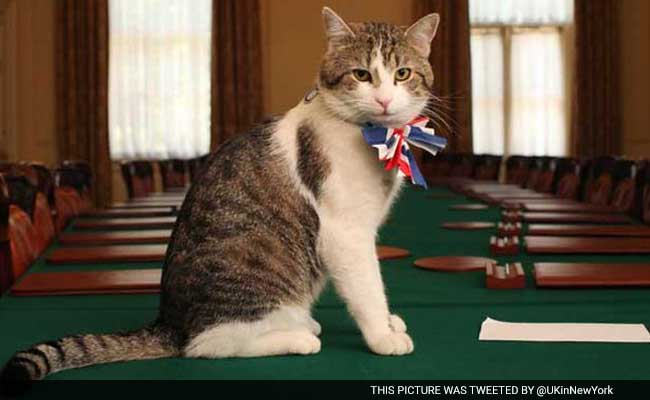
If you spend enough time low to the floorboards of Number 10 Downing Street, you learn to read the building not by its grand declarations or television speeches, but by its ankles. You observe the frantic stride of press secretaries whose shoes are always half-scuffed. You notice the heavy, hesitant heel-strike of a prime minister about to resign. And, if you are Larry, a twelve-pound brown-and-white tabby brought in from Battersea Dogs & Cats Home in the frost-bitten February of 2011, you simply watch the parade of temporary tenants pack their boxes and leave. For a deeper dive into similar topics, we recommend: this related article.
Prime ministers enter Downing Street believing they are architects of destiny. They leave as footnotes. Larry remains.
When Keir Starmer crossed the threshold of the famous black door in July 2024, he became the seventh British Prime Minister to share a roof with the Chief Mouser to the Cabinet Office. Seven. In the span of a single feline lifetime, the world outside that polished oak door spun through geopolitical shifts, economic shocks, three general elections, and an unprecedented procession of political turnover. To get more background on this topic, extensive analysis can be read at The Washington Post.
Yet inside, on the warm radiator in the small hall, sat the same cat. Unbothered. Unmoved. Unbossed.
To understand why a country obsessed with its own decline remains utterly fixated on a rescued stray sitting on a doorstep is to understand something profound about how human beings cope with chaos. In an era where power feels fleeting, institutions feel fragile, and political promises disintegrate under the light of the morning news cycle, Larry the Cat offers a strange, silent anchor. He is the quiet mockery of political ego and, paradoxically, the warmest thing in British public life.
The Mouse Catcher’s Apprenticeship
When David Cameron’s administration adopted Larry in 2011, the official narrative was pragmatic. The Cabinet Office had a rodent problem. Black rats had been spotted darting across TV news broadcasts on live television, a humiliating visual metaphor for a government preaching austerity while failing to control its own hallway pests.
The political staff needed a rodent exterminator. What they got was an aristocrat in a fur coat.
Early reports from inside the civil service were notoriously mixed. Internal leaks—because in Westminster, even a cat’s job performance is leaked to the press—suggested Larry lacked the killer instinct. He spent long hours asleep on heat vents. He permitted mice to scurry across the Persian rugs with impunity. Civil servants whispered that he was lazy.
Then came the moment that changed the narrative. In 2012, Cameron reported that Larry had finally made his first official kill: a mouse spotted in the Cabinet room. Whether the story was spun to protect the administration’s reputation or represented genuine strategic patience on the cat’s part matters little. Larry had secured his tenure.
Ministers came and went, but the civil service recognized a permanent fixture when they saw one. The Chief Mouser post is not tied to the party in power. He is not a political appointee. He is a civil servant in spirit—salaried in affection, funded by voluntary donations from Downing Street staff, and entirely immune to votes of no confidence.
Seven Lives, Seven Leaders
Consider the sheer velocity of human drama that has unfurled around Larry’s sleeping form.
First was David Cameron, who used Larry as a photo-op prop until rumors swirled that the two didn't actually get along. Cameron even had to address Parliament directly to dispel the scandal, asserting with full solemnity, "I love Larry, and I have photos to prove it." When Cameron resigned after the Brexit referendum in 2016, Larry stayed on the steps, watching the moving vans pull away.
Next arrived Theresa May, whose quiet, disciplined cadence was punctuated by the relentless drumming of parliamentary deadlock. May’s tenure was marked by political turmoil, but Larry kept his watch on the window sill, a silent witness to midnight negotiations and weeping resignations.
Then came Boris Johnson, bringing chaos, a energetic Jack Russell cross named Dilyn, and a sensory overload of noise. Reports from inside the building indicated Larry and Dilyn maintained a frosty, armed truce. Larry held his ground. When Johnson was ousted following a revolt within his own party, Larry outlasted him without lifting a paw.
The Liz Truss era lasted forty-four days—scarcely long enough for a cat to establish a favorite spot on the couch. A lettuce outlasted her in the tabloids; Larry outlasted her with absolute ease.
Rishi Sunak brought a slicker, tech-focused energy, but even his crisp suits and carefully managed public relations couldn't alter the immutable truth of Number 10: the cat belongs to the house, not the occupant.
And then Starmer arrived, bringing a new administration, a new political mandate, and his own family pets—including a Siberian kitten named Prince. Once again, rumors swirled about territorial disputes. Once again, the public leaned in, desperate to know how the veteran of Downing Street would handle the newcomer.
To list these names in rapid succession is to realize how fast the wheel of power turns. Prime ministers enter Downing Street flanked by cheering supporters and cameras, convinced their vision will endure for decades. Within months or years, they are led out the back door, swallowed by history.
Larry sits on the threshold, grooming his whiskers. He is the ultimate reality check for human ambition.
The Physics of Permanence
Why do we care?
It would be easy to dismiss the fascination with Larry as classic British eccentricity—a silly distraction engineered by news editors needing light relief between stories of economic hardship and international conflict. But that dismissive view misses the point entirely.
Human beings crave continuity. When the structures around us feel volatile, we look for constant points in the storm.
In ancient times, empires built massive stone monuments to convince themselves that their rule was permanent. In modern democracy, where leadership changes with the stroke of a pen or the failure of a parliamentary vote, stone monuments feel insufficient. They are cold. They don't react.
A living creature, however, provides a different kind of reassurance. Larry represents the endurance of daily life. Rain or shine, crisis or celebration, he expects his dinner at the same hour. He demands to be let out into the courtyard regardless of whether the Chancellor of the Exchequer is delivering a budget statement or the Foreign Secretary is dealing with an international emergency.
There is a lesson in his indifference. When the press pack gathers outside Number 10 on a cold November morning, waiting hours for a statement that could collapse a government, Larry will often saunter out the front door, walk to the center of the pavement, sit down, and thoroughly lick his left hind leg.
The cameras immediately tilt down. The serious political commentators stop speaking mid-sentence. For thirty seconds, the entire machinery of national media is hijacked by a cat scratching behind his ear.
It is a glorious, unintentional act of subversion. It reminds everyone watching that while politicians treat their struggles as matters of cosmic importance, the world keeps turning anyway. The birds still sing in St. James’s Park. The mice still run behind the wainscoting.
The Unspoken Rules of Downing Street
To live in Downing Street is to live inside a gilded aquarium. Every window is watched; every doorway is guarded by armed officers with submachine guns.
Former residents talk about the weird, suffocating pressure of the place. It is simultaneously a private family home, a high-security bunker, and a public stage. Children grow up under the glare of photographers; spouses navigate the awkward space between private life and public obligation.
Larry is the only inhabitant who lives there without anxiety.
He treats police officers as personal door-openers. He has been filmed casually chasing off pigeons twice his size, defending his territory with a fierce, quiet ownership that no Prime Minister could ever match. He has even been seen staring down a fox on the doorstep, refusing to yield an inch of ground.
There is a story told by civil servants about the quiet hours of Downing Street, long after the press corps has packed up their lights and the heavy black door has clicked shut for the night. In those moments, when the corridors are silent and the historical portraits of past leaders stare down from the walls, Larry trots down the long carpeted hallway, patrolling his domain.
He doesn't care about polling numbers. He doesn't read the morning papers. He doesn't know what a coalition is, or a vote of no confidence, or an economic forecast.
He knows only warmth, territory, and the steady beat of his own heart against the old floorboards.
The Final Chord
One day, inevitably, Larry will no longer sit on the doorstep of Number 10. Time comes for mouse catchers just as it comes for prime ministers.
When that day arrives, there will be no state funeral, no speeches in the House of Commons, no solemn monuments erected in Trafalgar Square. But there will be a quiet, collective ache across a nation that watched him keep vigil through some of the stormiest years in modern history.
Until then, the black door will open. Another leader will stand on the steps, promise a new era, and smile for the flashbulbs.
And just off to the side, near the polished boot scraper, a brown-and-white tabby will curl himself into a tight, warm circle on the stone, close his eyes, and go back to sleep.