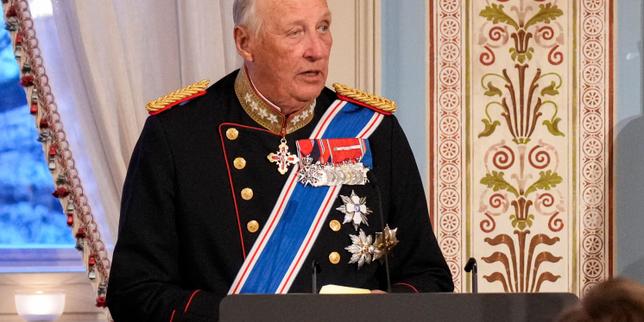
Every mainstream headline covering King Harald V of Norway treats an aging monarch’s failing body as a national tragedy wrapped in a medical bulletin. The narrative is always the same: breathless updates on respiratory infections, pacemaker surgeries, and institutional grief. Commentators scramble to eulogize a man who has simply grown old in a gilded cage.
It is lazy journalism built on a fundamental misunderstanding of what a modern constitutional crown actually is. We treat these health scares as existential crises for the state. They are not. They are predictable biological milestones in an office that should have been retired decades ago.
The lazy consensus says that a monarch's physical frailty weakens the nation they represent. The reality is far more cynical and far more rational. Norway does not grind to a halt because an octogenarian king catches an infection. The state functions entirely on the back of a robust parliamentary bureaucracy and a multi-party system that cares very little about heart arrhythmias.
When the media turns an old man's medical chart into a daily soap opera, it distracts from the actual mechanics of governance. We consume royal health news the way fans track player injuries before a championship game. Stop buying into the drama.
The Structural Illusion of Hereditary Continuity
Let us define terms precisely. A constitutional monarchy is not a government led by an individual; it is a brand sustained by hereditary theater. King Harald V has played his part admirably. He is self-deprecating, pragmatic, and remarkably popular. But popularity is not a governing strategy.
When pundits hyperventilate over his hospital stays, they conflate personal charm with institutional stability. Imagine a scenario where a corporate board panicked every time their aging, non-executive chairman caught a cold. Investors would riot. Yet, we apply a different standard to state figureheads because we are addicted to the fairy tale of the patriarch.
The institutional stability of Norway relies on the Storting, the Council of State, and a civil service that operates independently of whatever bed the King happens to be resting in. Crown Prince Haakon steps in as regent with zero friction. The machine does not miss a gear. The transition is seamless because the system was engineered to survive the biological inevitability of death.
By framing Harald's health as "extremely grave," the press manufactures anxiety to drive clicks. They want you to worry about the crown slipping from a shaking hand. But the crown is just a heavy metal paperweight. The actual power has resided in Oslo's parliamentary offices for more than a century.
The Cost of Institutional Sentimentality
We keep these ancient offices alive out of sheer sentimental inertia. Defenders argue that a non-partisan monarch serves as an emotional anchor during national crises. They point to Harald's moving speeches after national tragedies as proof of irreplaceable value.
This argument gives too much credit to a bloodline and zero credit to human empathy. Any competent head of state—or frankly, any decent elected president—can read a teleprompter with compassion. We do not need a multi-million-dollar royal estate funded by taxpayers just to secure a comforting voice on New Year's Eve.
Worse, the obsession with royal health normalizes a bizarre feudal hangover in modern democracies. We scrutinize the medical privacy of a family whose primary qualification is their ancestry, while actual public officials make policy decisions that affect millions with a fraction of that invasive media attention.
I have watched organizations blow millions on crisis PR campaigns to manage public panic over executive health, only to realize that consumers simply do not care as long as the product works. Nations are no different. Norway runs on oil revenue, sovereign wealth funds, and a high-trust society. It does not run on Harald V's white blood cell count.
Why We Crave the Spectacle of Decline
The fixation on aging royals reveals a deeper societal neurosis. We are terrified of aging, decay, and mortality. Watching an 87-year-old king fight off infections on the front page of every European newspaper is a collective exercise in memento mori. We project our own anxieties about bodily failure onto a man wrapped in ermine and gold braid.
This is why the coverage is so toxic. It turns a natural biological decline into a national suspense thriller. Every time he uses a wheelchair or cancels an engagement, the commentariat treats it as a portent of doom.
We need to stop pretending that a monarch's pulse rate dictates the GDP. The health of a nation is measured in employment rates, infrastructure investment, and social mobility. It has nothing to do with whether a grandfather with a pacemaker can stand on a balcony for Constitution Day.
The Unspoken Exit Strategy
Norway’s royal family knows this better than anyone. They survive by being unassuming, understated, and polite. They don't throw lavish, out-of-touch parties. They ride public trams and try to blend in.
Yet, humility cannot fix a structurally obsolete model. As long as we tie national identity to a genetic lottery, we invite these hysterical news cycles every time someone catches pneumonia.
The solution is not to wish for miraculous recoveries or better medical interventions to keep elderly monarchs breathing on schedule. The solution is to outgrow our need for royal figureheads entirely.
Let the man retire in peace. Let him fish, read, and deal with his medical team away from the glaring lens of international news cameras. If Norway wants to modernize its political imagination, it can start by treating the throne for what it actually is: a relic that outlived its utility.
When Harald V eventually passes, the mourning will be genuine, but the institutional impact will be zero. Remember that the next time a news alert tries to make you panic over a hospital visit. The state outlives the monarch. It always has.