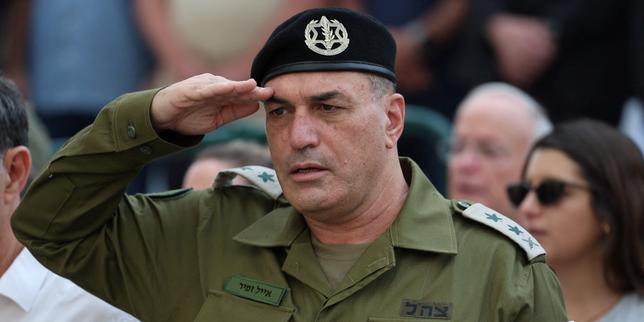
The headlines are predictable. A high-ranking military official stands before a microphone, adjusts their beret, and delivers a somber rebuke. They call the actions of radicalized civilians "moral failures." They label them "unacceptable." The media laps it up as a sign of internal friction or a "soul-searching" moment within the security apparatus.
It is theater.
If you believe these statements represent a genuine rift between the state and the fringes, you are falling for the oldest trick in the geopolitical playbook. We are witnessing a calculated outsourcing of state objectives. In the world of high-stakes territorial control, what the official military cannot do because of international law, the "unruly" civilian can. This isn't a failure of discipline; it’s a division of labor.
The Myth of the Rogue Actor
The "rogue settler" narrative is the "glitch in the system" excuse of the political world. In tech, when a company says a data breach was the result of a "lone bad actor," they are trying to protect the infrastructure that allowed the breach to happen. In the West Bank, the state provides the infrastructure—the roads, the water, the electricity, and the legal shield—while maintaining "plausible deniability" regarding the behavior of the inhabitants.
When the Chief of Staff of the IDF calls these attacks "ethically unacceptable," he isn't speaking to the perpetrators. He is speaking to Washington, Brussels, and the Hague. He is performing a tactical maneuver to decouple the state from the consequences of its own demographic engineering.
If the military truly found these actions unacceptable, they would stop them. They possess the world’s most sophisticated surveillance technology, a massive footprint of boots on the ground, and a legal framework that allows for administrative detention. They use these tools daily against Palestinians. The fact that they "struggle" to contain civilian rioters from their own side is a choice, not a capability gap.
Plausible Deniability as a Product
Think of this as the "Private Equity" model of occupation. A firm buys a distressed asset. They don't want the reputational hit of firing everyone and stripping the pensions, so they hire a "restructuring consultant" to do the dirty work. The firm stays clean; the consultant gets paid; the job gets done.
In this scenario:
- The State is the Private Equity firm. It needs the land but wants to maintain its seat at the UN.
- The Radical Fringe is the consultant. They create the pressure, move the fences, and make life untenable for the current "tenants."
- The Military Rebuke is the PR statement the firm puts out saying they "regret the aggressive tactics" of the consultant while cashing the checks.
I have spent decades watching how institutional power protects itself. The most effective way to advance an unpopular or illegal agenda is to let a "fringe" group do it for you, then publicly condemn them while privately ensuring their logistics remain intact. It is the "Good Cop, Bad Cop" routine scaled to an international crisis.
The Logistics of "Moral Outrage"
Let’s look at the data the "lazy consensus" ignores.
- Resource Allocation: Since 1967, the investment in settlement infrastructure has exceeded billions of dollars. This is not the behavior of a state that is "accidentally" losing control of its civilians.
- Legal Immunity: Human rights organizations like Yesh Din have tracked the rate of indictments for settler violence. The numbers are abysmal. If a CEO said they were "shocked" by embezzlement in their firm but refused to call the police or fire the suspects, you would assume the CEO was in on it.
- Tactical Synchronization: Most "outbreaks" of violence happen in areas where military presence is highest. The soldiers are often filmed standing by. This is not a lack of orders; it is a specific order to stay hands-off.
The military isn't "failing" to protect civilians. It is succeeding in its primary mission: maintaining the status quo while managing the "noise" of international condemnation. The "moral" framing is a distraction. This is a cold, hard, logistical operation.
Why the "Two-State" Premise is a Zombie
The world keeps asking, "How does this violence affect the peace process?"
That is the wrong question. The violence is the process.
The goal isn't a treaty; the goal is facts on the ground. Every time a "rogue" outpost is built and subsequently "condemned" but not dismantled, the map changes. By the time the diplomats finish their lattes and draft their next "deeply concerned" memo, the geography of the conflict has shifted another kilometer.
Stop looking at the moralizing statements of generals. Look at the budget lines. Look at the zoning maps. Look at the electricity grids. That is where the truth lives. The morality of the situation is a secondary concern for those in power; the utility of the situation is everything.
The Cost of the "Contradiction"
There is a downside to this strategy, and it’s one the insiders won't admit: it destroys the internal coherence of the military.
You cannot tell a nineteen-year-old conscript that they are part of the "most moral army in the world" while they are ordered to stand by as a family’s olive grove is torched. That creates a cognitive dissonance that eventually rots an institution from the inside out.
The state is trading its long-term institutional integrity for short-term territorial gain. It’s a classic case of "technical debt." You take a shortcut now to ship the product, but eventually, the bugs in the code will crash the whole system. The "moral failure" the Chief of Staff is talking about isn't an accident—it’s the interest payment on a decades-old policy.
The Brutal Reality of "Acceptability"
When a leader says something is "unacceptable," but then accepts it day after day, year after year, the word loses its meaning. It becomes a linguistic placeholder. It’s the "Thoughts and Prayers" of international relations.
If you want to understand the future of the region, ignore the press releases. Watch the cranes. Watch the bypass roads. Watch the military escorts for the "rogue" groups.
The "clash" between the state and the settlers is a family feud played out for the neighbors' benefit. Behind closed doors, they are eating at the same table, and they both know exactly who is paying for the meal.
Stop asking why the military won't stop the violence. Start asking why you still believe they want to.