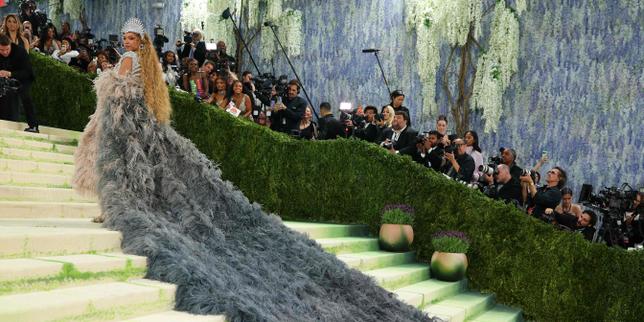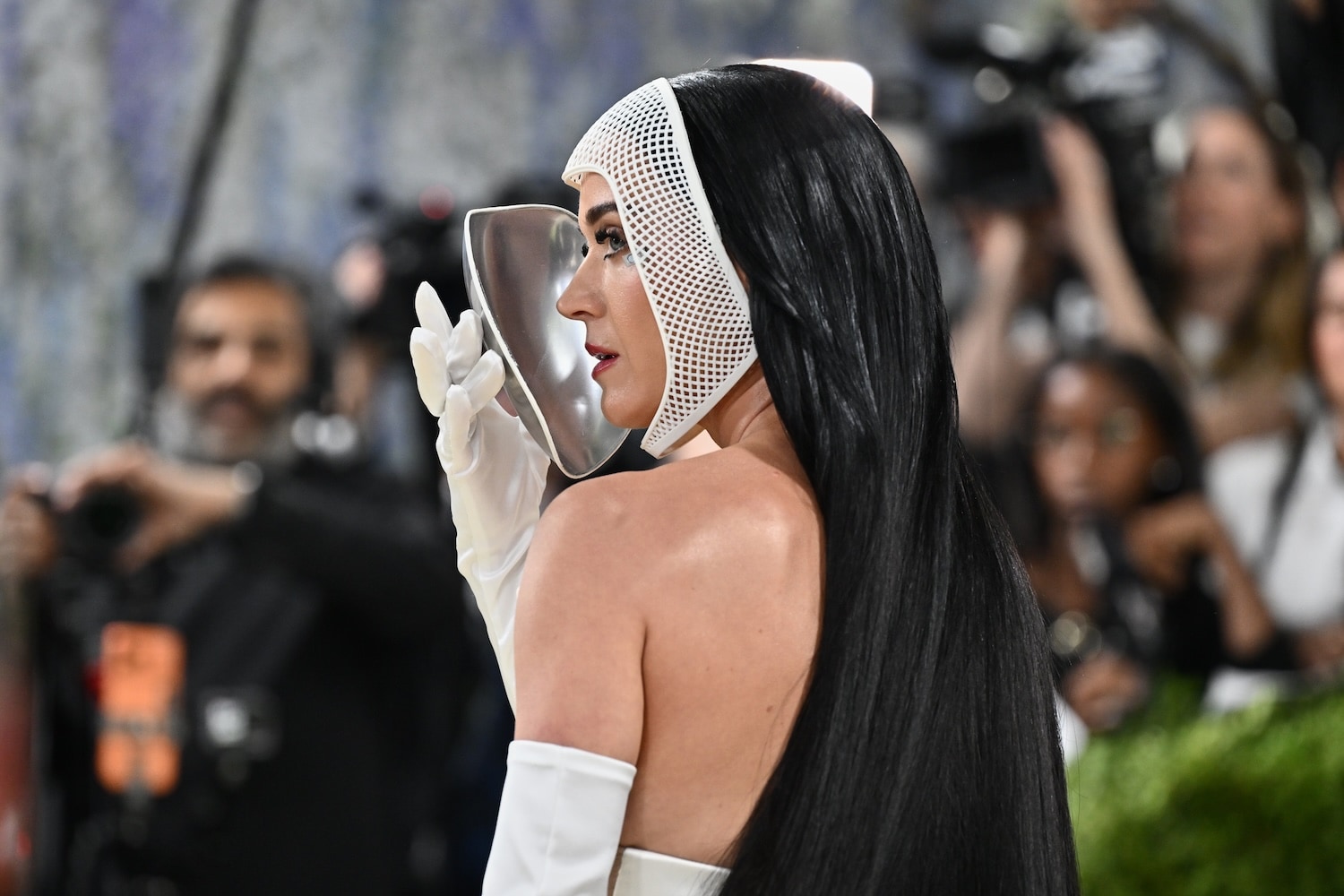
The internet is currently drowning in a flood of self-congratulatory praise. Every year, as soon as the Met Gala photos hit the wire, the narrative is identical: India has "arrived" on the global stage. We are told that the presence of Bollywood royalty and industrialist heirs marks a watershed moment for "art, heritage, and drama."
That is a lie.
What you are actually witnessing is not a cultural takeover. It is a high-priced branding exercise where Indian heritage is used as a convenient costume for a Western-centric institution that views the Global South as a mood board, not a peer. If you think a three-minute walk up a flight of stairs in Manhattan validates five thousand years of textile history, you aren't paying attention to the power dynamics at play.
The Met Gala is a fundraiser for a New York museum. It is a playground for American Vogue. It is a commercial engine for European luxury conglomerates. To celebrate Indian stars appearing there as a "victory" for the nation is to admit that our culture only has value once it has been filtered through the gaze of Anna Wintour.
The Sabyasachi Paradox
Let’s talk about the "Heritage" trap. Whenever a designer like Sabyasachi Mukherjee dresses a celebrity for the Met, the headlines scream about the "globalization of Indian craft."
I have spent years watching luxury markets operate from the inside. Real globalization happens when a brand dictates the terms of the conversation. At the Met, Indian designers are still playing by a set of rules they didn’t write. They are forced to lean into "exoticism" to be noticed.
If an Indian designer sends a minimalist, structured suit down that carpet, the Western press ignores it. To get a mention in the "Best Dressed" lists, the garment must be dripping in hand-embroidery, silk, and "regal" signifiers. It is a performance of "Indian-ness" designed to satisfy a Western appetite for the decorative.
When we cheer for this, we are cheering for our own pigeonholing. We are telling the world that Indian fashion is only relevant when it is archival or "ethnic." We are effectively saying we cannot compete in the arena of modern, functional, or avant-garde design without relying on the crutch of "tradition."
The Myth of the "Seat at the Table"
The "People Also Ask" sections of the internet are obsessed with how much it costs to attend the Met Gala and how many Indians were invited. This obsession with the invitation list is the ultimate "small-country" complex.
In 2024, the price of a single ticket reportedly climbed to $75,000, with tables starting around $350,000. When you see an Indian star on that carpet, you aren't seeing an "invitee" in the way a friend invites you to dinner. You are seeing a transaction.
- Brand Sponsorship: A luxury house (usually European) buys a table and chooses a "muse" to sit there.
- The Corporate Play: Indian billionaires buy their way in to signal their proximity to global power.
- The PR Cycle: Management agencies spend months lobbying for a slot to "increase the global footprint" of their talent.
This isn't "art and drama." It's an invoice. When we mistake a paid marketing activation for cultural recognition, we lose our ability to distinguish between influence and visibility. Visibility is being seen. Influence is being the one who decides who gets to be seen. India has plenty of the former and almost none of the latter in the halls of the Metropolitan Museum of Art.
Stop Calling it a "Runway of Heritage"
The competitor articles love the word "heritage." It’s a safe, warm word. It makes you feel like the ancestors are smiling down on the red carpet.
The reality is that the Met Gala is the antithesis of heritage. It is the peak of fast-paced, disposable, hyper-capitalist fashion. A dress that took 10,000 hours to hand-stitch is worn for four hours, photographed 5,000 times, and then shelved or sent to a climate-controlled vault.
There is a fundamental disconnect in using a 190-carat necklace or a hand-woven sari to participate in a spectacle defined by "Camp" or "Sleeping Beauties." The Met Gala thrives on irony and subversion. Indian fashion, in its current state on the global stage, is almost never ironic. It is earnest. It is trying so hard to be "regal" that it becomes a caricature.
True "drama" in fashion comes from challenging the viewer. What we see from Indian participants is usually a desperate attempt to be "the most." The most gold. The most fabric. The most jewels. It is a maximalism born of insecurity—the fear that if we don't bring the entire history of the Mughal Empire with us, we won't be enough.
The Economics of the Gaze
Consider the data of the luxury market. While India’s luxury sector is projected to reach $10 billion by 2030, the brands that dominate this growth are not Indian. They are the LVMHs and Kerings of the world.
The Met Gala serves these giants. When an Indian star wears a Western brand to the Met, they are helping that brand penetrate the Indian market. They are using their "heritage" face to sell French handbags to people in Mumbai and Delhi.
If we were actually winning, we wouldn't be celebrating the fact that an Indian actress wore a dress by a New York designer. We would be demanding to know why no major Indian conglomerate has the stones to buy a legacy European fashion house and install an Indian creative director to run it.
We are currently the consumers and the models. We are not the owners.
The Subversion We Actually Need
Imagine a scenario where an Indian contingent showed up to the Met and refused to play the "Royal India" card.
Imagine an Indian designer using recycled plastic from the landfills of Ghazipur to create a gown that rivaled the construction of Balenciaga. That would be a statement. That would be "art." Instead, we get more "Garden of Time" interpretations that look like they were pulled from a high-end wedding catalog in South Bombay.
The obsession with being "Best Dressed" is a trap for the mediocre.
The Actionable Truth
If you actually care about Indian fashion, stop refreshing the Met Gala feeds. The real innovation isn't happening on a red carpet in New York. It’s happening in the small studios in Bengaluru, the textile labs in Gujarat, and the streetwear collectives in the gullies of Mumbai that couldn't care less about an American gala.
- Stop looking for validation: The moment you stop caring if Vogue liked the sari, the sari becomes powerful.
- Invest in the infrastructure: Support the brands that are building supply chains, not just PR campaigns.
- Demand ownership: Celebrate the Indian CEOs and the acquisition of brands, not the "honor" of being a guest at someone else’s party.
The Met Gala is a costume party for the elite. It’s time we stopped treating it like a diplomatic summit. You aren't being represented; you're being sold a ticket to watch a performance of your own culture, edited for a crowd that thinks a bindi is a "festival accessory."
Take the "heritage" and keep it. We don't need the Met to tell us it's beautiful. If the only way we can feel proud of our designers is by seeing them in a 30-second clip on a Western social media handle, then our "heritage" is already dead.
Stop clapping. Start building your own tent.