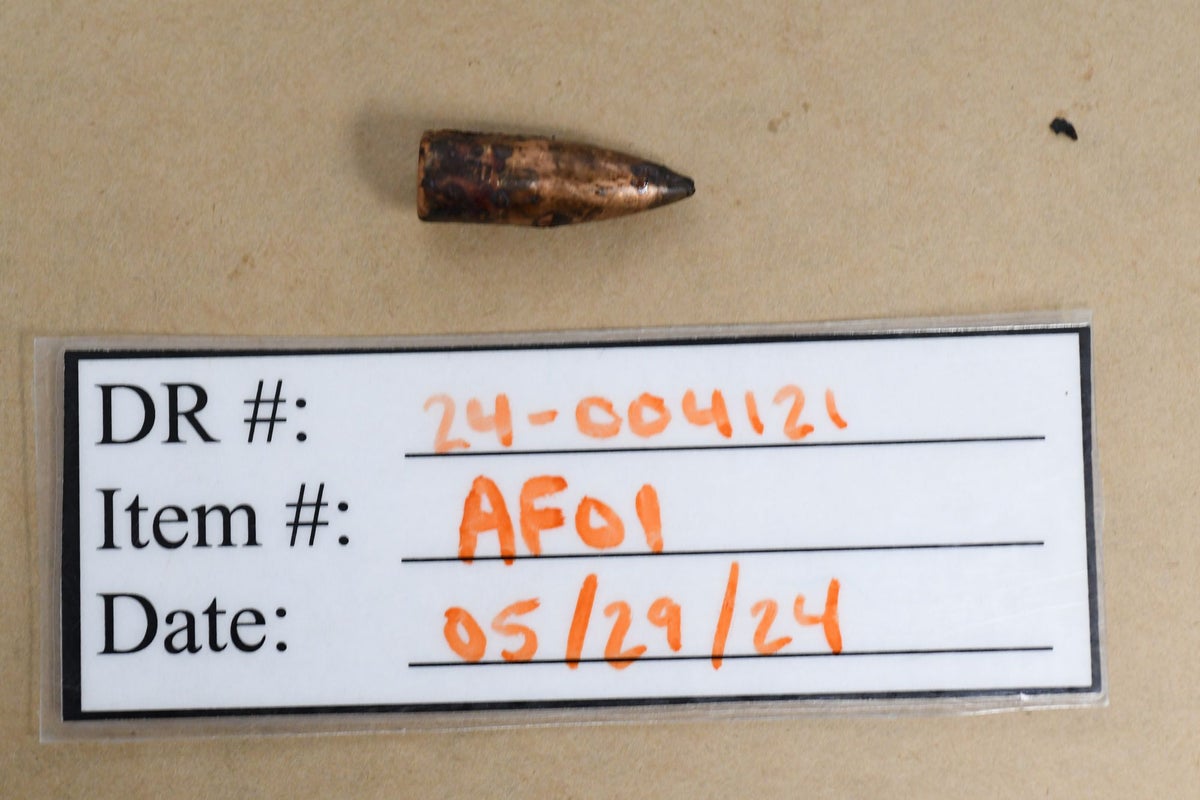
Military live-fire training exercises operate under a zero-tolerance threshold for ballistic escape. When a projectile leaves the designated boundaries of a military installation and strikes a civilian, it represents a catastrophic breakdown in the risk mitigation architecture. Analyzing these incidents requires moving beyond reactionary headlines and instead deconstructing the mechanical, geographical, and procedural failure points that allow a high-velocity projectile to intersect with civilian infrastructure.
By evaluating live-fire operations through the lens of ballistic containment systems, Surface Danger Zones (SDZs), and tort liability frameworks under the Federal Tort Claims Act (FTCA), we can map precisely how systemic complacency translates into kinetic failures.
The Tri-Centric Failure Framework of Ballistic Escape
A ballistic escape is never an isolated fluke. It is the compounding result of failures across three distinct vectors: mechanical trajectory, spatial boundary design, and operational oversight. When a heavy machine gun—such as a .50 caliber Browning Machine Gun (BMG) or a 7.62mm variant utilized in Air Force training exercises—discharges a round that exits a military reservation, all three vectors have simultaneously failed.
+-----------------------------------------------------------------+
|                    OPERATIONAL OVERSIGHT                        |
|  (Human Error, Inadequate Supervision, Deviant Range Discipline) |
+-----------------------------------+-----------------------------+
                                    |
                                    v
+-----------------------------------+-----------------------------+
|                     MECHANICAL TRAJECTORY                       |
|       (Azimuth Deviation, Elevation Errors, Ricochet Dynamics)   |
+-----------------------------------+-----------------------------+
                                    |
                                    v
+-----------------------------------+-----------------------------+
|                    SPATIAL BOUNDARY DESIGN                      |
|   (Flawed SDZ Modeling, Encroachment, Topographical Vulnerability)|
+-----------------------------------------------------------------+
1. The Mechanical Trajectory Vector
The physics of military-grade ballistics dictate that small arms and heavy machine gun rounds possess immense kinetic energy retention. A standard .50 caliber ball round (M2 Ammunition) has a maximum effective range of approximately 1,800 meters, but its absolute maximum aerodynamic range approaches 6,700 meters (roughly 4.1 miles) when fired at an optimal elevation angle of approximately 30 degrees.
For a projectile to breach a base perimeter and impact a civilian area, one of three mechanical anomalies must occur:
- Elevation Deviation: The weapon system was articulated above the approved maximum engagement angle, frequently due to improper target acquisition, lack of physical T-gocs (traverse and elevation mechanisms), or vehicle instability during mounted gunnery phases.
- Azimuth Deviation: The operator fired outside the established left and right limits of the range complex, pointing the weapon toward a non-containment sector.
- Ricochet Dynamics: The round impacted a hard surface within the range (rock outcroppings, frozen ground, or metallic targets) at an acute angle, preserving enough kinetic energy to alter its vector upward and outward over existing berms.
2. The Spatial Boundary Design Vector
Military bases established decades ago were routinely surrounded by vast buffers of undeveloped land. Decades of suburban expansion have triggered severe encroachment, placing residential zones, commercial enterprises, and civilian landscapers directly adjacent to installation fence lines.
The primary defensive mechanism against encroachment is the Surface Danger Zone (SDZ). An SDZ is a mathematically modeled area that overlays a training range to contain all projectiles, fragments, and ricochets.
The mathematical composition of an SDZ is governed by a simple calculus:
$$SDZ = Area_{A} (Distance\ X) + Area_{B} (Ricochet\ Area) + Area_{C} (Dispersion\ Area)$$
Where $Distance\ X$ represents the maximum aerodynamic range of the specific ammunition type.
When a stray bullet strikes a civilian outside the installation, it indicates that either the SDZ model was calculated using outdated ammunition data, the natural topography (hills, treelines) failed to act as a ballistic buffer, or the weapon system was operated outside the specific firing points used to generate that SDZ overlay.
3. The Operational Oversight Vector
Range control protocols exist to isolate human error. Military live-fire exercises require a strict hierarchy: the Range Officer in Charge (OIC), the Safety Officer (RSO), and the individual shooters. For a round to escape, a cascading failure in range discipline must occur. This includes the failure of the RSO to verify physical weapon blocks that limit traverse and elevation, or a failure to halt fire when weather conditions or thermal inversion layers obscure the background targets, masking where stray rounds are impacting.
The Legal Architecture of Sovereign Liability
When a civilian suffers severe bodily injury due to military negligence, resolving the claim does not follow standard personal injury protocols. Because the entity responsible is an arm of the federal government, the litigation must navigate the complex terrain of sovereign immunity and the Federal Tort Claims Act (FTCA), found under 28 U.S.C. § 1346(b).
The Federal Tort Claims Act (FTCA) Gateway
The United States government inherently possesses sovereign immunity, meaning it cannot be sued without its express consent. The FTCA serves as a limited waiver of this immunity, allowing individuals to bring civil lawsuits against the federal government for personal injury caused by the negligent or wrongful act of any employee of the government while acting within the scope of their office or employment.
In the context of an Air Force machine gun exercise striking a civilian, the plaintiff's legal counsel must systematically satisfy four core criteria to establish liability:
- The injury was caused by a negligent or wrongful act or omission of a federal employee (e.g., Air Force personnel or range control staff).
- The employee was acting within the scope of their official military duties at the time.
- The act was such that a private individual would be held liable under the laws of the state where the act occurred.
- The injury resulted in quantifiable damages.
The Discretionary Function Exception: The Government’s Shield
The primary battleground in military live-fire lawsuits is the Discretionary Function Exception (DFE), codified at 28 U.S.C. § 2680(a). This clause preserves sovereign immunity if the government act or omission involves the exercise of judgment or choice based on considerations of public policy.
To defeat a government motion to dismiss based on the DFE, plaintiff attorneys utilize a two-pronged test established by the Supreme Court (Bereskovitz v. United States):
| Test Component | Legal Requirement | Application to Live-Fire Failures |
|---|---|---|
| Prong 1: Element of Choice | The action must involve an element of judgment or choice, rather than a mandatory course of action. | If specific Air Force manuals, Range Regulations, or base-specific Standard Operating Procedures (SOPs) dictate exact safety parameters (e.g., mandatory physical stops on weapons), no discretion exists. Violating a mandatory safety directive strips the DFE protection. |
| Prong 2: Policy Justification | The judgment must be the kind that the discretionary function exception was designed to shield—specifically, actions grounded in social, economic, or political policy. | While the decision to conduct military training is a policy decision protected by the DFE, the specific tactical execution of range safety (e.g., failing to clear a jammed weapon safely or allowing a gunner to shoot over a berm) is considered an operational safety failure, not a high-level policy choice. |
Systemic Vulnerabilities in Modern Range Management
To prevent these existential failures, military leadership must treat range safety not as a compliance checklist, but as an active risk engineering discipline. Relying on paper logs and visual confirmation from a tower is insufficient given the speed and lethality of modern automatic weapons.
The Vulnerability of Dynamic Gunnery Exercises
Static firing ranges, where shooters remain in a fixed lane firing at a fixed target bank, present relatively low risk profile. The danger escalates exponentially during dynamic gunnery exercises. When personnel are firing from moving vehicles (such as Humvees, Joint Light Tactical Vehicles, or helicopters), tracking the precise muzzle orientation in real time becomes incredibly difficult.
Vehicle movement over uneven terrain induces chassis pitch and roll. If a vehicle strikes a depression while an automatic weapon is cycling at 600 rounds per minute, the muzzle can violently elevate above the safe impact vector in a fraction of a second.
Digital Range Management Limitations
Modern training installations utilize automated target systems and laser-rangefinders to track performance, but true real-time ballistic tracking is rarely deployed at the small arms level. Radar systems capable of tracking low-caliber projectiles in flight exist (such as counter-mortar radar), but they are not standard fixtures for everyday base range safety loops.
Instead, installations rely on passive containment: earthworks, concrete baffles, and vast swathes of restricted land. When civilian populations encroach upon these restricted buffers, the margin for error shrinks to zero, exposing structural gaps in older range designs that were never engineered to border high-density civilian landscapes.
Operational Reconstruction and Preventative Mandates
Mitigating the risk of a high-velocity ballistic escape requires implementing an immediate, multi-layered risk reduction protocol across all active military installations bordering civilian sectors.
Step 1: Transition from Passive to Active Mechanical Interlocks
Relying on human operators to maintain azimuth and elevation boundaries during high-stress or rapid-fire sequences introduces a variable point of failure. Weapon mounts must be retrofitted with positive physical interlocks—machined steel blocks fitted to the traverse and elevation mechanism that physically prevent the weapon from being aimed above the maximum safe elevation angle or outside the prescribed lateral limits of the range. These stops must be inspected, measured, and verified by an independent Safety Officer prior to the introduction of live ammunition.
Step 2: Implement Real-Time Laser Enclosure Visualizers
Range complexes must integrate low-power, continuous-wave laser boundary markers aligned with the maximum safe elevation ceiling of the range. If a weapon system breaks the plane of these invisible boundaries, automated range control sensors should trigger an immediate auditory or visual alarm at the firing line.
Step 3: Dynamic Re-Modeling of Surface Danger Zones
Static, paper-based SDZ maps must be deprecated in favor of dynamic, GIS-mapped safety zones that account for real-time atmospheric data. Air density, barometric pressure, and tailwinds alter the maximum aerodynamic distance of a round. On cold, high-pressure days with strong tailwinds, a projectile will travel significantly farther than on a hot, humid day. Range control must run predictive ballistic models before clearing units to fire heavy machine gun variants.
The ultimate resolution of a military live-fire incident involving a civilian bystander cannot rest on a simple settlement of damages. It requires an exhaustive, forensic overhaul of the specific range's architecture. When a single bullet bridges the divide between a military training range and civilian infrastructure, it exposes a systemic failure in risk modeling, weapon containment, and command accountability that demands immediate operational intervention.