The institutional logic of modern authoritarian governance relies heavily on legal formalism to suppress political dissent. When a Russian court sentenced a prominent Kremlin critic to an eleven-year prison term for publicly opposing the military campaign in Ukraine, international media outlets framed the event primarily as a human rights violation or a political tragedy. While accurate in moral terms, this framing treats a predictable structural output as an isolated anomaly. To understand how contemporary regimes neutralize opposition, analysts must deconstruct the mechanics of state-directed prosecution, the economic constraints placed on public dissent, and the systemic cost functions associated with anti-war mobilization.
State-sponsored prosecution under wartime legislation functions as a risk-mitigation tool for the ruling apparatus. In stable autocracies, the judicial system operates not as an independent arbiter of justice, but as an administrative branch of executive power designed to enforce compliance. The legal statutes deployed against dissidents are intentionally calibrated with high ambiguity, maximizing prosecutorial discretion and creating a chilling effect across civil society.
The Tripartite Framework of State Control
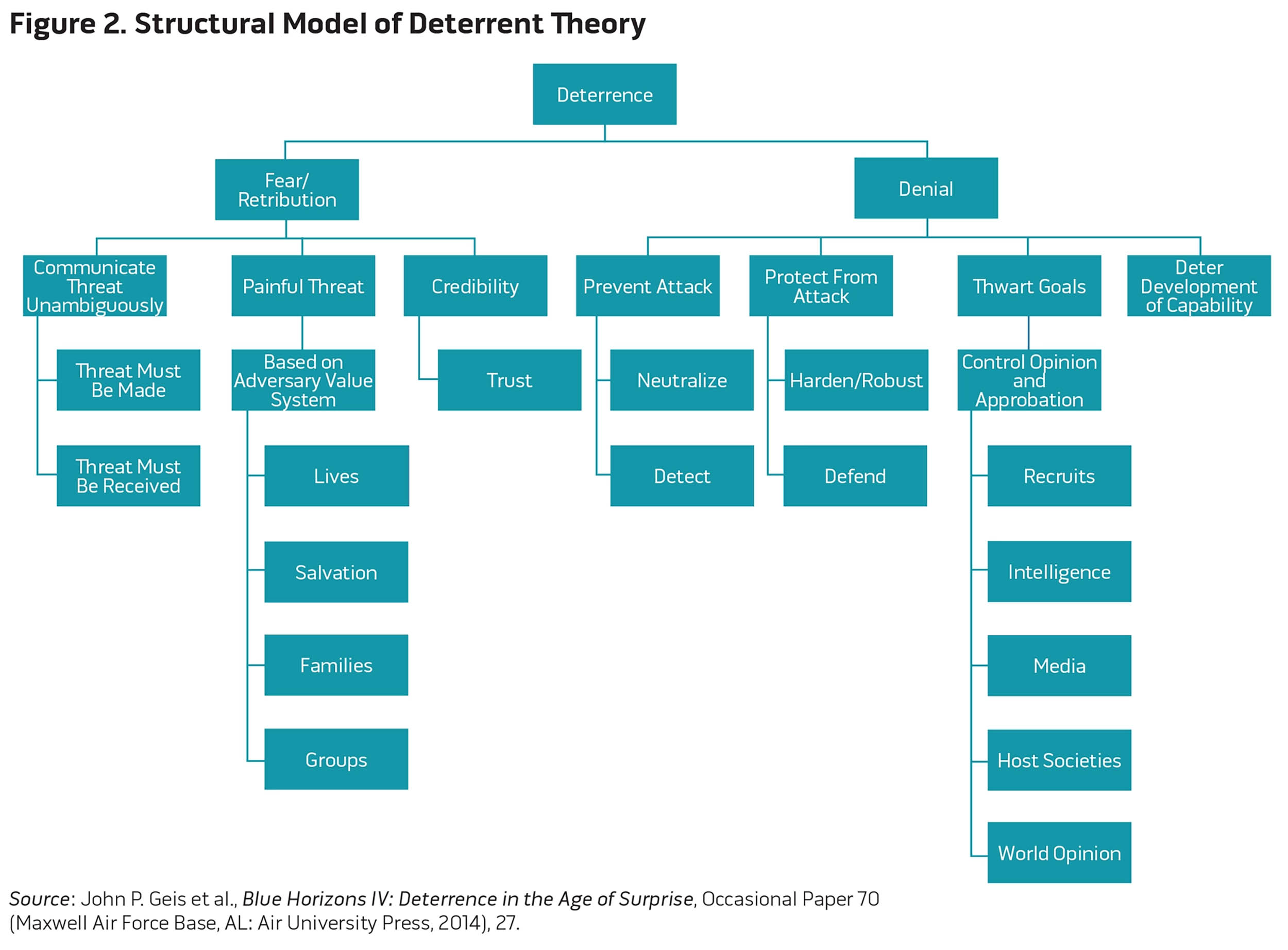
Suppressing coordinated political opposition requires a synchronized deployment of legal, financial, and informational instruments. Autocratic regimes typically rely on three interdependent pillars to maintain domestic stability during systemic external shocks like military conflict.
The first pillar is legislative architecture. By rapidly introducing emergency amendments—such as laws penalizing the "discreditation" of the armed forces or the spread of "fake news" regarding military operations—the state lowers the legal threshold for criminal conviction. Actions that previously fell under protected political speech are reclassified as national security threats. This reclassification strips defendants of standard constitutional protections, transforming the courtroom into a venue for public deterrence rather than factual adjudication.
The second pillar involves resource asymmetry and financial marginalization. Before an individual reaches trial, the state systematically dismantles their operational capacity. This includes freezing bank accounts, seizing communication hardware, designating affiliated organizations as extremist or undesirable entities, and cutting off access to independent funding networks. By imposing high transaction costs on dissent, the regime ensures that potential critics must expend finite energy on basic survival rather than coordinated resistance.
The third pillar is information containment. The state exercises monopoly control over broadcast media and heavily restricts digital communication channels to frame dissidents as foreign agents or existential threats to national survival. The eleven-year sentence serves as a high-visibility signaling mechanism to the broader population. The severity of the punishment is directly proportional to the perceived threat level of independent thought, designed to signal that moderate non-compliance carries maximum penalties.
The Cost Function of Dissent
To evaluate why individuals continue to oppose state actions despite catastrophic personal consequences, one must analyze the individual cost-benefit matrix under totalitarian pressure. Rational choice theory suggests that actors modify their behavior based on expected outcomes. However, when a government removes moderate penalties and replaces them with draconian measures, the traditional risk-calculation model breaks down.
Under normal conditions, political opposition involves calculated risks such as fines, short-term detention, or reputational damage. When the baseline punishment for speech jumps to a decade or more of imprisonment, the marginal cost of escalating resistance drops toward zero relative to the certainty of punishment. Once an individual crosses the threshold of being targeted by the state, further compliance yields no protective benefit.
Conversely, the regime's cost function involves balancing the resources required for surveillance and incarceration against the destabilizing potential of unsuppressed ideas. Prosecuting high-profile figures consumes administrative bandwidth and invites international scrutiny, but the regime calculates that this friction is a necessary price to prevent the formation of horizontal solidarity networks among the populace. The eleven-year sentence is an investment in systemic friction reduction, prioritizing long-term deterrence over short-term diplomatic optics.
Systemic Vulnerabilities in Legal Enforcement
While judicial coercion achieves immediate suppression, it introduces structural fragilities that accumulate over time. Over-reliance on severe penal measures exposes the regime to distinct operational risks.
Judicial inflation creates a diminishing marginal return on deterrence. When maximum penalties are routinely handed out for non-violent speech, the state exhausts its punitive escalation ladder. If a critic receives eleven years for speaking out, the state has few legal instruments left to punish more severe infractions short of physical elimination, which carries entirely different political costs.
Furthermore, the conversion of courts into political instruments degrades the internal integrity of the state apparatus itself. Administrative efficiency declines when promotion within the judiciary is based on political loyalty and conviction rates rather than legal competence. This creates a data feedback loop where executive leadership receives distorted information from lower tiers about the true level of societal discontent. If judges and prosecutors are incentivized to validate the regime's worldview, leadership operates in a strategic vacuum, unable to accurately measure public sentiment.
Strategic Outlook and Regime Trajectory
The deployment of extended prison sentences against anti-war critics marks a permanent shift toward totalizing social control. As long as the primary strategic objective remains the continuation of external military engagements, internal dissent cannot be tolerated even in latent forms. The regime views domestic cohesion as a strategic military asset, rendering civil liberties entirely subordinate to operational security requirements.
Future internal resistance will likely abandon public, platform-based mobilization in favor of decentralized, low-visibility friction strategies. As the cost of overt opposition scales toward infinity, political expression goes underground, transitioning into economic sabotage, administrative non-cooperation, and encrypted information sharing. The state will respond by expanding algorithmic surveillance and tightening capital controls. The ongoing contest between the apparatus of state coercion and individual autonomy will be determined by which entity can sustain higher operational friction over an extended timeline.