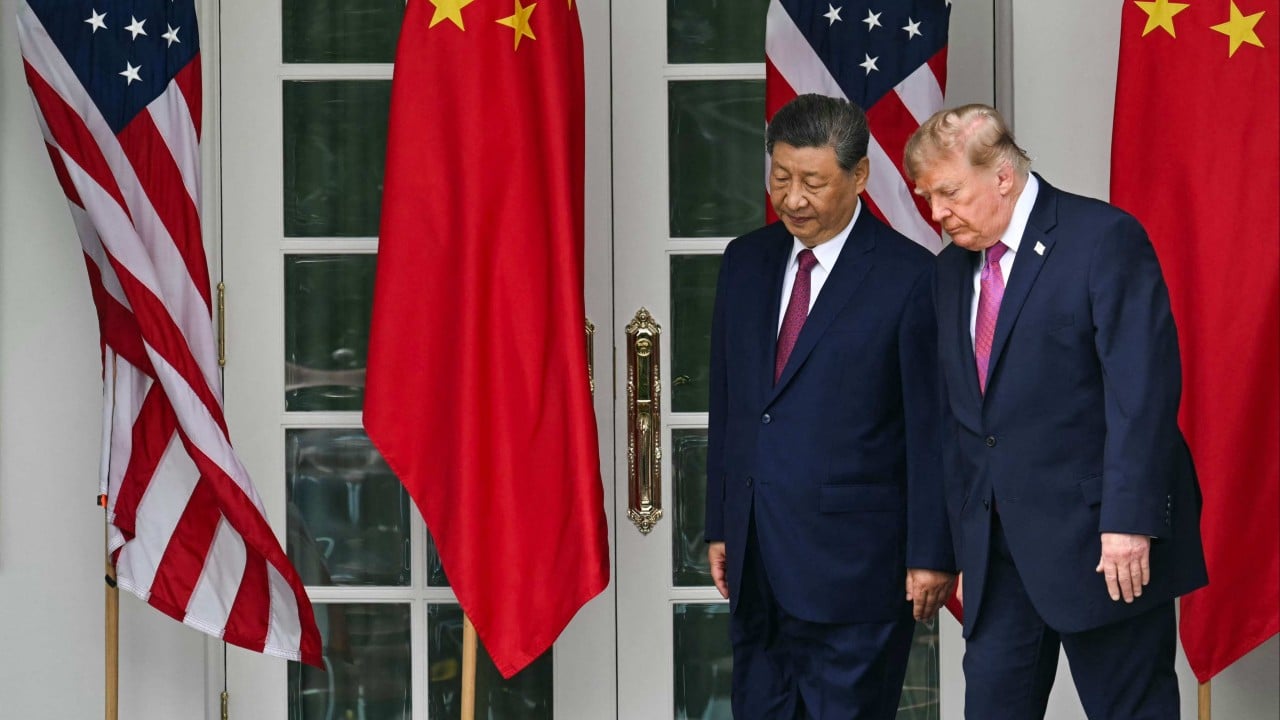
Statecraft operates on asymmetry. When Beijing presses Washington to formally alter its semantic posture regarding Taiwan independence, the underlying objective is not merely diplomatic signaling; it is an attempt to alter the core cost-benefit calculus of the global security architecture. By demanding that the United States cross the line from strategic ambiguity to explicit opposition against Taiwanese sovereignty pursuits, Chinese leadership removes a vital variable of uncertainty from its long-term strategic planning. This diplomatic maneuver exposes the structural friction points governing great power competition, illuminating how language functions as a primary instrument of geopolitical coercion.
To understand the weight of this diplomatic push, one must deconstruct the traditional framework of Washington's cross-strait posture. For decades, American policy has relied upon deliberate ambiguity, balancing the Taiwan Relations Act, the Three Communiques, and the Six Assurances. This triad created a calculated equilibrium. It permitted Washington to maintain extensive commercial and unofficial security ties with Taipei while deterring unilateral declarations of independence and simultaneously cautioning Beijing against unprovoked military aggression. When external actors pressure this architecture, they target the precise points where ambiguity yields to clarity. Beijing calculates that an administration focused on transactional diplomacy and economic rebalancing might view semantic concessions on sovereignty as a low-cost trade-off for broader cooperation in trade and technology governance.
The strategic cost function for Washington involves a severe trade-off between credibility and burden-sharing. For years, American defense planners have urged Taipei to expand its asymmetric defense capabilities, noting that conventional hardware acquisitions alone cannot withstand a concentrated cross-strait blockade or amphibious campaign. When an administration treats defense hardware authorizations as conditional bargaining instruments, the deterrent signal fractures. Beijing reads this transactional friction as an opening. If Washington signals a willingness to adjust its opposition to sovereignty adjustments in exchange for short-term macroeconomic alignment, the perceived reliability of American alliance commitments degrades across the entire Indo-Pacific theater. Allies from Tokyo to Canberra observe whether core security commitments remain insulated from commercial negotiations.
The economic dimensions of this diplomatic friction introduce another layer of quantification. Modern semiconductor supply chains concentrate an overwhelming share of advanced logic chip fabrication within Taiwan. Any military disruption across the Taiwan Strait creates an immediate systemic collapse across global electronics, automotive, and artificial intelligence infrastructure. Beijing's strategic planning accounts for this technological vulnerability. By pressing for diplomatic alignment on sovereignty before technological dependencies fully shift toward domestic fabrication plants in the United States and allied nations, Chinese strategists attempt to capture the narrative before economic decoupling alters the military equation. The timing of diplomatic pressure correlates directly with the timeline of global supply chain diversification.
From Taipei's perspective, the shifting diplomatic lexicon introduces acute operational anxiety. The ruling Democratic Progressive Party operates within a constrained political space where domestic democratic legitimacy depends on maintaining constitutional distinctness, yet external survival requires managing the superpower equilibrium. When bilateral summits occur without explicit reaffirmation of American security guarantees, the political risk profile for Taiwan's leadership escalates. The structural response from Taipei has involved accelerated domestic defense spending, highlighted by legislative approval of multi-billion dollar special defense budgets intended to finance coastal defense cruise missiles, sea mines, and unmanned aerial surveillance networks. However, capital expenditure cannot substitute for clear superpower deterrence. Without unwavering diplomatic friction against unilateral coercion, the local defense posture faces an uphill battle against an adversary enjoying superior industrial mobilization capacity.
Examining the mechanics of deterrence reveals why explicit opposition to independence occupies such a central role in Beijing's grand strategy. Deterrence theory posits that dissuasion depends on the perceived capability and resolve of the defender. If Beijing secures a formal or semi-formal verbal concession from Washington opposing independence, the ideological justification for coercive military action becomes pre-packaged. It redefines any future cross-strait conflict not as an unprovoked invasion of a sovereign entity, but as an internal counter-secession operation against an internationally isolated administration. This semantic pivot alters international legal interpretations, complicates coalition-building among regional partners like Japan and Australia, and lowers the diplomatic threshold for economic sanctions or blockades.
Institutional constraints within the United States further complicate this geopolitical friction. The Taiwan Relations Act legally mandates that the United States provide Taiwan with arms of a defensive character and maintain the capacity to resist any resort to force that would jeopardize the security of the people on Taiwan. When executive branch rhetoric diverges from statutory intent or creates ambiguity regarding opposition to coercion, it triggers friction between the White House and Capitol Hill. Congressional oversight committees frequently utilize legislative mechanisms to reaffirm support for Taipei, creating a dual-track American foreign policy where executive transactionalism collides with legislative institutional commitments. This internal American divergence is closely monitored by Beijing, which measures executive resolve against legislative baseline statutes to identify vulnerabilities in the deterrence shield.
Military readiness metrics add empirical gravity to these political maneuvers. The People's Liberation Army continues to refine its joint island landing campaigns, anti-access area denial capabilities, and gray-zone pressure tactics, including routine incursions across the median line of the Taiwan Strait. Against this operational backdrop, Taiwan's military modernization emphasizes distributed lethality, mobile missile systems, and hardened command centers designed to survive initial missile barrages. Yet, military hardware acquisition cycles operate on multi-year delays, whereas diplomatic signals transmit instantly. A sudden shift in Washington's verbal framing can undermine years of capability-building by eroding the political will required to sustain prolonged asymmetric defense.
Future containment of cross-strait escalation requires a recalibration of American alliance signaling. Washington must decouple core security assurances from transactional trade negotiations, ensuring that defense commitments to democratic partners remain non-negotiable baselines rather than variable instruments in bilateral bargaining sessions.