Donald Trump claims Democrats are trying to steal the California gubernatorial and Los Angeles mayoral primaries through late-night ballot counting. He is wrong. The delay is not a conspiracy; it is the deliberate design of California election law, which prioritizes ballot access and signature verification over midnight television results. With Republican Steve Hilton leading the initial gubernatorial tally and Spencer Pratt contesting the Los Angeles mayoral runoff spot, the slow processing of millions of mail-in ballots changes the numbers daily. This is standard operational reality for the nation's most populous state.
To understand why California takes weeks to finalize an election, one must look at the mechanics of the system rather than social media posts.
Every single registered voter in California receives a mail-in ballot by default. This policy transforms the entire nature of election infrastructure. In states like Florida, the vast majority of voters cast their ballots early in person or at precincts on Election Day. Machines count those votes instantly. Florida law also dictates that mail-in ballots must be received by the time polls close on Election Night.
California does the opposite.
Under California law, a ballot is valid if it is postmarked by Election Day and arrives at a county elections office up to seven days later. This means thousands of ballots are still traveling through the United States Postal Service long after the candidates have finished their victory or concession speeches.
The Grinding Gears of Signature Verification
Once those ballots arrive, the real work begins. It is a labor-intensive, manual process that defying any narrative of automated corruption.
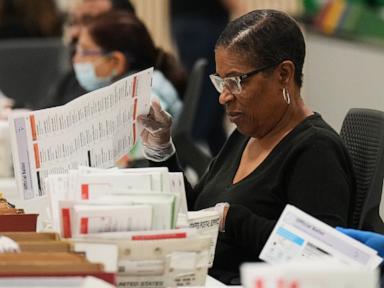
Every single mail-in ballot return envelope must undergo a strict signature verification process. Human election workers compare the signature on the outside of the envelope with the signature on the voter’s original registration file. If the signatures match, the ballot moves to the next stage. If they do not match, or if the signature is missing entirely, the ballot is not thrown away.
Instead, the state mandates a "curing" period. Election officials must contact the voter and give them an opportunity to verify their identity and fix the discrepancy. This consumer-protection approach to voting naturally extends the timeline by weeks.
Once verified, the ballots cannot just be shoved into a scanner. They must be physically removed from the envelopes, flattened, inspected for damage or stray marks, and then fed into tabulators in batches.
The Jungle Primary Math
The stakes are particularly high in this cycle due to California’s unique "top-two" open primary system. All candidates, regardless of party affiliation, appear on the same ballot. The top two finishers advance to the November general election.
Currently, former Fox News commentator Steve Hilton holds a narrow lead in the gubernatorial race to succeed Gavin Newsom, closely followed by Democrat Xavier Becerra and billionaire Tom Steyer. Because the margins between the second and third-place candidates are thin, the steady drip of late-arriving mail ballots can completely alter who makes the cut for November.
The same dynamic is playing out in the Los Angeles mayoral race. Incumbent Karen Bass is headed for a runoff, but the battle for the second spot between conservative reality television personality Spencer Pratt and progressive city council member Nithya Raman hangs on a few thousand uncounted envelopes.
When early returns favor Republicans, it is usually because conservative voters tend to cast their ballots in person on Election Day or return their mail ballots early. The later-arriving ballots, particularly those dropped off at boxes on Election Day or mailed at the last minute, historically skew toward younger and more progressive voters. This shift is a well-documented phenomenon known to political scientists as the "blue shift." It is not cheating. It is arithmetic.
The Friction Between Speed and Trust
The criticism of California’s timeline is not confined to the White House. Florida Governor Ron DeSantis called the delay "pathetic" and "corrosive to our civic culture."
There is a legitimate policy debate to be had here. A long count creates an information vacuum. In that vacuum, speculation and distrust flourish.
However, the trade-off is clear. California has chosen a system that maximizes the opportunity to participate, accepting that the cost of that access is patience. The state's rejection rate for mail-in ballots is historically low, hovering around one percent, precisely because the law gives voters time to correct mistakes.
The administration’s broader push for the SAVE America Act and executive orders targeting mail-in voting reflect a desire for a uniform, restrictive federal standard. But until federal laws change, California will continue to run its elections according to its own statutes.
The counting will continue for days. The margins will shift. Candidates will fluctuate in the standings. It is an excruciatingly slow process, but it is exactly what the law requires.


