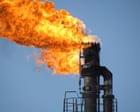
In the sweltering heat of Belém, where the Amazon basin meets the Atlantic, an elderly fisherman checks his nets. His fingers know the rhythm of the water better than the lines on his own palms. For generations, his family measured wealth in river currents, seasonal rains, and the steady movement of fish. Today, he looks out at an horizon framed by the quiet hum of distant machinery and a sky heavy with carbon. He does not read global policy documents. He does not track international summits. Yet every breath he takes is tied to a set of numbers being debated thousands of miles away in polished conference rooms.
For decades, the conversation around energy has been trapped in a polite stalemate. Governments gather, sign pledges, take photo opportunities, and return home to approve new drilling permits. The language of international climate politics is designed to blur sharp edges. It speaks of net-zero targets and transition windows, terms so slippery they allow leaders to promise a green future while pumping record amounts of crude oil today.
Then Brazil decided to publish a map.
Not an abstract pledge. Not a vague vision statement for 2050. A step-by-step roadmap designed to phase out fossil fuels entirely across the global economy.
To understand why this document feels like a shock to the system, you have to look at who wrote it. Brazil is not a small island nation watching its coastlines wash away, though it has plenty to lose. It is an industrial heavyweight, a agricultural powerhouse, and one of the largest oil producers on Earth. When a nation that earns billions from petroleum sits down and draws up the blueprint for ending the oil era, the room goes quiet.
The mathematics of our current reality are simple, brutal, and largely ignored. If every existing oil field, gas pipeline, and coal mine operates through its planned lifetime, the planet exceeds its safe thermal limits. It is not a matter of opinion. It is basic accounting. Yet, for thirty years, international agreements carefully avoided mentioning the words fossil fuels. Pledges focused on emissions, as if pollution were a magic mist that appeared out of nowhere, entirely disconnected from the refineries pumping it into the air.
Brazil’s blueprint breaks that silence. It lays out explicit timelines for winding down extraction, shifting subsidies, and replacing carbon-heavy infrastructure with renewable grids. It sets targets not just for energy consumption, but for the actual extraction points at the wellhead.
Think of a home with a burst pipe flooding the living room. For decades, the global community has discussed better mops, higher-capacity buckets, and synthetic towels. We debated who should pay for the water damage and how fast people ought to wring out their rags. Brazil’s document does something startlingly obvious: it reaches for the main shut-off valve.
The human cost of this transition is where the real drama unfolds.
Consider a welder on an offshore platform off the coast of Rio de Janeiro. He is forty-two years old. His job paid for his home, put his children through school, and earned him a place of respect in his community. To him, words like decarbonization sound like a threat to his family's dinner table. If the global roadmap means his platform closes in ten years, what happens to his mortgage? What happens to the town onshore whose entire economy feeds, houses, and services his crew?
This is where previous environmental efforts failed. They treated workers as collateral damage in a noble cause.
The new framework attempts to confront this fear directly. Winding down oil production cannot simply mean pulling the plug and walking away. It requires redirecting trillions of dollars currently funneled into fossil fuel subsidies toward retraining programs, regional economic investments, and public infrastructure. The blueprint insists that a transition which abandons its workforce will inevitably collapse under political backlash.
The friction is already visible inside Brazil itself. The nation lives a double life. On one hand, its state-backed energy firm seeks new exploration frontiers near the mouth of the Amazon River, citing national development and revenue needs. On the other hand, its environmental leadership champions global conservation and leads the charge to phase out carbon.
This tension is not a defect of the policy. It is the core conflict of our era. Every nation, every city, and almost every individual lives inside this contradiction. We rely on cheap energy to haul our food, heat our homes, and power our devices, even as we watch the climate systems that sustain us unravel.
The global roadmap does not pretend this conflict is easy to resolve. It sets up intermediate checkpoints, demanding transparent reporting on fossil fuel extraction rather than hiding behind offsets and accounting tricks. It pushes rich nations, who built their wealth on two centuries of unabated coal and oil combustion, to provide financial backing for developing nations making the leap straight to clean grids.
Without that financial bridge, the roadmap remains ink on paper. A country struggling with poverty cannot choose long-term planetary health over immediate survival unless the economic math makes sense.
In the end, policy documents are only as powerful as the human will behind them. The blueprint published in Belém is not a magic wand. It is a mirror held up to the global economy, forcing leaders to look directly at the contradiction of promising a cool planet while financing hot engines.
Back on the river, the fisherman pulls his net into the boat. The water ripples under the morning light, carrying the weight of a changing world. The machines in the distance keep humming for now. But for the first time in a generation, there is a clear, written plan to turn off their fuel, piece by piece, until the river belongs only to the water again.