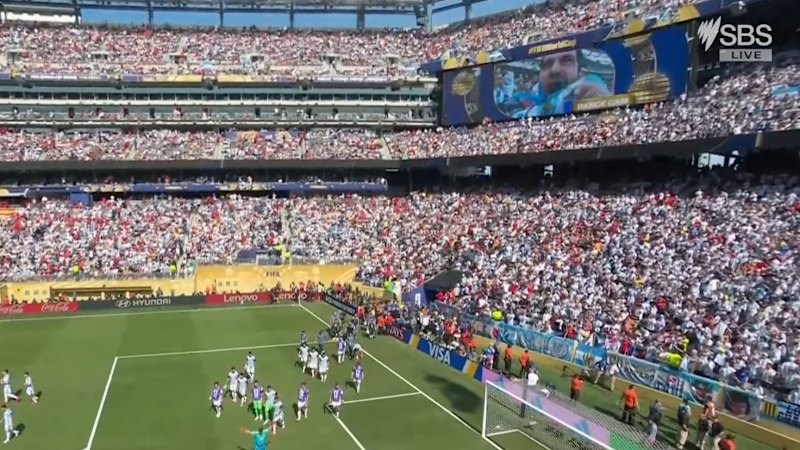
The smell of freshly cut grass used to mean something pure. Standing at the edge of a local pitch on a crisp autumn morning, the damp air carries the scent of mud, sweat, and absolute simplicity. Two metal goalposts, a worn leather sphere, and a patch of green. That was the entire universe. For billions of people across every continent, football was never just a sport. It was a language spoken without words, a refuge from poverty, a communal heartbeat that synchronized entire nations every four years.
That heartbeat is stuttering.
Somewhere in the gleaming, sterile corridors of high-power governance, away from the dust of neighborhood pitches and the roar of packed terraces, the soul of the sport has been quietly traded away. The ledger is balancing, but the spirit is bankrupt. At the center of this transformation sits one man, orchestrating a relentless expansion that threatens to break the very thing it seeks to monetize.
Gianni Infantino needs to step down. Not because of a sudden scandal or a dramatic courtroom showdown, but because the philosophy he represents is fundamentally incompatible with the survival of football as a human experience.
To understand how we arrived at this precipice, we have to look past the neon lights of the modern stadium and examine the mechanics of absolute power.
When Infantino took the helm of FIFA in 2016, he promised a new dawn. Transparency. Growth. Money for the grassroots. The rhetoric was smooth, delivered with the practiced charm of a diplomat who knew exactly which hands to shake. But power, absolute and unchecked, acts as a magnifying glass for intent. It did not take long for the grand vision to reveal its true architecture.
Consider the trajectory. Expansion is the gospel of the modern executive. More teams equal more matches. More matches equal more broadcasting rights. More broadcasting rights equal more revenue streams to distribute among member associations whose votes keep presidents in power. It is a closed loop of self-preservation disguised as progress.
The 2026 World Cup format expansion to forty-eight teams is the crown jewel of this strategy. On paper, it sounds democratic. More nations get to dream. More flags on the global stage. But physics applies to economics just as surely as it applies to gravity. When you stretch a rubber band too far, it snaps.
Step onto the pitch with the players for a moment. This is a hypothetical scenario, but it is built entirely on the verified realities of modern fixture congestion.
Imagine a twenty-four-year-old winger. He has just played sixty matches this season across domestic leagues, domestic cups, European competition, and international windows. His joints ache with a deep, bone-weary fatigue that sleep cannot cure. Now, add summer tournaments that never end, expanded club world cups squeezed into the microscopic gaps of an already broken calendar, and endless cross-continental flights.
He does not play with joy anymore. He plays with survival instinct.
When the human body is pushed past its biological threshold, the magic dies. We are no longer watching the pinnacle of human athletic art; we are watching exhausted assets shuffle across a corporate billboard. Hamstrings tear. Knees buckle. Careers are cut short not by bad luck, but by institutional greed.
The defenders of the current regime will point to the numbers. They love numbers. Revenue is up. Reserves are swelling. FIFA distributes millions to developing football nations, helping build pitches and academies where none existed before.
This is the seductive lie of modern administration. It takes a noble objective—helping the global game grow—and ties it to a destructive mechanism.
Money is pouring into football, yes. But where is it flowing? Like water, it rushes upward, pooling at the top while the roots dry out. The disparity between the elite clubs and everyone else widens into a chasm. Meanwhile, the cost of attending a match for a working-class fan—the people who built the traditions, sang the songs, and passed down club loyalties like heirlooms—has been priced out of reality.
Football is undergoing a process of gentrification. The terraces are being sanitized, turned into tourist attractions for corporate clients who sip champagne in hospitality boxes while checking their phones. The noise, the raw, unfiltered passion that made the sport a global phenomenon, is being systematically muted.
And who is steering this ship? A man who treats tradition as an obstacle rather than a compass.
Infantino’s tenure has been marked by a relentless push to reinvent international tournaments into commercial mega-events that dilute their own prestige. The prestige of the World Cup was built on its scarcity. It was a quadrennial pilgrimage. By turning it into an endless, bloated circus, the magic evaporates. You cannot dilute the wine for decades and still expect people to marvel at the vintage.
History teaches us a harsh lesson about monopolies and unchecked authority. When an organization becomes too big to fail, it invariably becomes too arrogant to listen.
We saw it in banking. We saw it in tech. Now we are watching it happen to the world's game. FIFA operates with a veil of insulation that separates its leadership from the consequences of their decisions. When fans riot over ticket prices, they are miles away in a VIP suite. When players collapse from exhaustion, the executives are negotiating the next broadcasting deal in a luxury hotel.
There is a profound disconnect between the executive tier and the ecosystem they control.
Leadership requires stewardship. A true leader understands that they are merely a temporary custodian of something much larger than themselves. They are caretakers of a cultural heritage that belongs to billions. When a custodian begins treating the estate as their personal fiefdom, selling off the furniture to pay for expansion projects nobody asked for, it is time for them to leave.
If Infantino remains, the trajectory is clear. Football will continue its slow drift toward a fragmented entertainment product, disconnected from its cultural roots. Domestic leagues will become feeder systems for bloated global spectacles. The soul will be sanded down until nothing is left except a polished corporate brand, devoid of local flavor, local rivalry, or local heart.
The rain is coming down harder now on that local pitch. The mud is thick underfoot. A child kicks a deflated ball against a brick wall, chasing a dream that feels distant, simple, and entirely unmonetized.
That child does not care about broadcasting rights or executive committees. They care about the sound of leather hitting the net.
Football can still be saved, but the rot must be cleared from the top. The departure of Gianni Infantino would not solve every problem overnight, but it would send an unmistakable signal. It would draw a hard line in the grass, declaring that the game belongs to the people who play it, watch it, and bleed for it—not the men who package it for sale.
The whistle is about to blow. The choice is stark. Either we reclaim the soul of the sport, or we sit back and watch the greatest game ever played turn into a corporate ledger entry, fading quietly into the dark.